
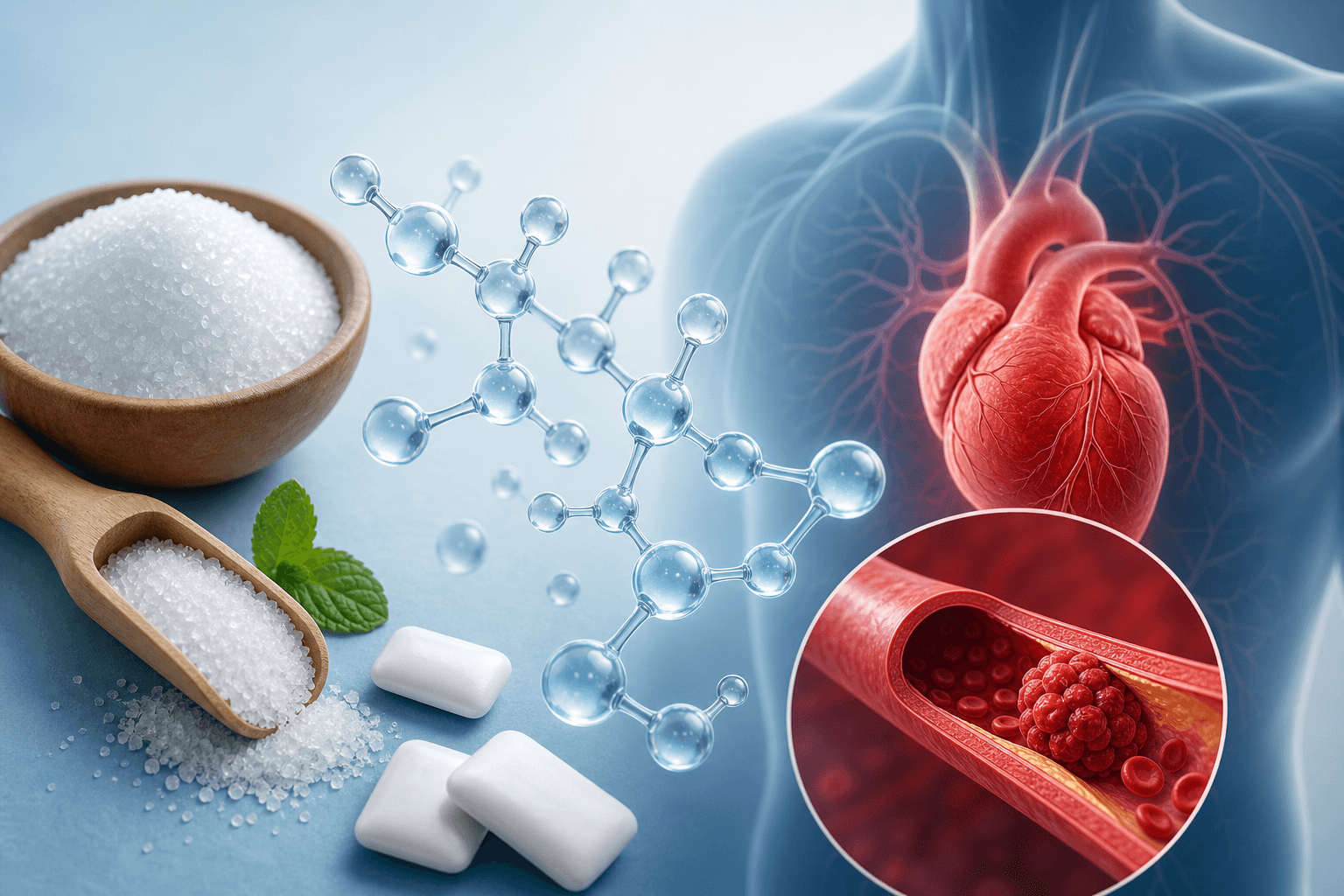
Seldom has a food additive deemed safe attracted such scrutiny from the scientific community. Xylitol, a low-calorie sugar alcohol found in sugar-free gum and mints, has been linked to elevated cardiovascular risk. A major study presented at the European Society of Cardiology Congress in Munich has raised troubling questions. The research suggests that this ubiquitous sweetener may not be as harmless as consumers have long assumed.
The study drew on data from over 17,700 participants across two large prospective cohorts. One cohort was based in Canada, while the other was situated in the United Kingdom. Researchers found that individuals with xylitol levels in the highest quartile faced substantially greater cardiovascular risk. In the Canadian cohort, the risk of a major adverse cardiovascular event was 57 percent higher over six years. The UK cohort showed an 18 percent increase in risk over a follow-up period spanning three decades.
What distinguishes this research is its investigation into the underlying biological mechanism. Earlier work demonstrated that xylitol enhances platelet reactivity, making blood more prone to clotting. In a small interventional study, volunteers who consumed a xylitol-sweetened beverage showed markedly elevated clotting markers. Excessive clot formation is a well-established precursor to both heart attacks and ischaemic strokes.
The implications of these findings extend well beyond individual dietary choices. Over the past decade, sugar substitutes have proliferated in processed foods marketed as healthier alternatives. Dietary guidelines have routinely recommended them for individuals managing obesity or diabetes. Had regulators subjected these compounds to more rigorous long-term testing, the current concerns might have been identified sooner. The same research team had previously found a comparable association between erythritol and cardiovascular risk.
Researchers have been careful to note that the study was observational and does not establish direct causation. Nevertheless, the consistency of findings across multiple cohorts and complementary mechanistic evidence is compelling. Dr Marco Witkowski, who led the research, emphasised that much remains unknown about xylitol's cardiovascular effects. Further investigation into the long-term safety of artificial sweeteners is now warranted.