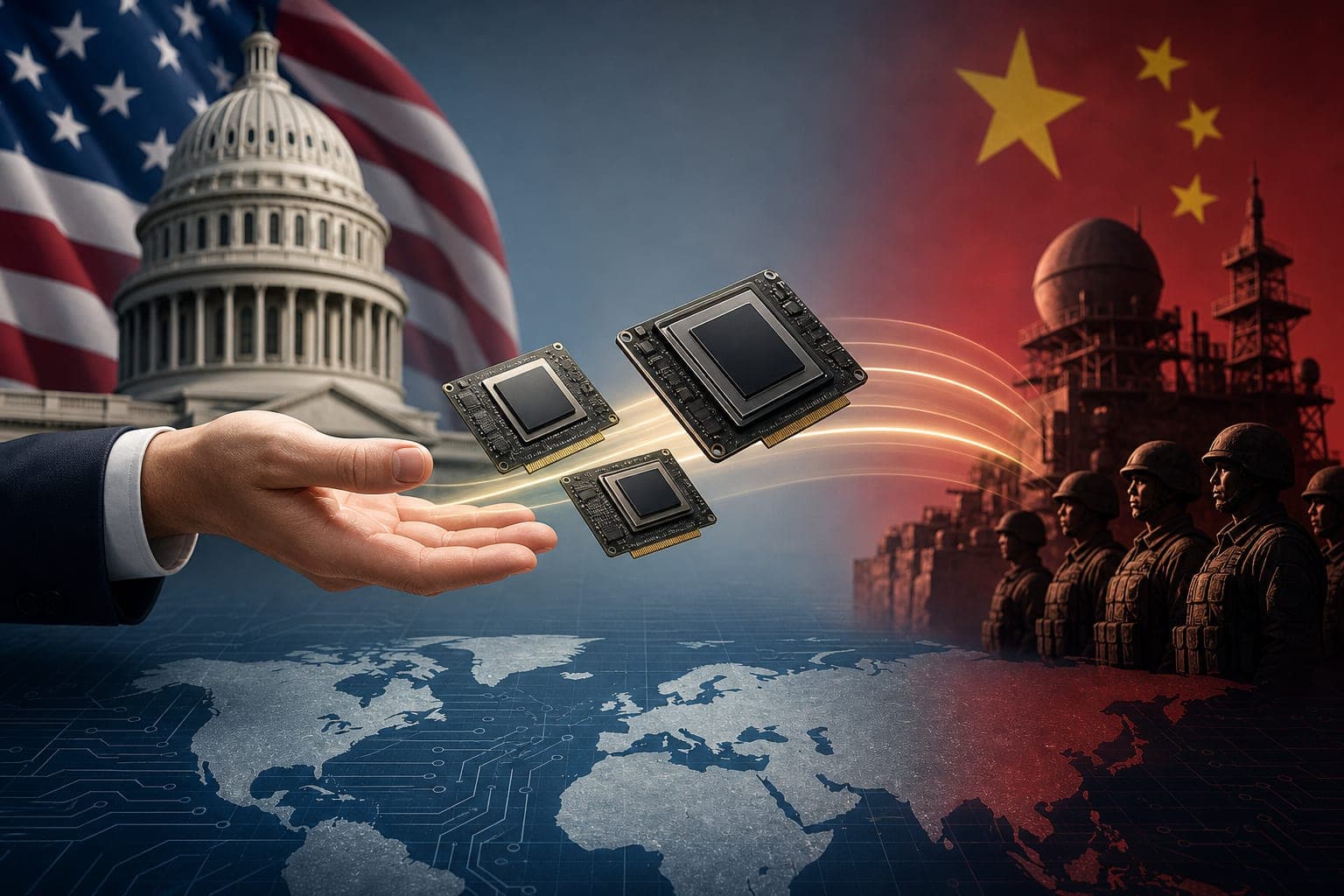
Seldom has a single policy disclosure provoked such fierce scrutiny of American technology exports. The US House Foreign Affairs Committee revealed that the Commerce Department approved the sale of approximately 879,000 advanced artificial intelligence chips to Chinese companies. These approvals, granted between December 2025 and May 2026, covered processors from both Nvidia and AMD. The revelation has reignited a contentious debate over the intersection of commerce and national security.
The approved chips included Nvidia's H200 and AMD's MI325X, both considered high-performance AI accelerators. Chinese companies had initially sought licences for 3.4 million chips, though only a fraction received authorisation. Notable recipients included prominent technology conglomerates such as Alibaba, Tencent, Baidu, and ByteDance. Critically, over thirty percent of the approved chips were designated for companies the Pentagon classifies as Chinese military entities.
This policy shift marked a significant departure from the previous administration's approach. In October 2022, President Biden imposed sweeping export controls to curtail China's access to advanced semiconductors. Those restrictions were intended to prevent Beijing from enhancing its military capabilities through American technology. However, President Trump reversed this trajectory in December 2025 by permitting conditional H200 sales to approved Chinese customers.
Allegations of diversion have further complicated the controversy. Committee Chairman Brian Mast accused certain recipient companies of being fronts for chip smuggling operations. One firm linked to a network under criminal investigation reportedly received approval for over 40,000 processors. Both Nvidia and AMD maintain that their export applications complied fully with applicable regulations and posed minimal diversion risk.
The implications of these approvals extend well beyond bilateral trade relations. Critics contend that inadequate oversight has compromised strategic technological advantages painstakingly cultivated over decades. Meanwhile, proponents argue that restricting chip sales merely accelerates China's pursuit of semiconductor self-sufficiency. As congressional oversight intensifies, the fundamental tension between economic competitiveness and national security remains unresolved.