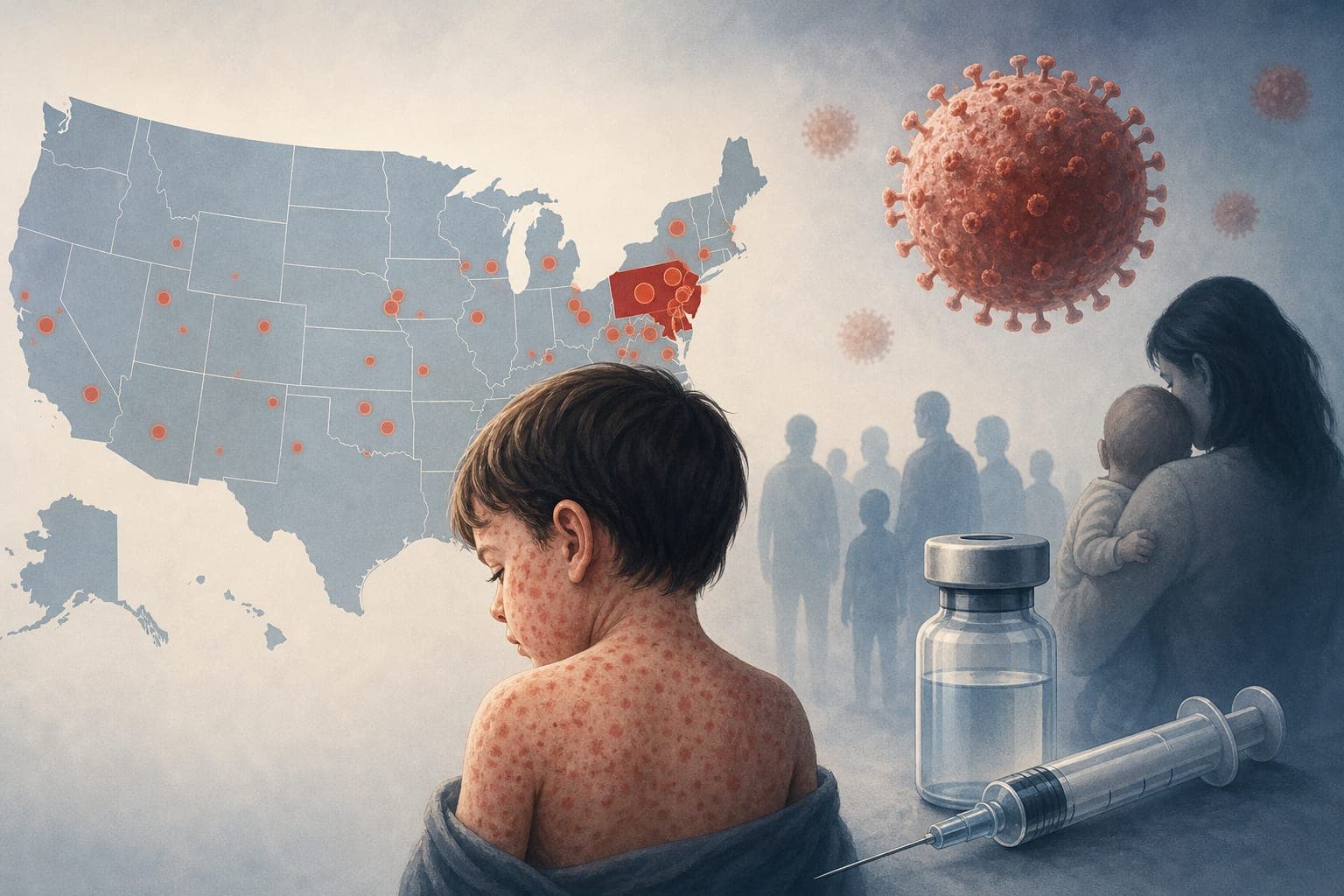
Seldom has a public health reversal carried such profound symbolic weight. The Pan American Health Organization declared on November 17 that measles is once again endemic in the United States. This revocation erases a designation the country had maintained since 2000. The decision followed evidence that the virus had circulated uninterrupted for over twelve months. What was once a hallmark of immunization success has become a cautionary tale.
The resurgence traces its origins to a major outbreak in West Texas in January 2025. Since then, authorities have recorded more than 7,000 confirmed cases across the country. Over 92 percent of those infected were unvaccinated or had unknown vaccination status. Nearly a dozen deaths have been attributed to the disease. Such figures represent the worst measles surge the nation has witnessed since 1991.
Declining vaccination rates constitute the primary catalyst behind this crisis. Kindergarten immunization coverage fell to approximately 92 percent in the 2025–2026 school year. This figure sits well below the 95 percent threshold required to sustain herd immunity. Because measles is extraordinarily contagious, even marginal gaps in coverage can precipitate widespread outbreaks. Rising non-medical vaccine exemptions have further compounded the vulnerability.
The ramifications extend beyond domestic borders. Experts warn that the United States may now become an exporter of measles to other nations. Losing elimination status also undermines the country's credibility in advocating for global vaccination efforts. Multiple countries, including the United Kingdom and Mexico, have similarly lost their status this year. This pattern suggests a systemic erosion of public confidence in immunization programs worldwide.
Regaining elimination status will demand sustained and coordinated intervention. Brazil offers a precedent, having lost its designation in 2019 before reclaiming it in 2024. However, experts estimate that the process could take the United States approximately five years. Robust surveillance, targeted vaccination campaigns, and the restoration of public trust will prove indispensable. Without such concerted measures, this preventable disease will continue to exact a devastating toll.