
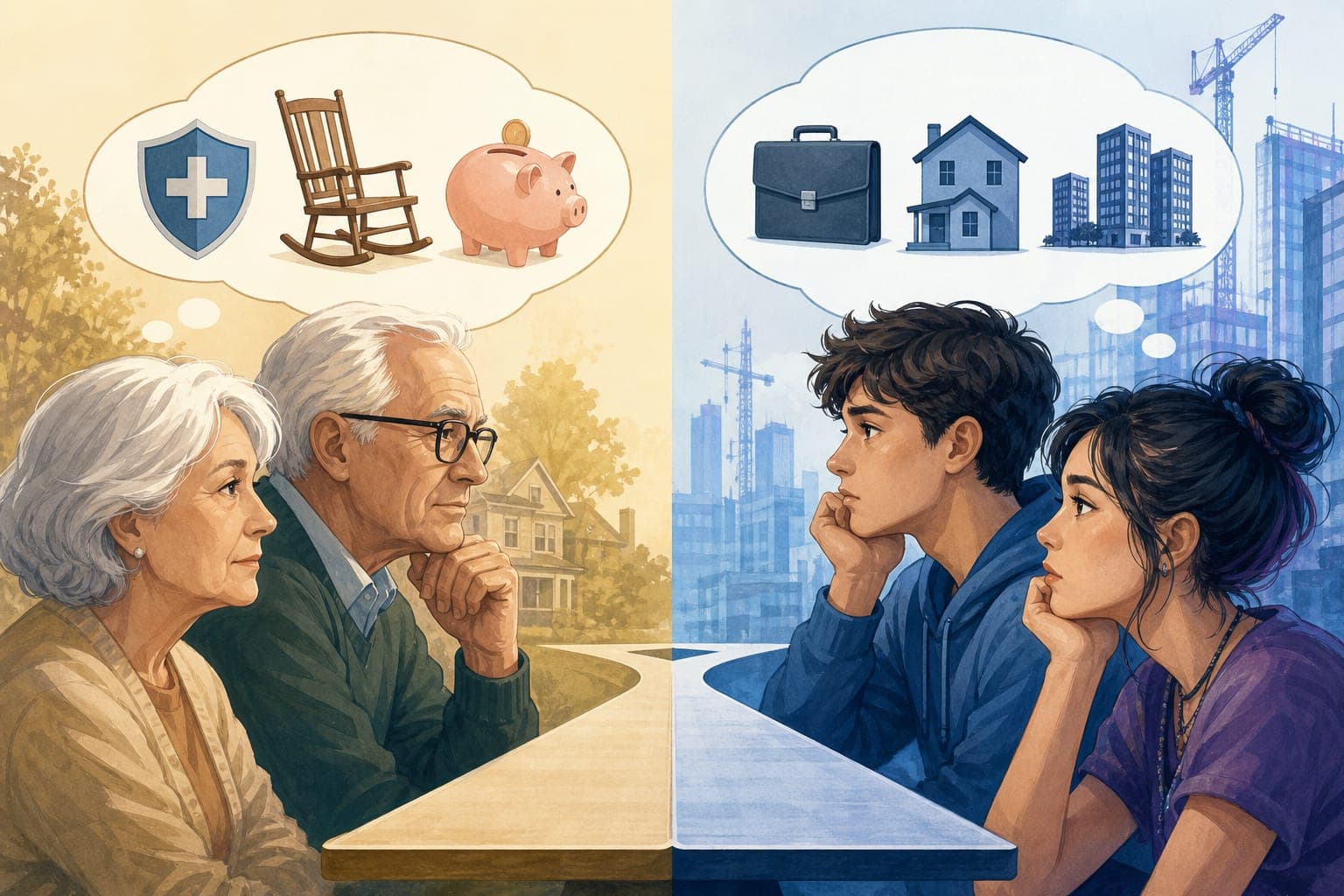
Baby Boomers and Generation Z have developed sharply different economic concerns. According to recent consumer confidence data from The Conference Board, Boomers' confidence has been declining steadily. Meanwhile, Gen Z's confidence has remained relatively elevated. The main reason is clear: people in their twenties and seventies worry about entirely different issues. These differences have been shaped by the distinct economic eras each generation experienced.
Older Americans are primarily concerned about healthcare and retirement security. Tom Arnold, a finance professor at the University of Richmond, has noted this pattern. He explained that retirees worry about how well their benefits will continue performing. Younger people, on the other hand, tend to focus on employment and credit. Their main anxiety is whether sufficient jobs will be available when they need them.
Gen Z faces significant financial challenges that previous generations had not encountered at the same age. Nearly forty percent of Gen Z report that housing affordability is among their top financial worries. About sixty-seven percent of Gen Z adults say they struggle to cover housing costs. Baby Boomers, who hold over fifty percent of all household wealth, experience far less housing pressure. Had younger workers entered the job market during more stable conditions, their outlook might have been different.
Experts suggest that Gen Z may maintain a more optimistic long-term perspective despite current difficulties. Younger workers have more years ahead for the economy to recover and improve. However, obstacles such as inflation, student debt, and a competitive job market cannot be overlooked. If policymakers had addressed housing affordability earlier, generational economic tension could have been reduced. Understanding these generational differences is essential for creating effective economic policies.