Seldom has a scientific discovery so fundamentally challenged established biological assumptions. Researchers have identified a phenomenon they call the 'third state,' a condition that exists beyond the conventional boundaries of life and death. Led by Peter Noble of the University of Alabama at Birmingham and Alex Pozhitkov of the City of Hope National Medical Center, this research demonstrates that cells can acquire unprecedented capabilities after an organism dies. Their findings, published in the journal Physiology, have sparked intense debate within the scientific community.
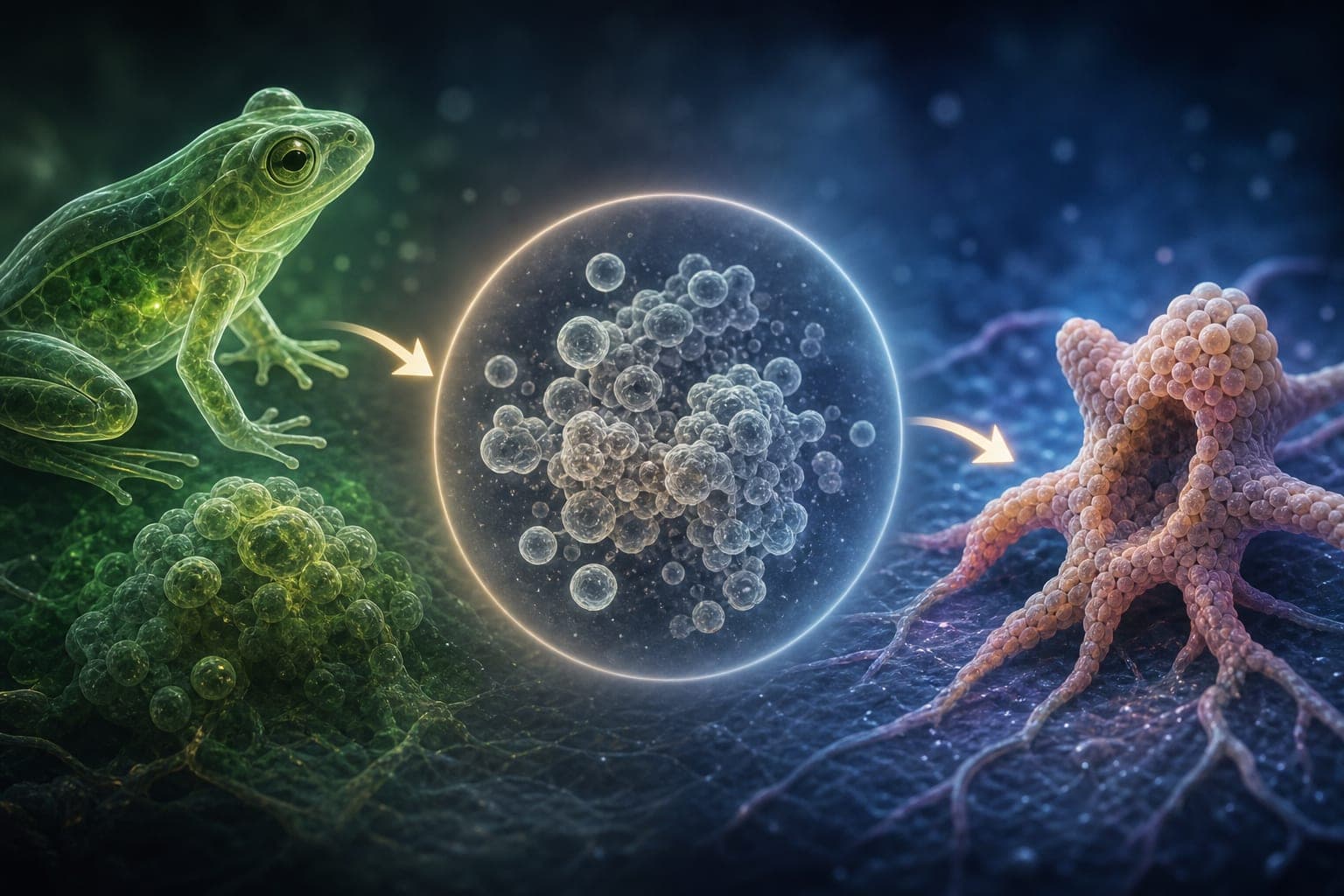
The most compelling evidence for this third state emerged from experiments conducted at Tufts University. Skin cells extracted from deceased frog embryos spontaneously reorganized into multicellular organisms called xenobots. These structures exhibited behaviors far beyond their original biological roles. Notably, the xenobots deployed cilia, tiny hair-like projections, for locomotion rather than their usual function of moving mucus. Such adaptive reorganization was entirely unprecedented in cellular biology.
The phenomenon extends beyond amphibian cells. Scientists at Tufts University and Harvard's Wyss Institute subsequently developed anthrobots from adult human tracheal cells. These microscopic biological robots demonstrated autonomous movement and, remarkably, promoted neuron growth across damaged tissue. Unlike conventional medical interventions, anthrobots require no genetic modification whatsoever. This inherent plasticity of human cells has profound implications for personalized therapeutic applications.
What distinguishes the third state from ordinary post-mortem cellular activity is the emergence of entirely novel functions. Tumors and cell lines that divide indefinitely, such as HeLa cells, are not classified within this category. The third state requires that cells not merely survive but fundamentally transform. Researchers hypothesize that specialized channels in cell membranes function as electrical circuits, guiding this remarkable reorganization. Nevertheless, the underlying mechanisms remain only partially understood.
The practical implications of these findings are considerable. Anthrobots could potentially be engineered to deliver drugs, clear arterial plaque, or repair spinal cord damage. Because they derive from a patient's own tissue, the risk of immune rejection diminishes substantially. Should further research validate these therapeutic possibilities, regenerative medicine may undergo a paradigm shift. The third state thus compels a fundamental reconsideration of what it means to be alive.