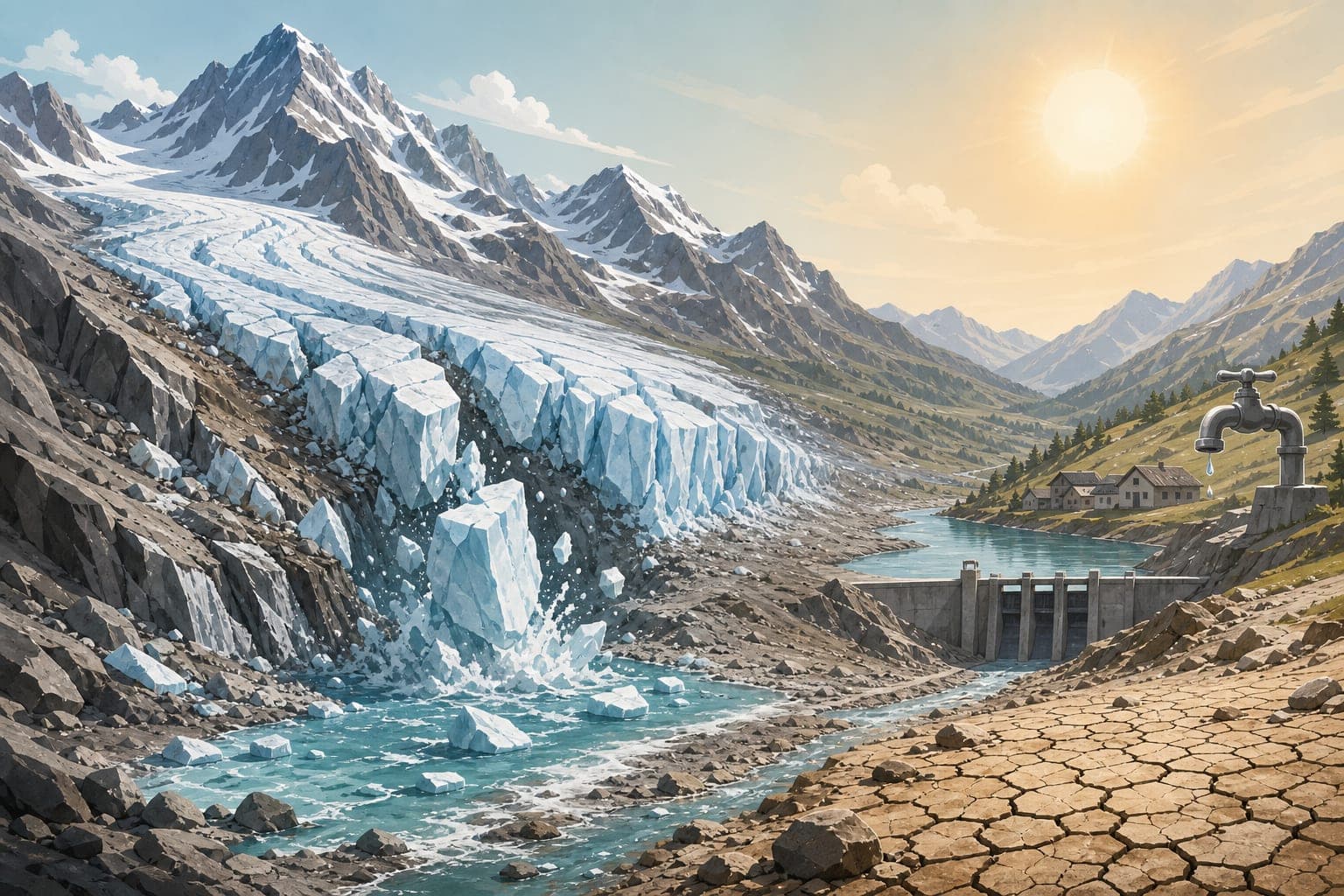
Seldom has the retreat of Alpine glaciers been as precipitous as in 2026. According to a report by the Swiss Glacier Monitoring Network, Switzerland's glaciers lost 5.5% of their ice volume this year. This represents the second-largest annual decline since systematic measurements began. Scientists have described the situation as catastrophic, underscoring the unprecedented pace of glacial deterioration.
A confluence of adverse conditions drove this extraordinary melt. Winter snowfall was well below the long-term average at all elevations. Consequently, the protective snow layer that normally shields glaciers from summer heat was critically thin. Intense heatwaves from May through September then exposed bare ice, which absorbs more solar energy than reflective snow.
The cumulative impact over recent years has been staggering. Between 2022 and 2026, Swiss glaciers shed nearly one-fifth of their total ice. The mean thickness of individual glaciers decreased by 2.5 to 4 metres in a single season. On some glacier tongues, thickness reductions of up to 10 metres were recorded.
Beyond the immediate loss of ice, the implications for water security are profound. Glaciers released approximately 2.2 trillion litres of meltwater between July and September alone. This volume exceeds four times the annual drinking water consumption of all Swiss households. As glaciers diminish, their capacity to replenish rivers and hydropower reservoirs during dry periods erodes substantially.
Furthermore, glacial retreat destabilises mountain terrain by thawing the permafrost that functions as structural adhesive. Last year, the Swiss village of Blatten was devastated when a fragile glacier collapsed, triggering a landslide. Scientists caution that without decisive action on carbon emissions, such events will become increasingly commonplace across the Alps.