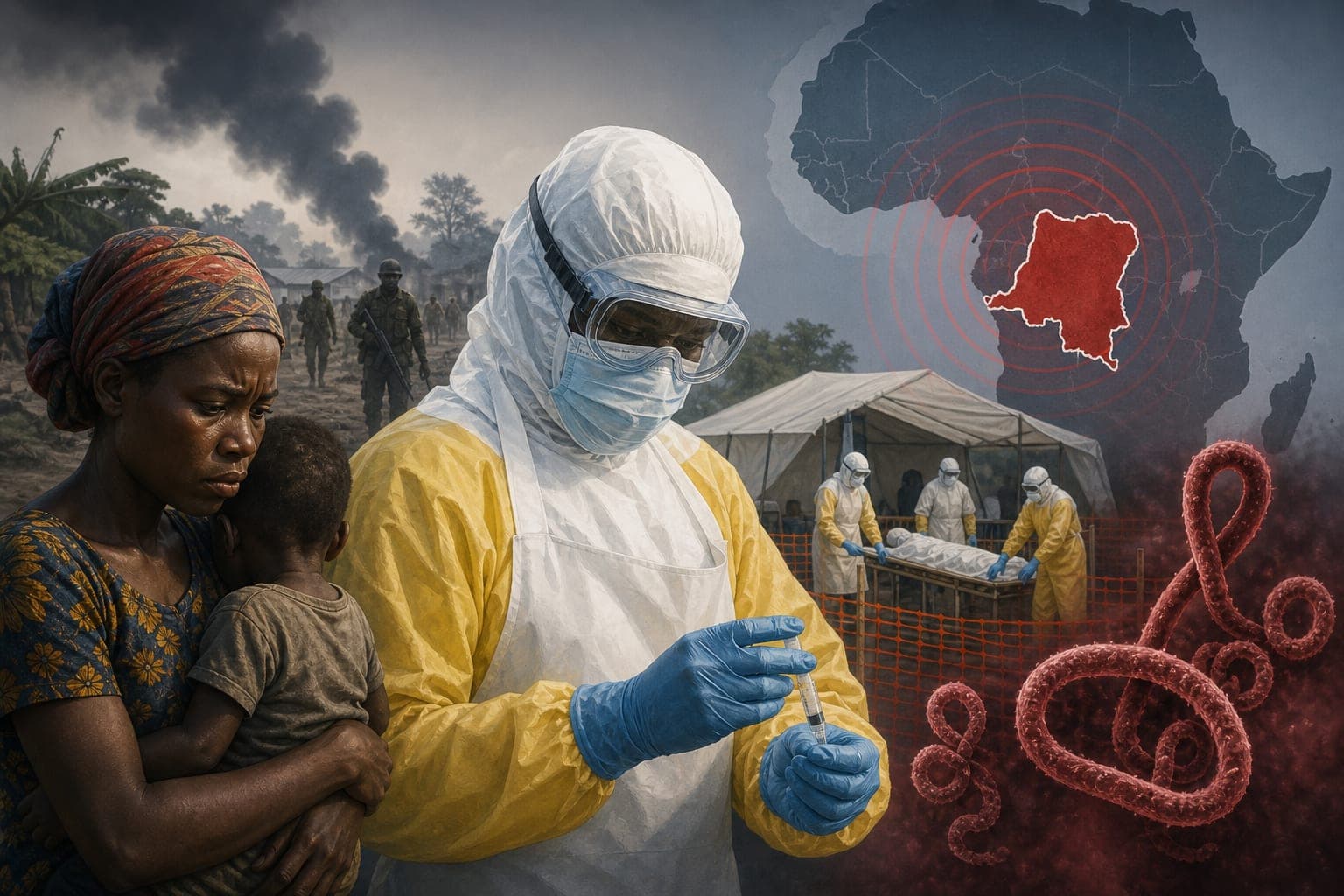
The Ebola outbreak in the Democratic Republic of Congo has reached alarming levels. The WHO chief stated it is already the second-largest Ebola epidemic ever recorded. He warned that it is spreading faster than any previous outbreak. At its current pace, it could eclipse the 2014-2016 West Africa epidemic. That earlier crisis killed more than 11,000 people across several countries.
Officially, 4,449 confirmed cases and 2,061 deaths have been reported across five provinces. About 90 percent of cases are concentrated in the Ituri province. Many deaths are occurring in communities rather than in treatment centres. This indicates that there are unidentified chains of transmission that officials cannot track. The outbreak was declared on 15 May, but it likely began months earlier.
Several factors are making containment of this epidemic extremely difficult. The affected region is experiencing armed conflict, which limits access for health workers. Misinformation about the virus has also made some communities suspicious of medical teams. Furthermore, the Bundibugyo strain responsible has no approved vaccine or specific treatment. Two candidate vaccines have entered early human safety trials.
The WHO and its partners are working to scale up the response significantly. They aim to raise contact tracing from 80 percent to 95 percent. More than 21,000 community health workers have been trained so far. However, officials acknowledge that the outbreak is still outpacing their efforts. If governments invested more in global health systems, future epidemics would be contained faster.