
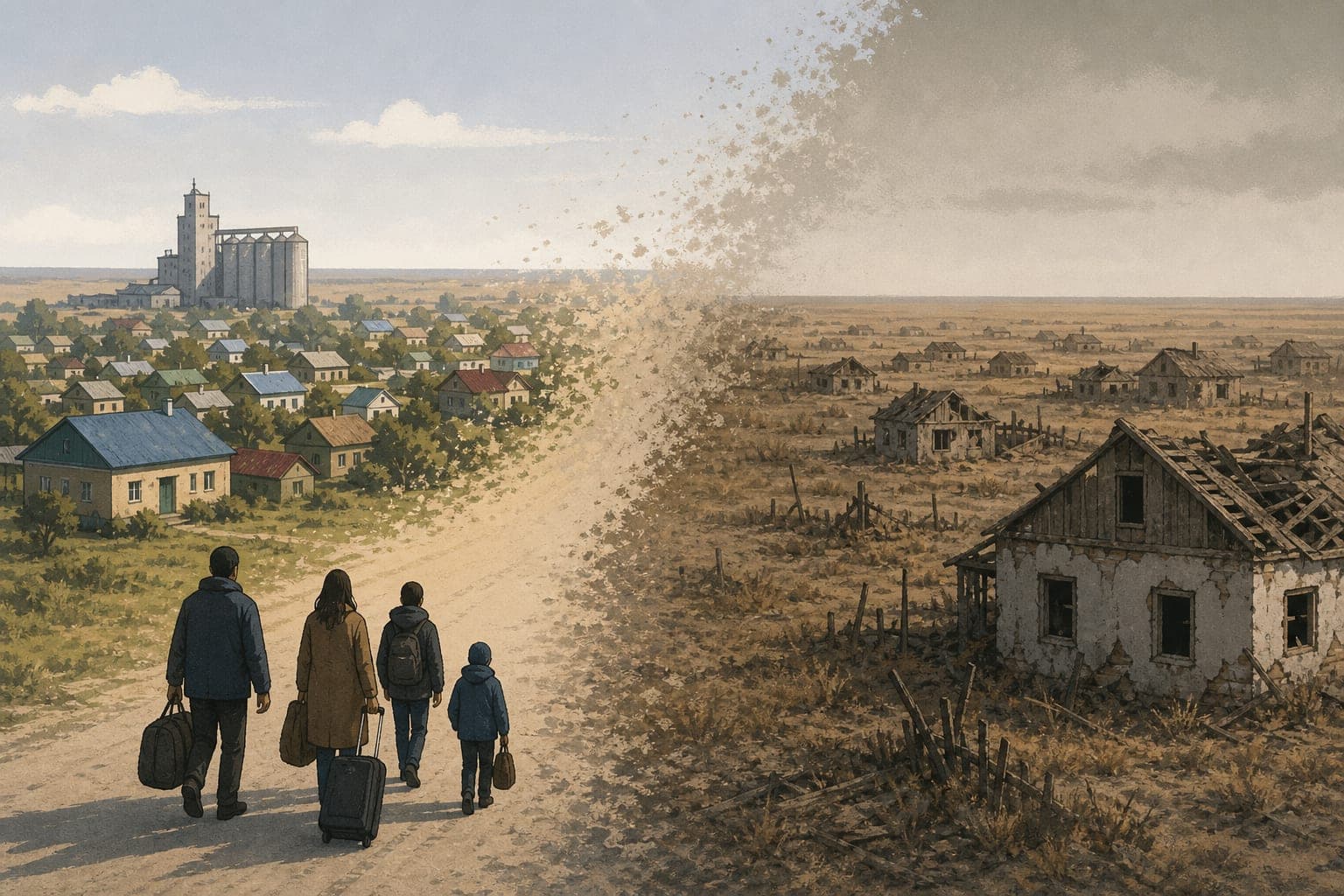
Seldom has the phenomenon of rural depopulation been illustrated so starkly as in Zaozerny, Kazakhstan. This small settlement in northern Kazakhstan once sustained approximately 10,000 residents during the Soviet era. Today, a mere 216 inhabitants remain, surrounded by thousands of vacant dwellings. The village's hospital lies in ruins, and livestock now roam through its abandoned theatre. Such extreme demographic contraction demands scholarly examination.
Zaozerny's decline is inextricably linked to the dissolution of the Soviet Union in 1991. Employment in the area had been sustained by a nearby uranium mine, which provided stable wages. When industrial operations ceased, residents found themselves bereft of viable economic alternatives. Consequently, successive waves of emigration hollowed out the community over three decades. What remains is a settlement where infrastructure far exceeds the needs of its diminished population.
This trajectory is by no means an isolated case within Kazakhstan. According to official data, approximately 1,800 rural settlements have disappeared from the country's administrative map. In 2024 alone, the rural migration deficit reached a record 111,400 people. Northern regions, including Akmola, Kostanay, and Pavlodar, have borne the brunt of this exodus. These provinces have collectively lost over 1.2 million inhabitants since independence.
The government has attempted to stem this demographic haemorrhage through various policy interventions. Financial incentives were introduced to encourage resettlement in underpopulated northern territories. However, these measures have yielded limited success, as many participants subsequently relocated back to cities. Harsh climatic conditions and comparatively low wages rendered rural life untenable for most. More recently, authorities have imposed restrictions on residency permits in major urban centres.
Kazakhstan's urbanisation rate has now reached an unprecedented 63 percent. While cities expand rapidly, the countryside faces an existential predicament. The case of Zaozerny epitomises a broader structural transformation reshaping Central Asian demographics. Whether policymakers can devise sustainable solutions to preserve rural communities remains an open question. Not since the post-independence upheaval has the rural-urban divide been so pronounced.