
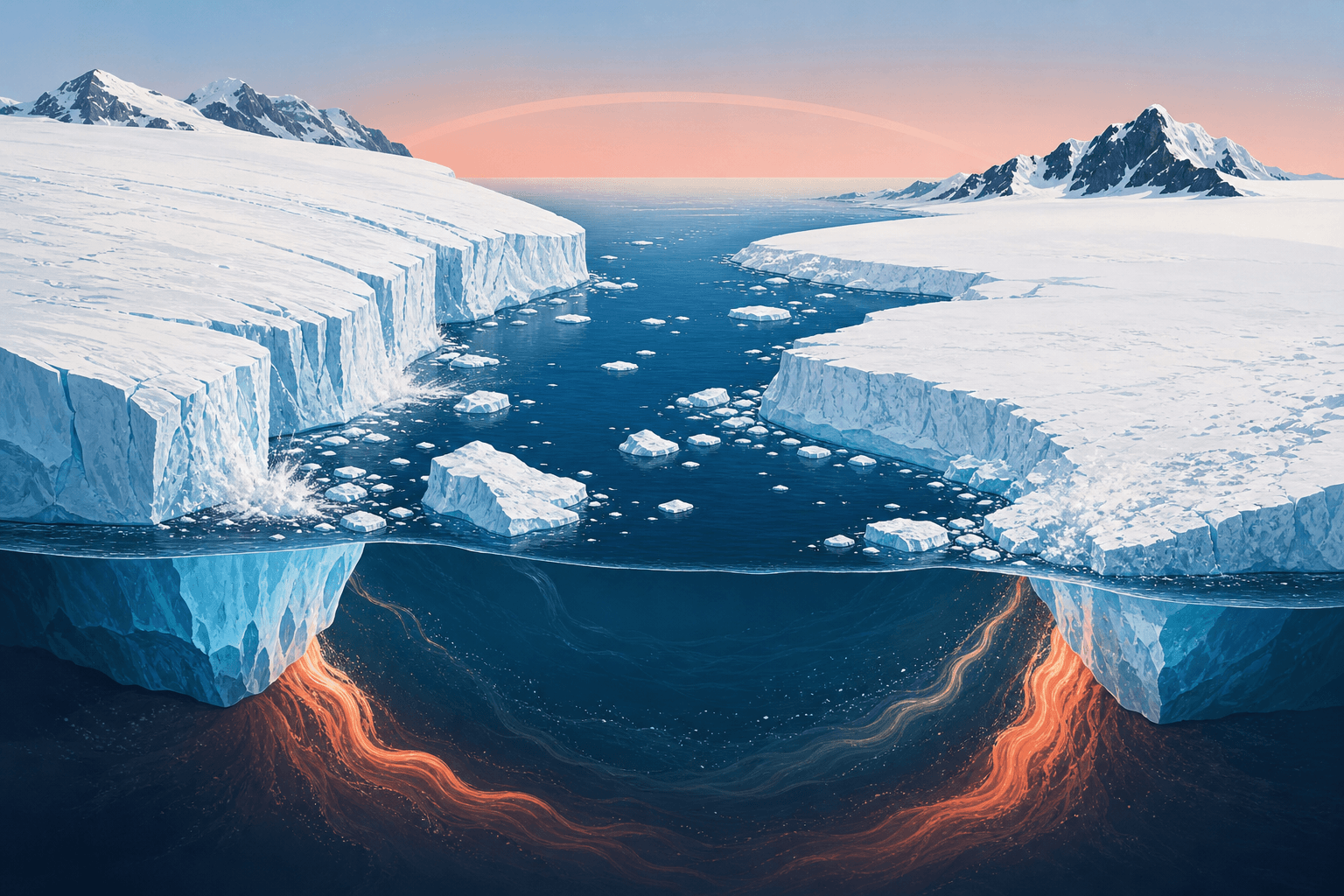
Seldom has a scientific finding so starkly illustrated the magnitude of planetary transformation. A comprehensive study published in the journal Scientific Data has quantified unprecedented ice loss. Approximately 12.5 trillion tons of ice from Greenland and Antarctica have melted since 1979. This volume would be sufficient to cover the continental United States in ice five feet deep. The sheer scale of this depletion underscores the urgency of addressing climate change.
What distinguishes this research is its methodological rigour and extended temporal scope. An international collaboration headed by the European Space Agency conducted the analysis. By incorporating NASA satellite data, researchers charted ice sheet volumes back to the 1970s. The team utilised 45 independent surveys and 27 different satellites to corroborate their findings. Such convergence of independent data sources lends considerable credibility to the conclusions.
The study's temporal analysis reveals a particularly alarming trajectory. Ice sheets remained relatively stable throughout the 1970s, 1980s, and into the 1990s. However, mass loss then accelerated dramatically, intensifying most sharply during the 2010s. Crucially, five-sixths of the melt stems not from warmer air but from ocean waters eroding ice from below. This mechanism of submarine melting has proven far more consequential than surface processes alone.
The ramifications for coastal regions are both profound and far-reaching. The melted ice has already contributed measurably to global sea level rise, affecting millions annually. Co-author Andrew Shepherd noted that changes are tracking decades behind global warming trends. This implies that ice loss will persist for decades, even if greenhouse gas emissions cease immediately. Such inertia in the climate system renders the situation particularly intractable.
Independent scientists have endorsed the study's sobering conclusions. University of Colorado ice scientist Ted Scambos observed that society possesses the knowledge but lacks the prudence to act. The Jakobshavn glacier in Greenland is now retreating at up to 50 metres per day. These findings compel policymakers to confront the irreversible consequences of inaction. Ultimately, the trajectory of polar ice loss will shape civilisation's relationship with coastlines for centuries.