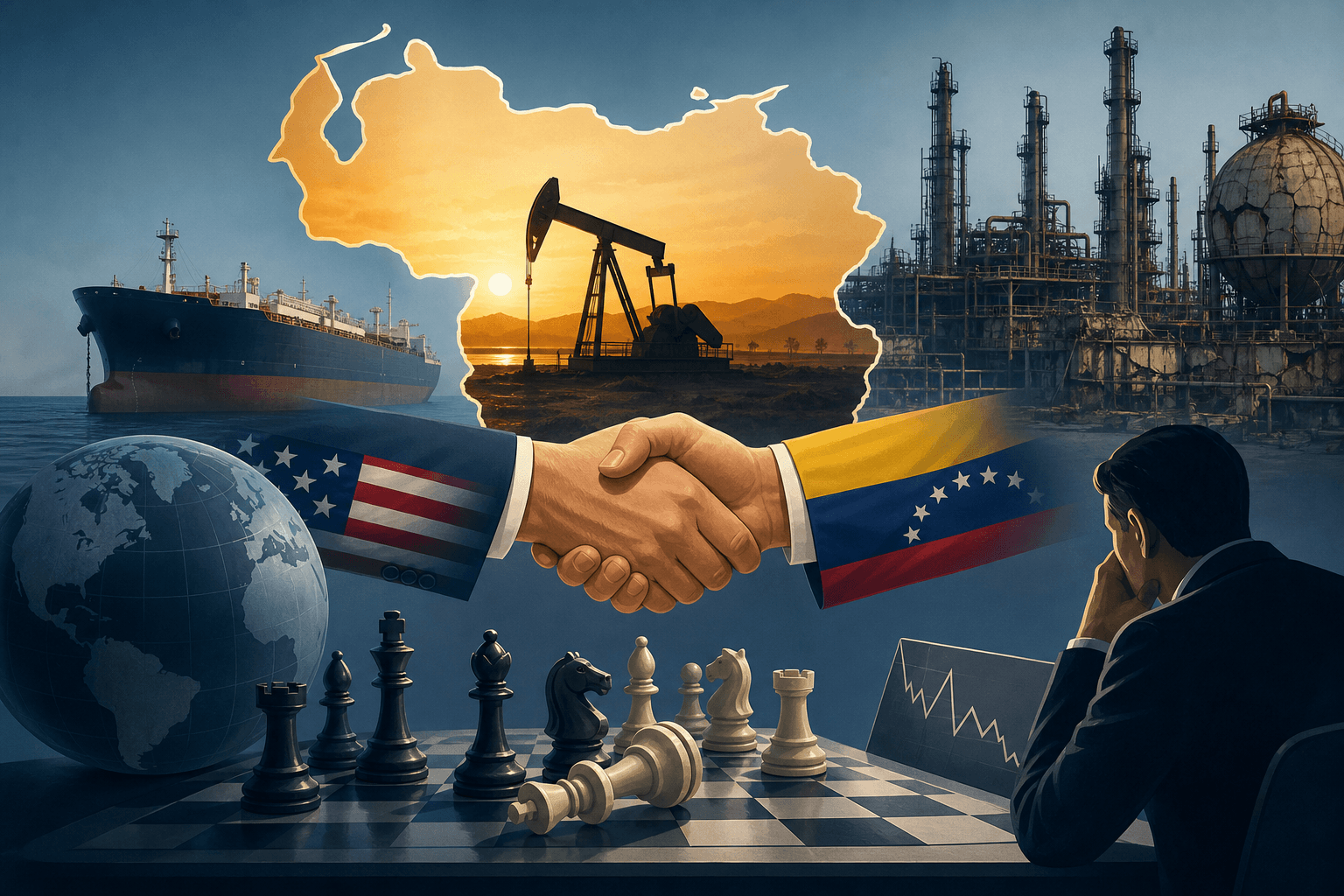
Seldom has a single energy announcement generated such sweeping geopolitical and market implications. President Trump declared on August 28 that the United States had secured majority control of over 65 billion barrels of proven Venezuelan oil reserves. He characterized the unprecedented agreement as the biggest oil deal in world history. The deal reportedly involves a 100-year lease on 17 strategic oil fields through a public-private partnership.
Under the terms disclosed thus far, the U.S. holds a 55% effective stake in a newly formed joint venture. This entity would become the second-largest corporate holder of proven reserves globally, trailing only Saudi Aramco. Venezuela's acting President Delcy Rodríguez projected $209 billion in tax revenue and $100 billion in private investment. She described the arrangement as a catalyst for the reconstruction of her nation's battered economy.
Nevertheless, considerable ambiguity surrounds the deal's operational viability. No formal text has been released, and the two countries characterize the agreement in markedly different terms. Experts have repeatedly cautioned that Venezuela's dilapidated oil infrastructure will require years and billions of dollars to rehabilitate. Production has plummeted from 3.5 million barrels per day in the late 1990s to roughly 800,000 barrels currently.
The strategic rationale is partly driven by escalating crude prices amid the ongoing conflict with Iran. U.S. gas prices have surged approximately 27% year over year, reaching around $4.09 per gallon. Transit through the Strait of Hormuz has declined drastically, constraining global supply chains. Trump has framed the Venezuelan deal as a mechanism to alleviate these mounting domestic pressures.
Industry stakeholders remain cautious despite the deal's enormous theoretical upside. Major oil companies have expressed reluctance to commit capital without greater regulatory and political stability. ExxonMobil's CEO notably stated that re-entering Venezuela would require significant changes from current conditions. Whether this ambitious undertaking yields tangible returns hinges on execution, sustained investment, and geopolitical durability.