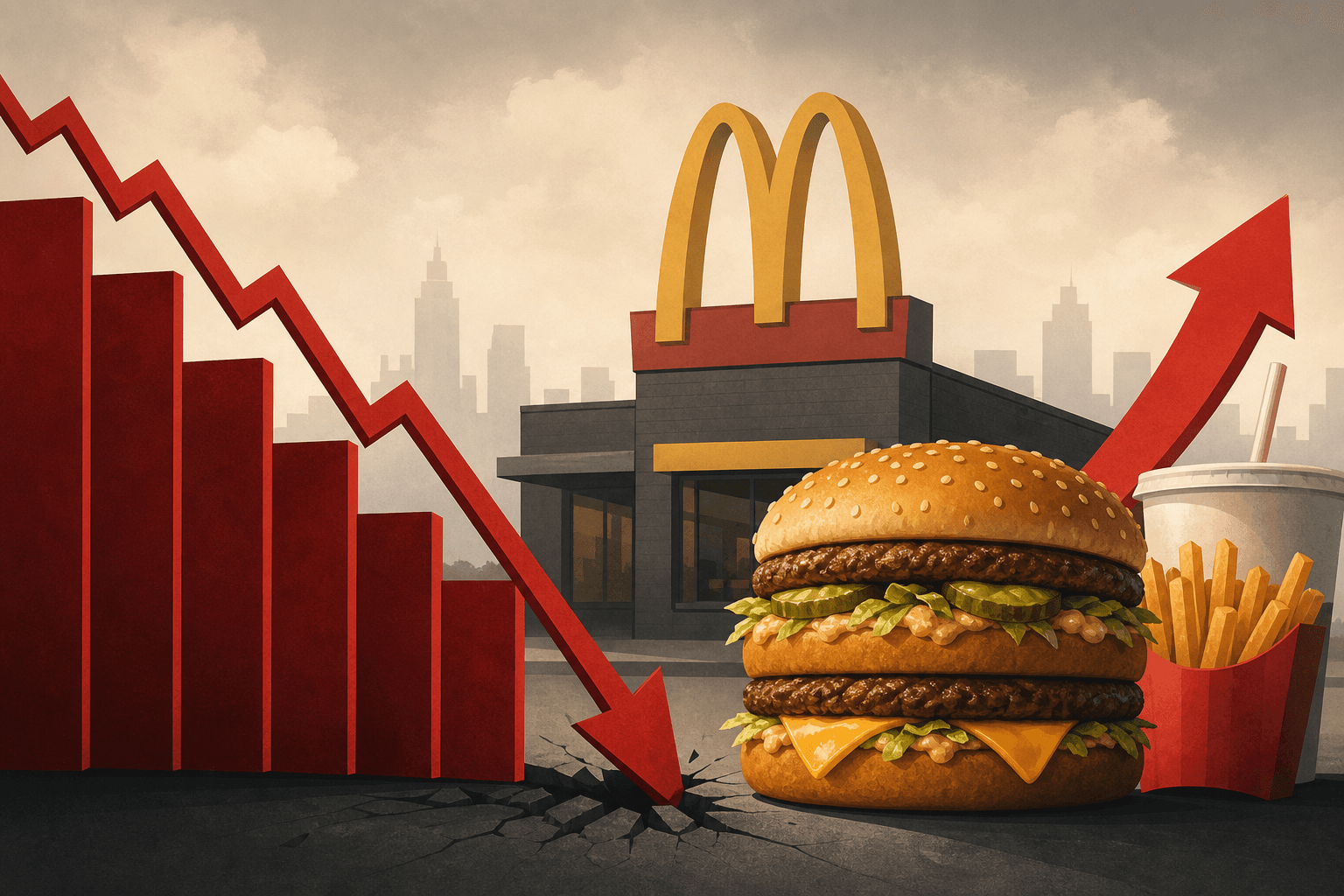
Seldom has a blue-chip restaurant stock experienced such a precipitous decline driven primarily by consumer sentiment. McDonald's Corporation shares have plummeted nearly 31% from their February high. The sell-off has placed the stock on track for its worst annual return since 2002. At the heart of this downturn lies a fundamental tension between corporate pricing strategy and consumer affordability. Cost-conscious diners increasingly perceive the chain's menu as overpriced, eroding foot traffic across domestic locations.
The magnitude of this erosion became evident during the company's recent Investor Day presentation. Management guided for slightly negative U.S. sales in the current quarter. Second-quarter same-store sales grew a mere 0.8%, the slowest pace in over a year. Domestic guest counts have declined as persistent inflation and elevated interest rates constrain household budgets. Analysts noted that roughly a third of franchisees had not adhered to corporate pricing recommendations.
The phenomenon known as Big Mac inflation encapsulates the broader affordability crisis confronting fast-food consumers. The Economist's Big Mac Index reveals that U.S. sandwich prices rose approximately 23% between 2019 and late 2025. McDonald's had initially raised menu prices to offset surging ingredient costs, higher wages, and escalating fuel expenses. However, the cumulative effect has alienated the very demographic upon which the brand built its identity. What was once synonymous with accessible dining now carries connotations of diminished value.
In response, management has unveiled its turnaround initiative dubbed McDonald's NEXT. The strategy encompasses restaurant renovations, menu innovation, digital transformation, and operational efficiency improvements. Financial targets include expanding operating margins to the low-to-mid 50% range by 2030. The company plans to provide approximately 8.5 billion dollars in partnering support through 2036. Nevertheless, investors remain skeptical that these measures will meaningfully reinvigorate guest traffic in the near term.
The implications of McDonald's predicament extend well beyond a single corporation's balance sheet. Should the world's largest fast-food chain prove unable to sustain its pricing power, it would signal a profound shift. Competitors and industry stakeholders are monitoring whether this consumer backlash represents a temporary correction or structural change. For investors, the critical question remains whether brand equity alone can justify current valuations. Not until tangible evidence of a traffic recovery emerges will market confidence be fully restored.