
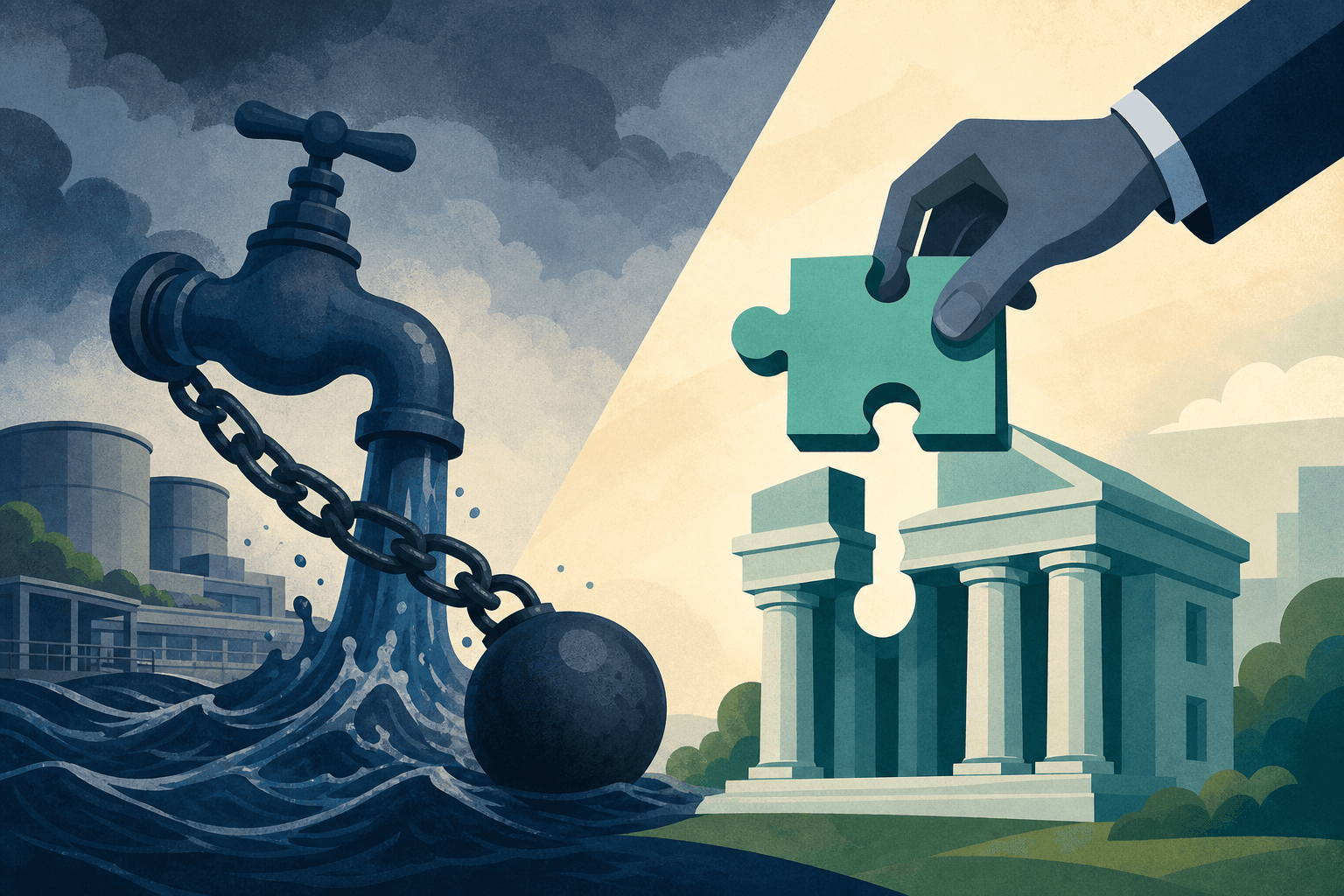
Seldom has a privatised utility provoked such fierce debate over the boundaries between state and market. Thames Water, which serves sixteen million customers across London and southeast England, now carries approximately £19 billion in debt. A cross-party parliamentary committee recently urged the government to place the company under temporary state control. The committee further recommended blocking a creditor-led rescue bid worth £10 billion. This escalating crisis has become a defining test case for how essential infrastructure should be governed.
The company was privatised in 1989 with no debt whatsoever. Over the following decades, successive owners pursued aggressive financial engineering, extracting billions in dividends. Since privatisation, Thames Water has distributed over £10 billion to shareholders while its infrastructure deteriorated. Critics argue that this model prioritised shareholder returns over capital investment, creating the structural insolvency now threatening the firm.
A consortium of creditors known as London & Valley Water is vying to seize control through a rescue deal. However, the parliamentary committee warned that these bidders care more about extracting immediate value than serving customers. Meanwhile, Prime Minister Andy Burnham initially pledged to nationalise the company during his campaign in July 2026. Having assumed office, he has since retreated, suggesting elected mayors could merely oversee private water companies instead.
The Guardian's editorial contends that oversight without genuine ownership amounts to a sleight of hand. Under a special administration regime, shareholders would be wiped out and creditors would accept significant losses. Proponents of nationalisation argue that returning the utility to public hands could end the cycle of extraction and failure. Opponents counter that such a move would prove prohibitively costly and legally complex for taxpayers.
This controversy transcends a single company's balance sheet. England and Wales remain the only countries with fully privatised water and sewerage systems. Publicly owned Scottish Water has reportedly invested thirty-five percent more than its English counterparts in comparable infrastructure. Whether Burnham ultimately intervenes may reshape investor confidence across the entire regulated utilities sector for decades to come.