
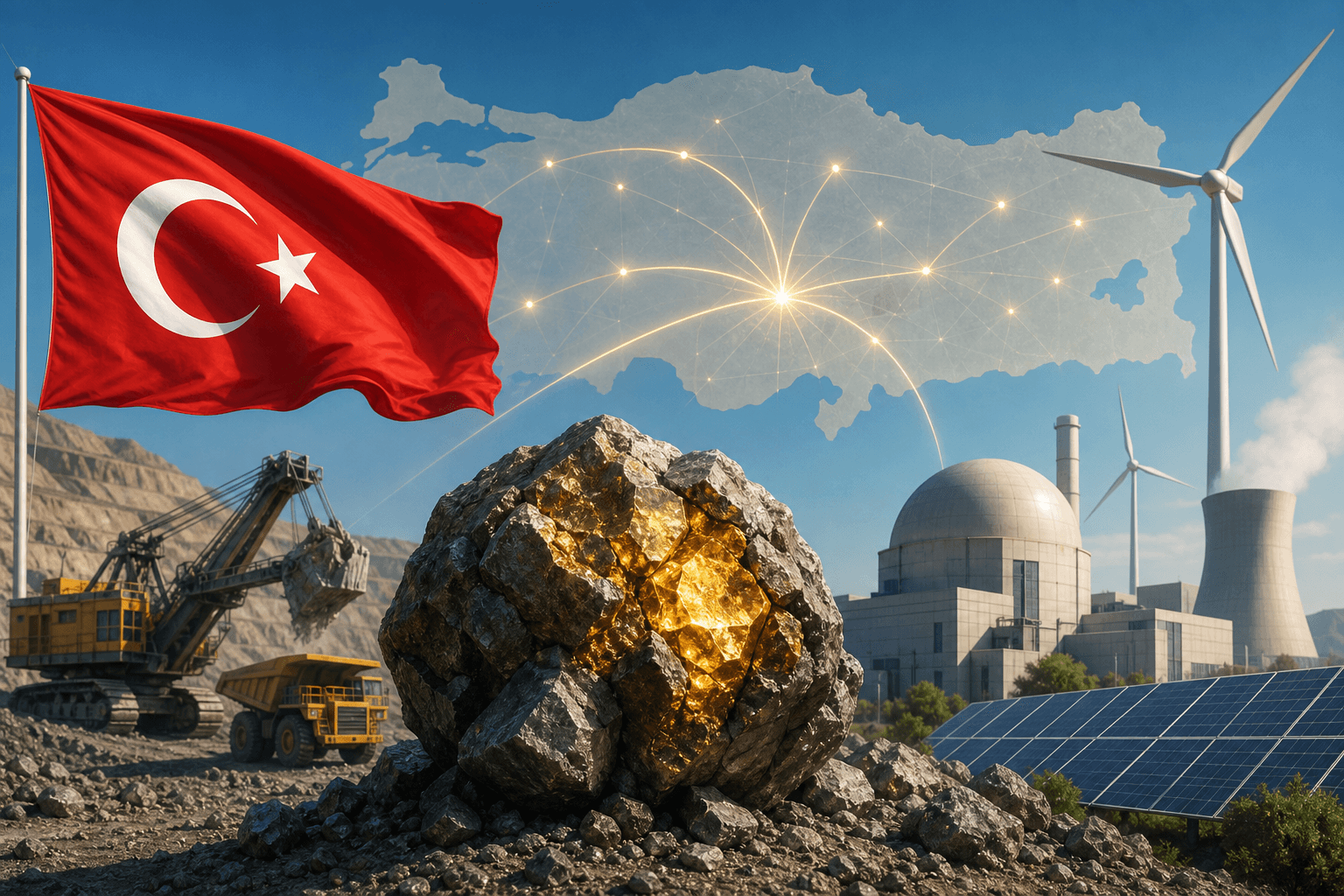
Seldom has a single mineral resource held such transformative potential for a nation's energy trajectory. Turkey has officially commenced operations to develop its substantial thorium reserves. The government recently authorized the expropriation of over two million square meters in Eskişehir province. State-owned mining company Eti Maden will coordinate the extraction of this strategically vital resource. This initiative signals a pivotal shift in Turkey's long-term energy and economic policy.
The sheer magnitude of Turkey's thorium deposits warrants considerable attention from global energy analysts. Reserves in the Eskişehir Sivrihisar region alone are estimated at approximately 380,000 tons. Furthermore, broader geological surveys indicate a total national thorium asset of roughly 540,000 tons. According to physicists, one ton of thorium can generate energy equivalent to 3.5 million tons of coal. Such extraordinary energy density positions thorium as a compelling alternative to conventional fossil fuels.
What distinguishes thorium from traditional nuclear fuels is its superior efficiency and reduced environmental footprint. Thorium-based reactors produce substantially less long-lived radioactive waste than uranium-fueled systems. The element is also three to four times more abundant in the Earth's crust than uranium. Moreover, thorium's low weaponization potential mitigates proliferation concerns that have long plagued nuclear energy discourse. These inherent advantages have prompted renewed global interest in thorium fuel cycles.
Turkey has already begun forging international partnerships to accelerate its thorium ambitions. Its nuclear research agency signed a memorandum of understanding with Denmark-based Copenhagen Atomics. This collaboration focuses on producing thorium compounds that meet nuclear fuel standards for molten salt reactors. Copenhagen Atomics targets its first test reactors by 2028, with commercial deployment anticipated in the 2030s. Turkey aspires not merely to domestic utilization but to becoming an international supplier of nuclear fuel materials.
Nevertheless, substantial technical and economic hurdles remain before thorium's potential can be fully realized. No commercial-scale power plant currently operates on thorium fuel anywhere in the world. Experts emphasize that national research and development infrastructure must be completed expeditiously. The estimated raw material value of the Eskişehir reserves alone approaches 28 billion dollars. Should Turkey successfully navigate these challenges, it could secure energy independence for approximately 4,000 years.