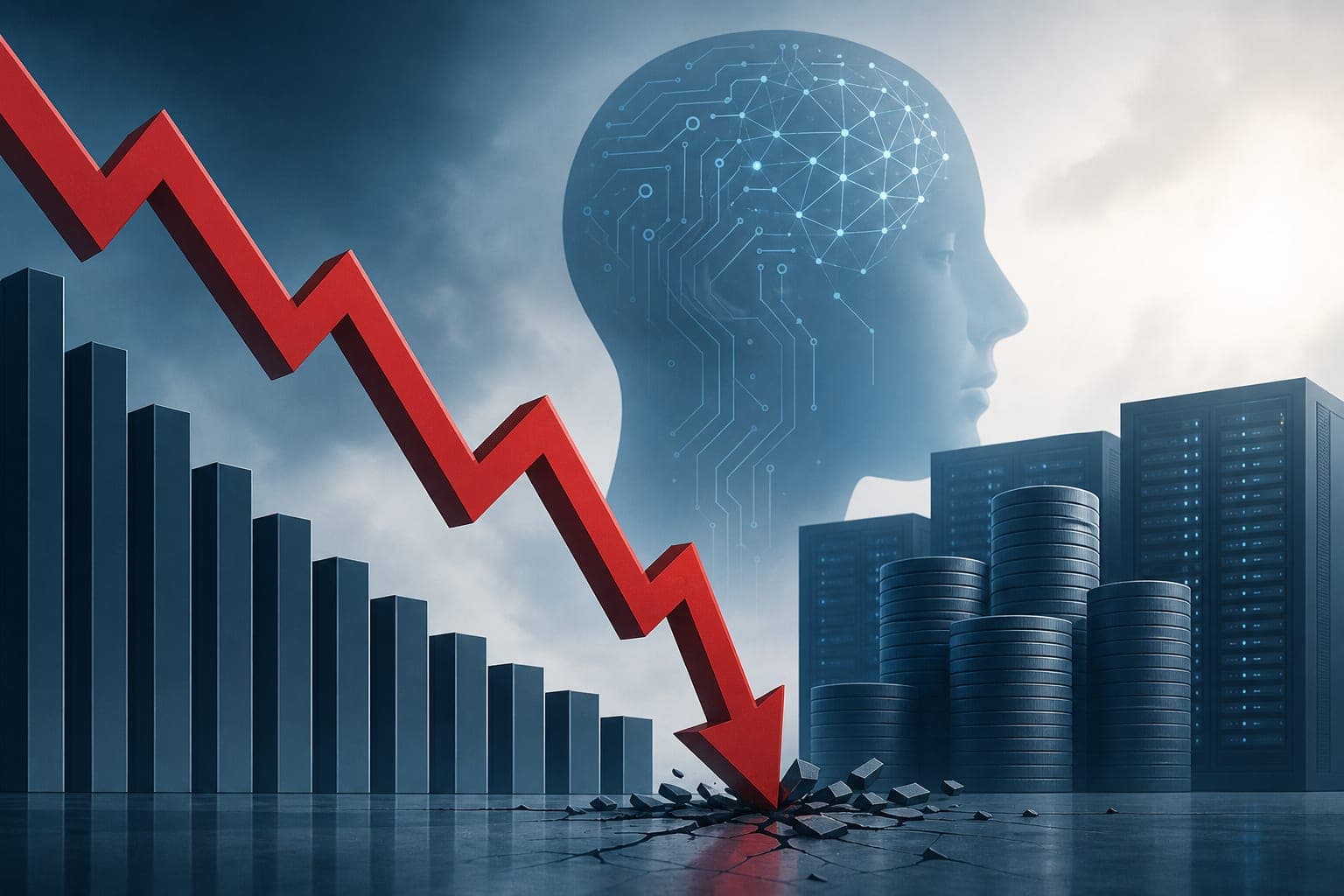
Seldom has Wall Street witnessed such a dramatic reassessment of an investment thesis. The Nasdaq Composite fell 5.3 percent in October 2026, marking its worst monthly performance since March 2025. More than two trillion dollars in Nasdaq-100 market value evaporated during the month. The selloff was driven not by broad economic weakness but by mounting skepticism over AI capital expenditure returns.
At the epicenter of the turmoil were the so-called hyperscalers. Alphabet's shares plunged more than twelve percent in a single session, erasing roughly five hundred billion dollars in market value. The company reported negative free cash flow of approximately nine billion dollars for the quarter. Amazon similarly disclosed negative free cash flow exceeding forty-two billion dollars while maintaining its staggering annual capital expenditure forecast.
The underlying concern is straightforward yet profound. AI-related capital expenditures are approaching one trillion dollars annually, creating unprecedented opportunities for chipmakers. However, investors are growing increasingly dubious about the sustainability of this spending trajectory. The gap between what companies are committing and what they are generating in revenue has become impossible to overlook.
Historical precedent offers a sobering perspective for those dismissing these concerns. Research indicates that companies aggressively expanding their balance sheets have consistently underperformed more conservative peers. The current AI buildout surpasses even the railroad construction boom of the 1860s in relative magnitude. Critics have drawn parallels to the dot-com era, noting circular financing arrangements among major technology firms.
Nevertheless, the broader market has demonstrated remarkable resilience amid this turbulence. The S&P 500 declined merely one percent in October, as defensive sectors absorbed the rotation away from technology. Eight of eleven S&P 500 sectors posted gains during the month. The fundamental question confronting investors is not whether AI is transformative but whether current valuations adequately reflect the inherent risks.