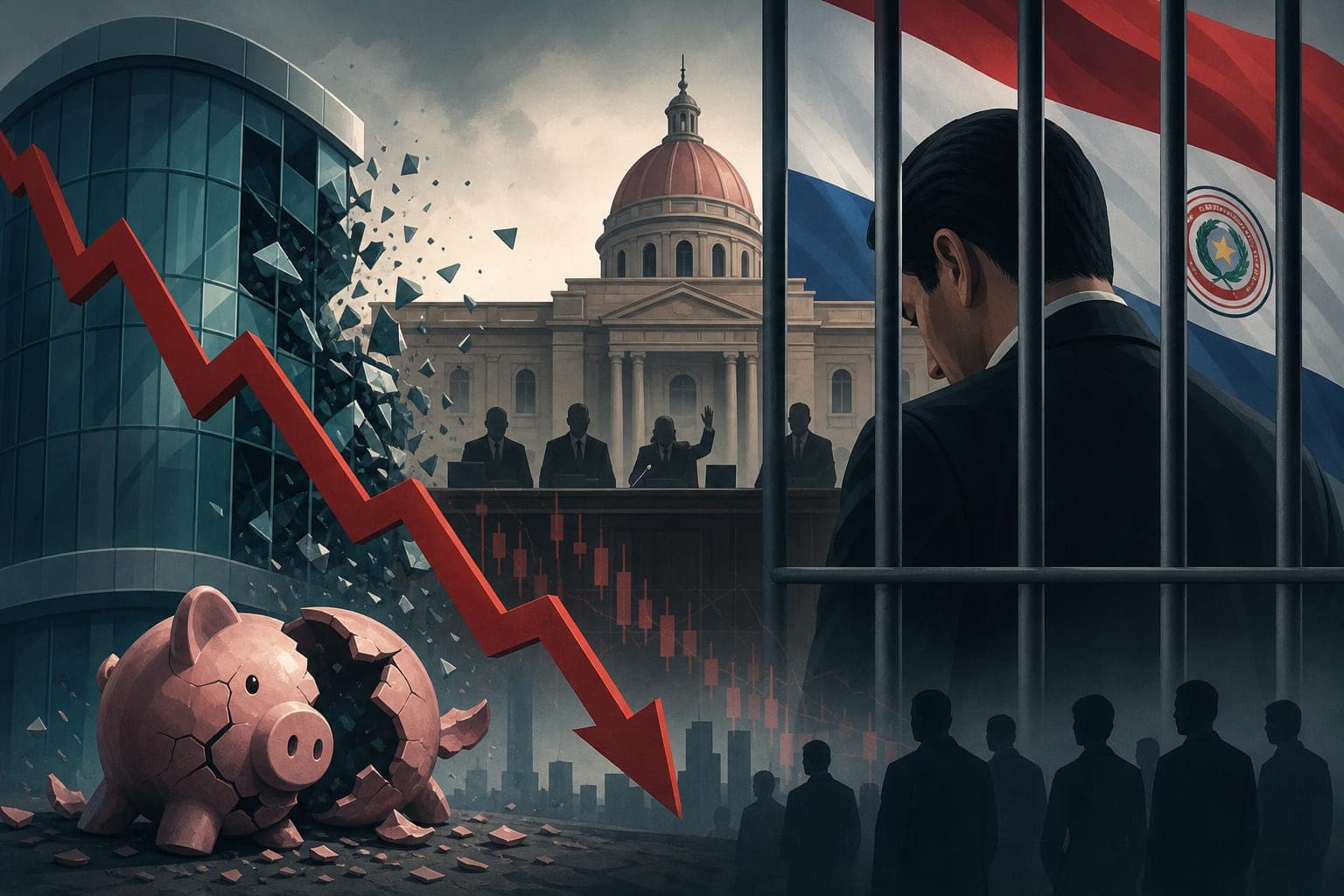
Seldom has a banking failure so swiftly precipitated the downfall of a sitting head of state. Paraguay's President Santiago Peña was unanimously impeached and placed under house arrest on November 6, 2026. The crisis was triggered by the collapse of Ueno Bank, a digital lender that had amassed nearly 2.94 million customers. That figure represented approximately 63 percent of Paraguay's adult population. The bank's insolvency froze savings for millions, igniting widespread protests across the country.
Impeachment charges allege that Peña committed conflicts of interest and manipulated regulatory oversight. Lawmakers further accused him of diverting pension funds and orchestrating an institutional cover-up involving the central bank. Peña had previously held a stake in Ueno's parent holding company. Moreover, he had appointed a former Ueno executive to lead Paraguay's central bank. These entanglements underscore the systemic risks inherent in the nexus between political power and private capital.
The ramifications extend well beyond Asunción's political corridors. Paraguay's sovereign bonds have depreciated, and the guaraní has weakened amid the turmoil. International investors, who had been drawn by the country's investment-grade credit rating from Moody's in 2024, are now reassessing risk. S&P Global has suggested the nation's economic growth should remain resilient due to the failure's limited scope. Nevertheless, the episode has undeniably tarnished Paraguay's credibility with global capital markets.
Vice President Pedro Alliana was sworn in as interim president immediately following the impeachment. The new administration faces the formidable task of restoring depositor confidence and stabilizing the financial system. Congress has approved a mechanism to reimburse Ueno depositors, though recovery of public funds will take considerably longer. Brazil, Paraguay's largest economic partner, has expressed concern about avoiding social instability and broader regional contagion.
This crisis serves as a cautionary tale for stakeholders in emerging market economies. It reveals how inadequate regulatory independence can amplify systemic vulnerabilities within the financial sector. Investors will scrutinize not merely the resolution of Ueno's liabilities but also what this episode discloses about institutional safeguards. For Paraguay, rebuilding its reputation as a stable investment destination will require sustained governance reforms and genuine regulatory autonomy.