
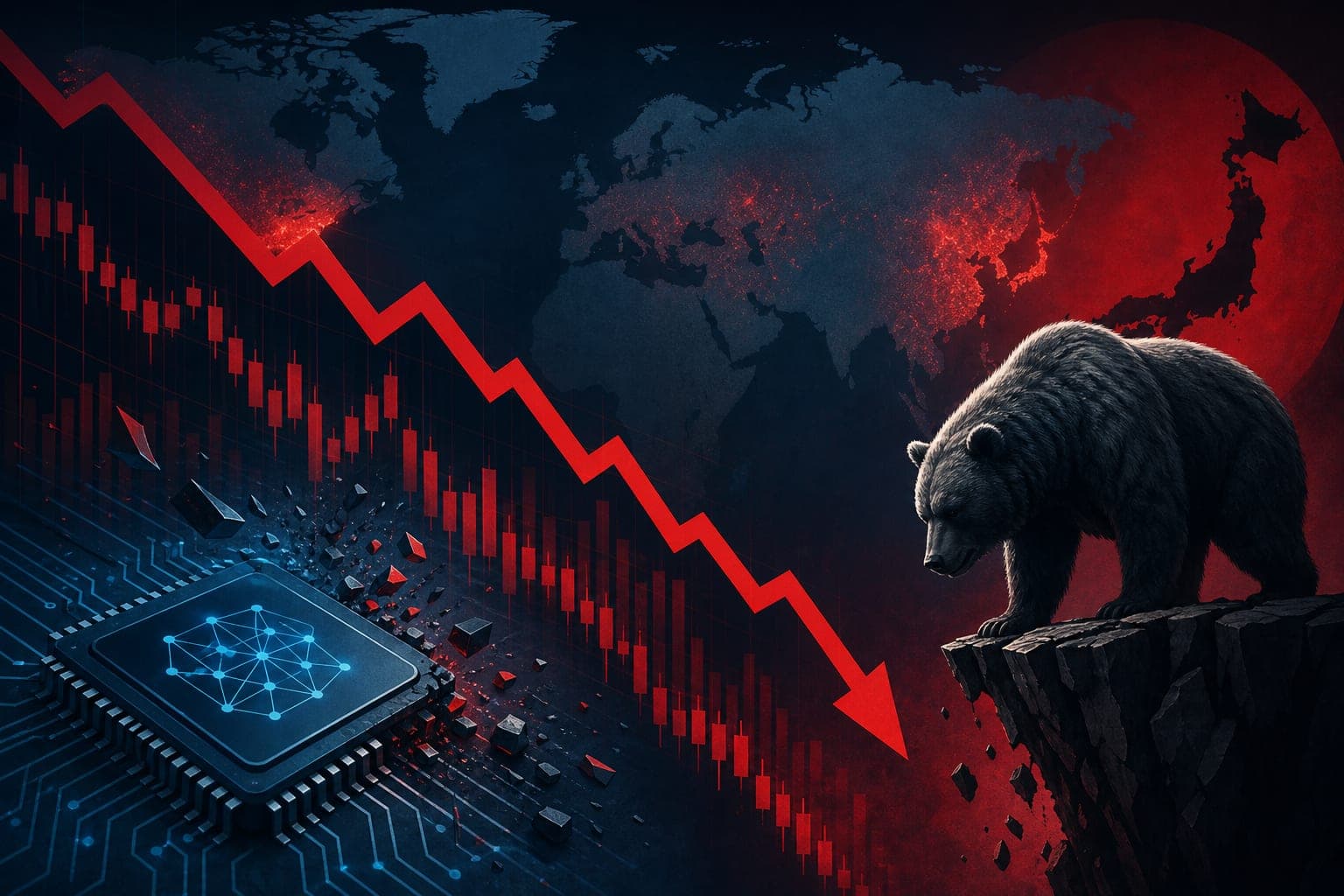
Seldom has a single trading session inflicted such widespread damage across global equity markets. On November 5, 2026, the Nasdaq Composite plummeted 5.5%, officially entering correction territory. The tech-heavy index closed more than 10% below its October record high. Meanwhile, Japan's Nikkei 225 slid nearly 6%, crossing the threshold into a bear market. The contagion spread rapidly, rattling bourses from Seoul to Frankfurt.
At the epicenter of this upheaval lay a dramatic reassessment of artificial intelligence valuations. The Philadelphia Semiconductor Index plunged approximately 12%, recording its steepest single-day decline since March 2020. The so-called Magnificent Seven technology stocks alone shed roughly one trillion dollars in market capitalization. Investors had begun questioning whether enormous capital expenditures on AI infrastructure would yield adequate returns.
The Cboe Volatility Index, Wall Street's widely monitored fear gauge, surged nearly 70% to close at 28.18. This represented the third-largest single-day percentage gain in the index's history since 1990. Such a precipitous spike underscored the abruptness with which market sentiment had shifted from complacency to panic. Notably, the VIX had sat near its calmest level in weeks just hours before the rout began.
The sell-off's reverberations extended well beyond technology. The S&P 500 fell 4.4%, while the Dow Jones Industrial Average shed 1,800 points. South Korea's Kospi index declined so sharply that circuit breakers were triggered. European markets likewise opened deeply in the red, with the Stoxx 600 heading for its worst session since March. Crude oil markets exhibited heightened volatility as well.
Historical precedent offers cautious grounds for optimism amid the turbulence. Following previous corrections, the Nasdaq has averaged gains of roughly 9% within three months. Moreover, the S&P 500 was higher one month later in nine of the last ten major VIX spikes. Nevertheless, structural uncertainties surrounding AI spending and regulatory headwinds may distinguish this episode from earlier recoveries. Prudent portfolio diversification remains paramount for navigating such volatile conditions.