
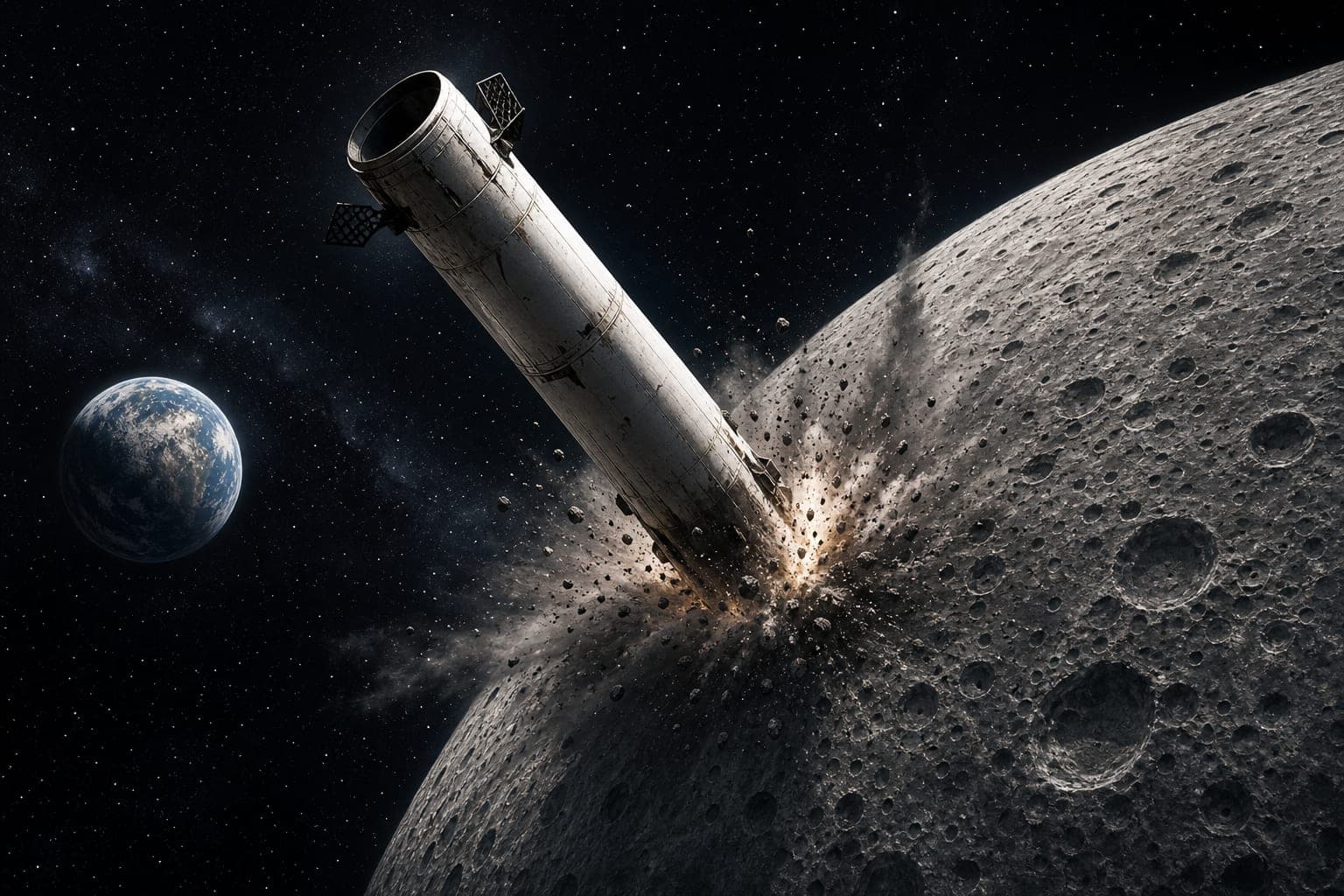
An abandoned SpaceX Falcon 9 rocket stage is heading toward the Moon. The object, which was launched in January 2025, has been drifting for over a year. It was pulled into the Moon's gravitational field after completing its mission. Astronomers predict it will strike near Einstein Crater on August 5, 2026. The impact is expected to create a crater up to thirty metres wide.
The rocket stage had been used to carry two private lunar landers into space. After completing that task, the upper stage was left adrift in orbit. Its movement has been difficult to track because of solar radiation pressure. An amateur astronomer first identified the object and calculated its collision course. Scientists now plan to observe the crash and study the resulting debris.
Although this particular impact poses no immediate threat, experts argue it highlights a growing problem. Space debris around Earth has already reached alarming levels. An estimated one hundred and forty million pieces of debris now orbit our planet. As more nations and private companies pursue lunar missions, the Moon could face similar contamination. Had regulations been established earlier, this situation might have been avoided.
International law provides some guidance, but significant gaps remain. The 1967 Outer Space Treaty holds nations liable for damage caused by their space objects. However, the treaty does not specifically address debris on the Moon's surface. The European Space Agency has adopted a zero debris approach for future missions. Without stronger accountability measures, the problem of space junk will only worsen.