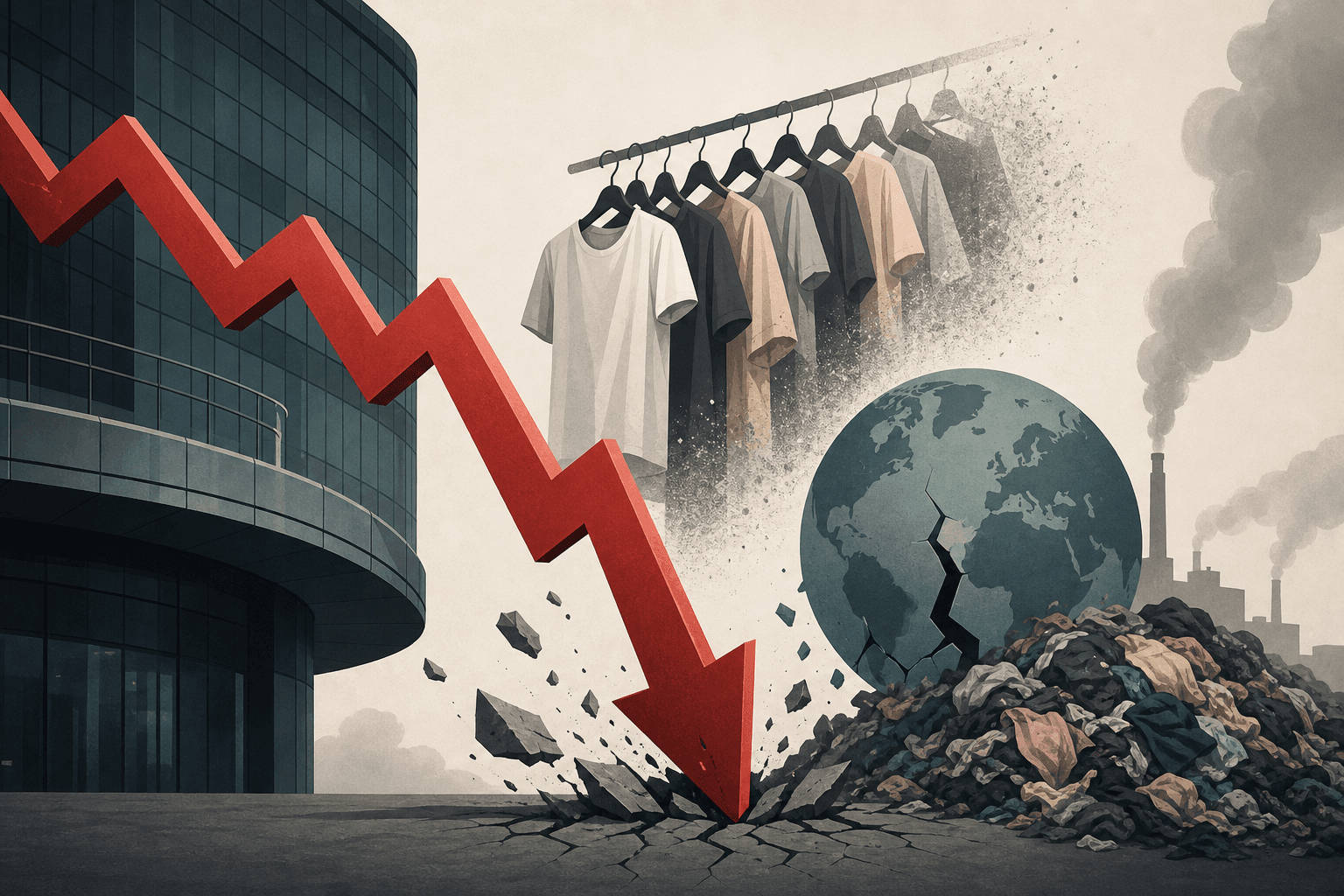
Seldom has a market debut so starkly illustrated a company's deteriorating fortunes. Shein's shares fell 9% on their first day of Hong Kong trading on September 1. The IPO raised approximately $1.74 billion, valuing the fast-fashion retailer at around $26.5 billion. That figure represents a precipitous decline from its $100 billion private-market valuation in 2022.
The compressed valuation reflects mounting headwinds that have fundamentally undermined Shein's business model. Revenue growth decelerated sharply to 8% in 2025, down from 20.7% the prior year. In the first quarter of 2026, the company posted a $99 million net loss. This reversal followed a $395 million profit in the corresponding period of 2025.
Central to this downturn is the elimination of the U.S. de minimis tariff exemption. This provision had previously allowed packages valued under $800 to enter the country duty-free. Shein's U.S. revenue declined 14.3% in the first quarter of 2026. The European Union has imposed its own import levy, compounding the regulatory burden further.
Beyond trade policy, Shein faces scrutiny over its environmental footprint and labour practices. The company ranked as the top polluter among fast-fashion retailers in recent sustainability assessments. Its carbon emissions have risen faster than its revenue, casting doubt on its net-zero pledges. Allegations of forced labour in its supply chain have drawn condemnation from lawmakers internationally.
According to its prospectus, Shein intends to allocate 80% of IPO proceeds toward technology and global expansion. Whether such investment can offset structural challenges remains an open question. Had the company listed at its peak valuation, the narrative would have been triumphant. Instead, the tepid debut serves as a cautionary tale about building empires on regulatory arbitrage.