
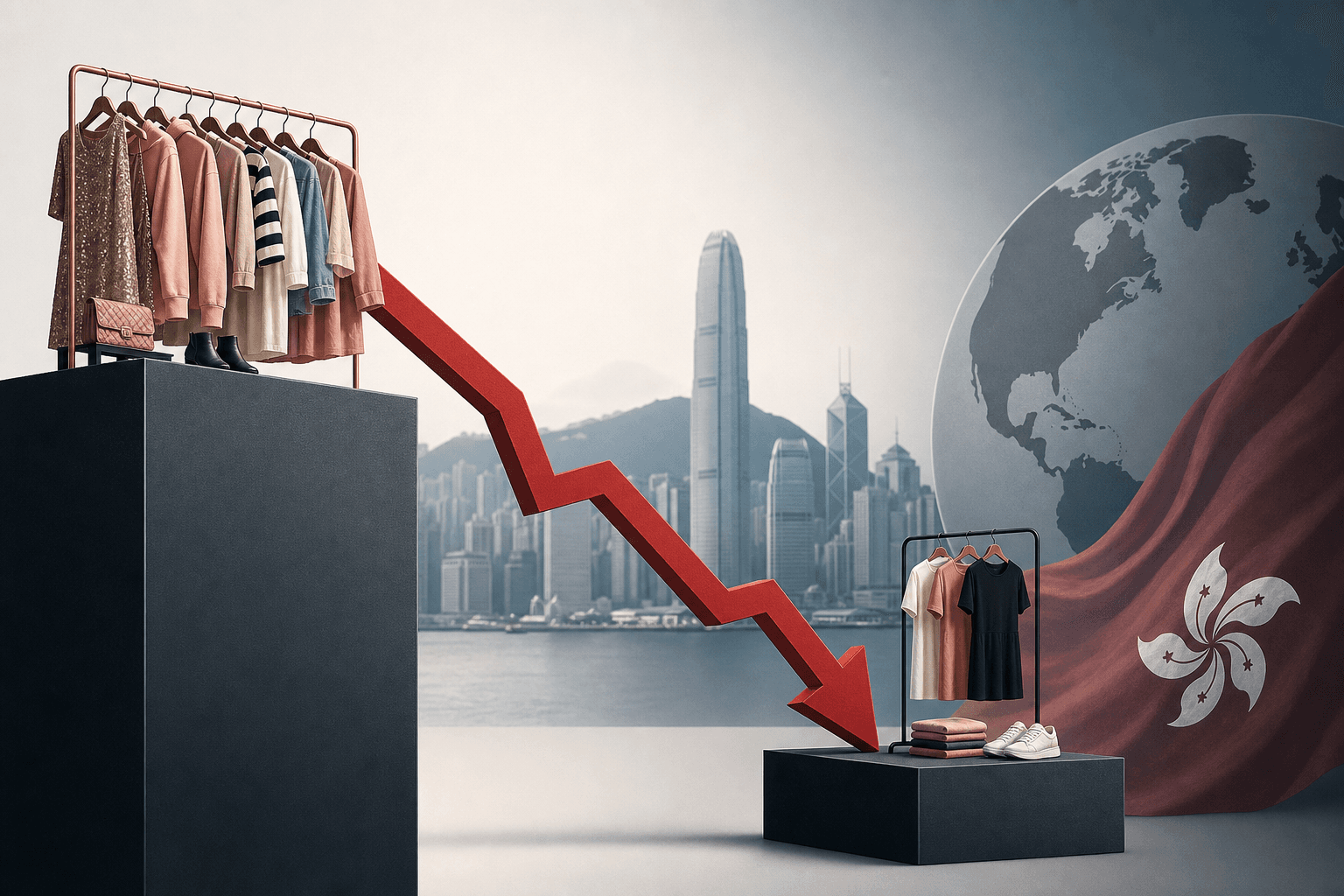
Seldom has a once-dominant retail brand approached public markets under such diminished circumstances. Shein, the China-founded, Singapore-headquartered fast-fashion retailer, has launched its Hong Kong IPO at a valuation of approximately $27 billion. This figure represents a staggering decline of roughly 70% from its 2022 private-market peak of $98.2 billion. The company initially targeted a range of $30 billion to $40 billion but faced considerable investor pushback.
The erosion of Shein's valuation can be attributed to several converging headwinds. Revenue growth decelerated sharply to just 8% in 2025, down from 20.7% the prior year. In the first quarter of 2026, growth slowed further to a mere 1.1%. The company posted a $99 million net loss that quarter, reversing a $395 million profit from the same period a year earlier.
Central to this deterioration is the elimination of the U.S. de minimis duty exemption on low-value parcels from China. This regulatory shift has imposed substantially higher tariffs on Shein's shipments, compelling the company to raise consumer prices. U.S. revenue consequently fell 14.3% in the most recent quarter. The European Union has similarly introduced new levies targeting cross-border e-commerce platforms.
Compounding these regulatory pressures is the intensifying rivalry with PDD Holdings' Temu platform. Both companies are entangled in litigation across multiple jurisdictions over copyright infringement and anti-competitive practices. Shein's protracted journey to an IPO—having previously abandoned listings in both New York and London—further underscores the geopolitical complexities confronting Chinese-founded enterprises. The dual-class share structure grants Shein's four co-founders approximately 90% of voting power.
Nevertheless, the IPO remains the largest new share issuance on the Hong Kong exchange in 2026. Seven cornerstone investors, including Tiger Global and Tencent, have committed to subscribing for shares. Whether this listing marks a strategic inflection point or merely a pragmatic concession remains to be seen. For prospective investors, the fundamental question is whether Shein can recalibrate its business model amid an increasingly hostile regulatory landscape.