Seldom has a single discovery so fundamentally challenged established principles of molecular biology. Scientists at Stanford University have identified an unprecedented mechanism by which bacteria synthesize DNA. Rather than relying on a conventional nucleic acid template, the system employs a protein's own structure as a blueprint. This remarkable finding was published in the journal Science in April 2026.
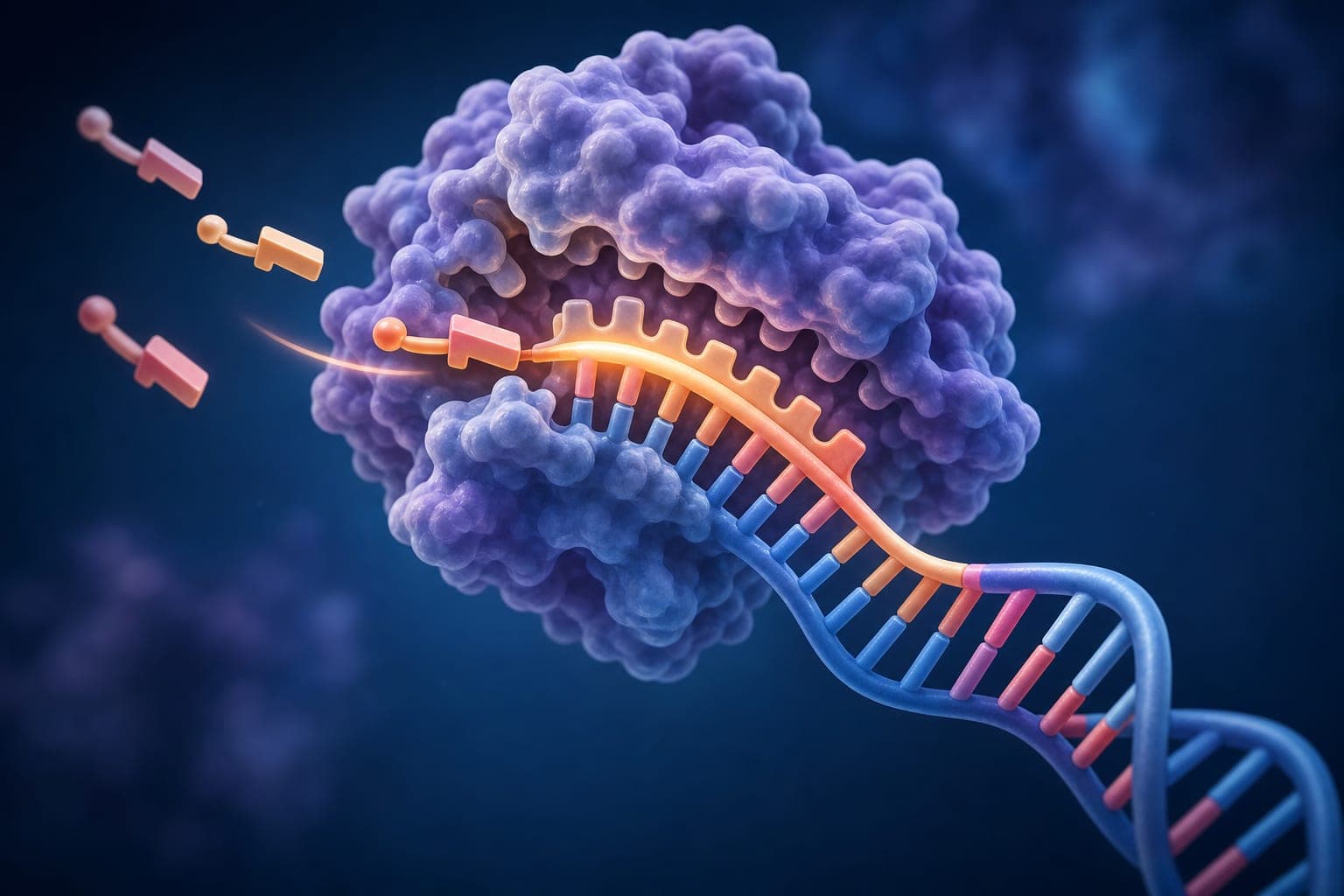
The discovery centres on DRT3, a bacterial defense system comprising two distinct enzymes and a noncoding RNA molecule. One enzyme, Drt3a, operates conventionally by copying a short RNA sequence to produce a DNA strand. However, the second enzyme, Drt3b, proved to be the genuinely astonishing component of the system. Drt3b synthesizes a complementary DNA strand without any external nucleic acid template whatsoever. Instead, its own amino acid residues serve as a physical mold, dictating precise nucleotide incorporation.
This unconventional pathway effectively reverses the traditional flow of genetic information. Ordinarily, DNA provides the template for producing proteins through well-established transcription and translation processes. In this instance, however, a protein's inherent structure determines the resulting DNA sequence. Stanford biochemist Alex Gao described this as a fundamentally new way that life produces DNA.
The DRT3 system appears to be widespread across bacterial species, functioning as a defense against viral infections. When activated, the accumulation of synthesised DNA inhibits the bacterium's growth. This self-sacrifice effectively prevents the invading virus from replicating and spreading to neighbouring cells. Nevertheless, the precise mechanism by which the synthesised DNA disrupts viral activity remains unresolved.
The broader implications of this discovery are considerable and warrant further investigation. CRISPR, now an indispensable gene-editing tool, similarly originated as a bacterial defense system. Researchers have speculated that Drt3b could eventually be engineered for biotechnological applications, including customised DNA synthesis. Moreover, the finding underscores how much remains concealed within microbial biology, prompting scientists to re-examine what they have long considered settled knowledge.