
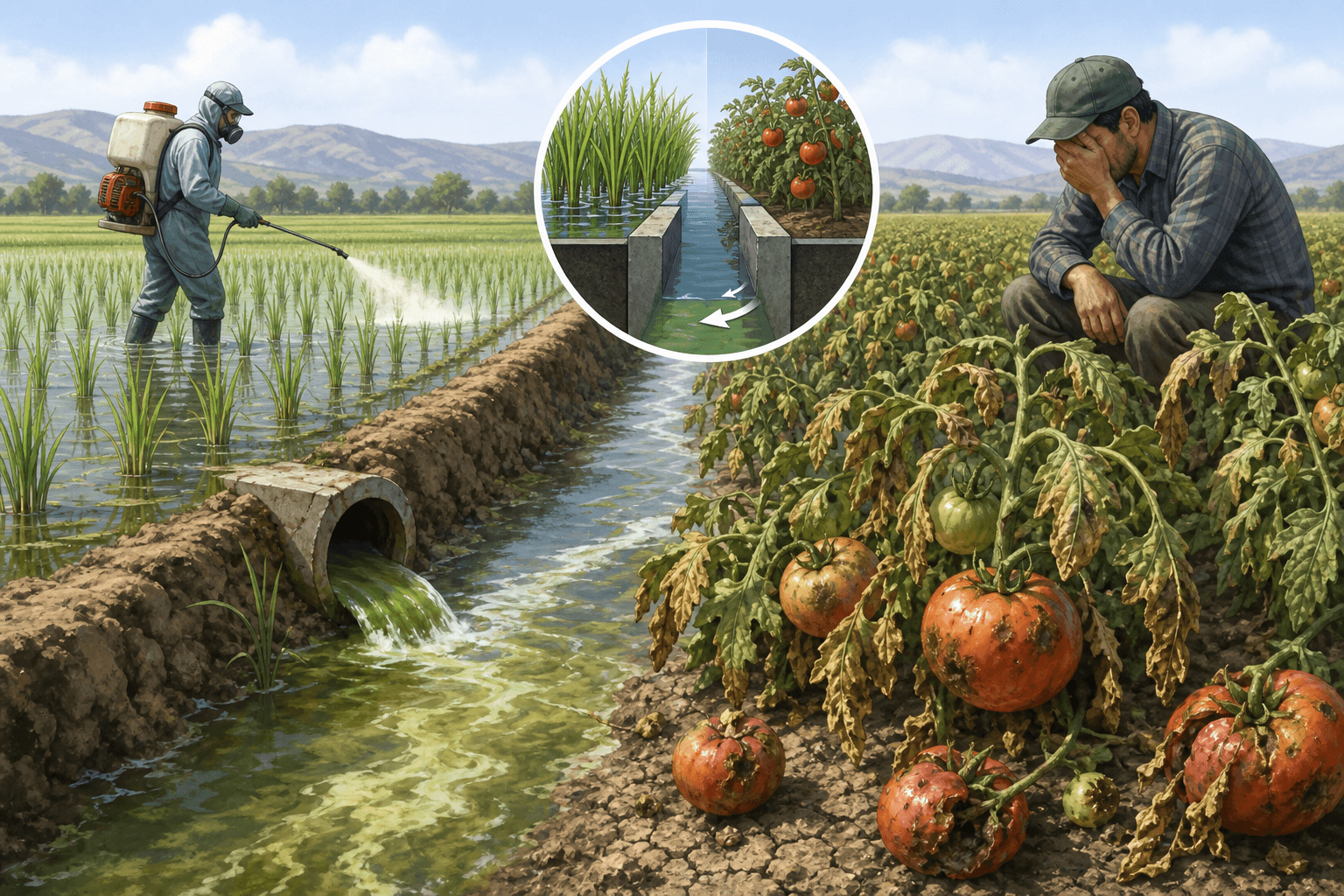
Seldom has a single agricultural practice inflicted such measurable harm on a neighboring crop. In Turkey's Karacabey district, pesticide-laden water from rice paddies has contaminated shared irrigation channels. The contamination has triggered phytotoxicity in tomato fields across the Karacabey Plain. Paste tomato producers now face yield losses reaching seven tons per acre. This case exemplifies how pesticide runoff can undermine the viability of adjacent farming operations.
The irrigation water originates from Manyas Lake, which supplies approximately 220,000 acres of farmland. Rice growers in the Manyas and Gönen regions apply agricultural chemicals that subsequently drain into local streams. These pesticide residues then infiltrate the shared water system that vegetable farmers depend upon. Laboratory tests conducted in Germany confirmed the presence of harmful chemical residues in the water. The contamination has affected crops across ten villages within the Karacabey irrigation area.
The consequences for tomato cultivation have been particularly severe. Phytotoxicity has caused leaves to curl, plants to wither, and overall growth to deteriorate markedly. Farmers report that fields irrigated with contaminated lake water yield dramatically less than those using artesian wells. One local producer noted that switching to well water effectively doubled his harvest output. Such disparities underscore the direct correlation between water quality and agricultural productivity.
Ramazan Düzen, Vice Chairman of the Karacabey Chamber of Agriculture, has advocated for structural reform. He insists that rice drainage water must be separated from vegetable irrigation channels through deliberate policy intervention. Düzen has emphasized that farmers cannot resolve this predicament independently. He and fellow producers have called upon the Agriculture Ministry to conduct inspections and implement safeguards before the next growing season.
This dispute illuminates a broader tension inherent in intensive agricultural systems worldwide. When diverse crops share water infrastructure, the chemical inputs of one sector may inadvertently compromise another. The Karacabey case demonstrates that regulatory oversight and infrastructure investment are indispensable. Without coordinated policy measures, the economic livelihoods of vulnerable farming communities will remain perpetually at risk. Ultimately, sustainable agriculture demands that competing interests be reconciled through evidence-based governance.