
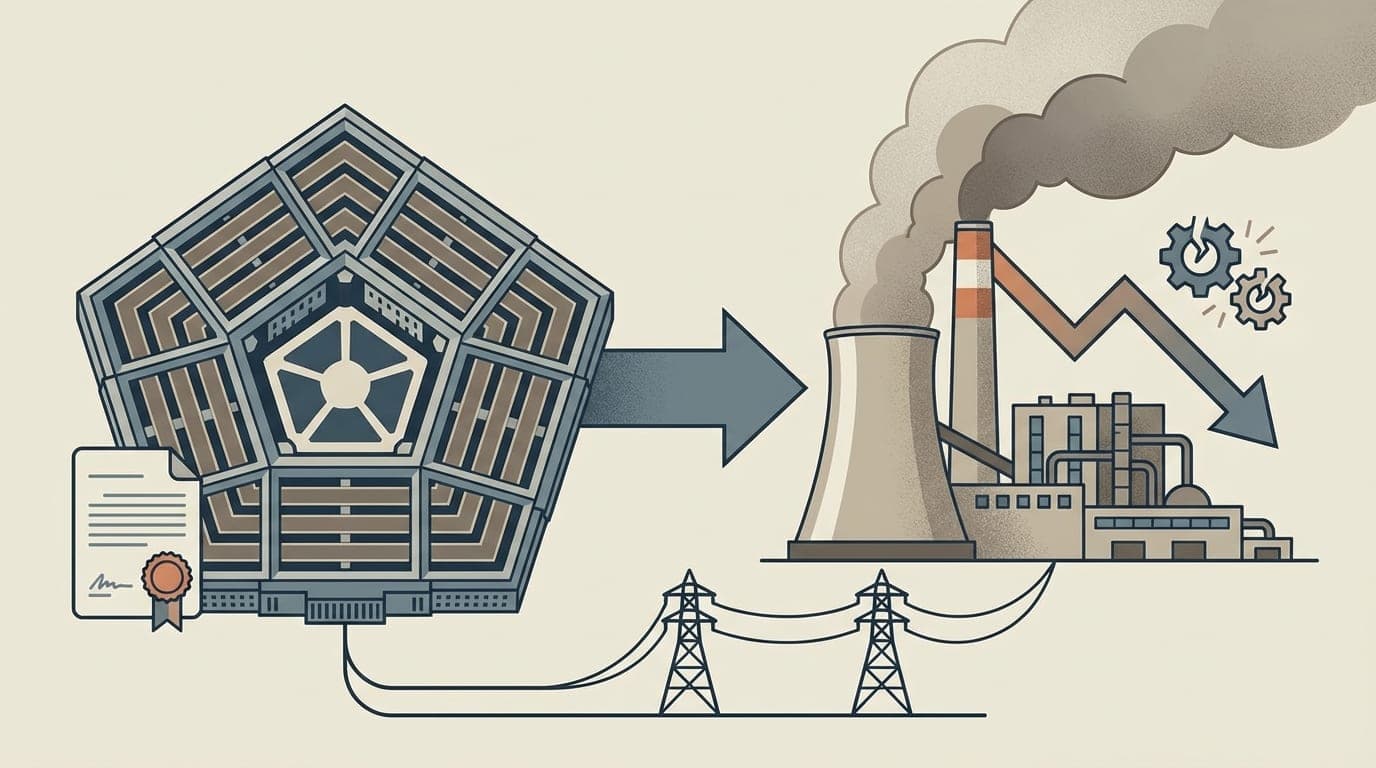
On February 11, 2026, President Donald Trump signed an executive order directing the Pentagon to prioritize coal-based electricity. The directive mandates that the Department of Defense establish long-term power purchase agreements with coal-fired facilities. This unprecedented intervention aims to prop up an industry that has struggled against cheaper alternatives for years. The administration framed the policy as essential for national security and grid resilience.
Coal currently provides approximately 16% of U.S. electricity, a dramatic decline from its once-dominant position. In the early 2000s, coal accounted for roughly half of all American power generation. U.S. coal production peaked in 2008, and output has since fallen by more than half. The Energy Information Administration projects coal generation will decline by 6% in 2026 and another 4% in 2027.
The administration contends that coal procurement strengthens military readiness by ensuring uninterrupted baseload power. The Pentagon, as the federal government's largest energy consumer, would negotiate directly with coal plant operators. Concurrently, the Department of Energy announced $175 million in funding to upgrade coal plants in several states. These measures represent the most aggressive federal attempt to reverse coal's structural decline.
Critics have lambasted the executive order as economically counterproductive and environmentally detrimental. Environmental organizations warn that expanding coal usage could undermine climate mitigation efforts for decades. Energy economists note that 99% of existing coal plants are more expensive to operate than their renewable replacements. The Union of Concerned Scientists stated that coal power has the worst reliability record of any energy source.
This policy raises fundamental questions about government intervention in energy markets shaped by economic forces. Natural gas and renewables have rendered coal increasingly uncompetitive through market dynamics alone. Whether federal procurement mandates can meaningfully alter these entrenched trends remains highly contentious. The tension between industrial policy objectives and market efficiency will likely define this debate for years.