
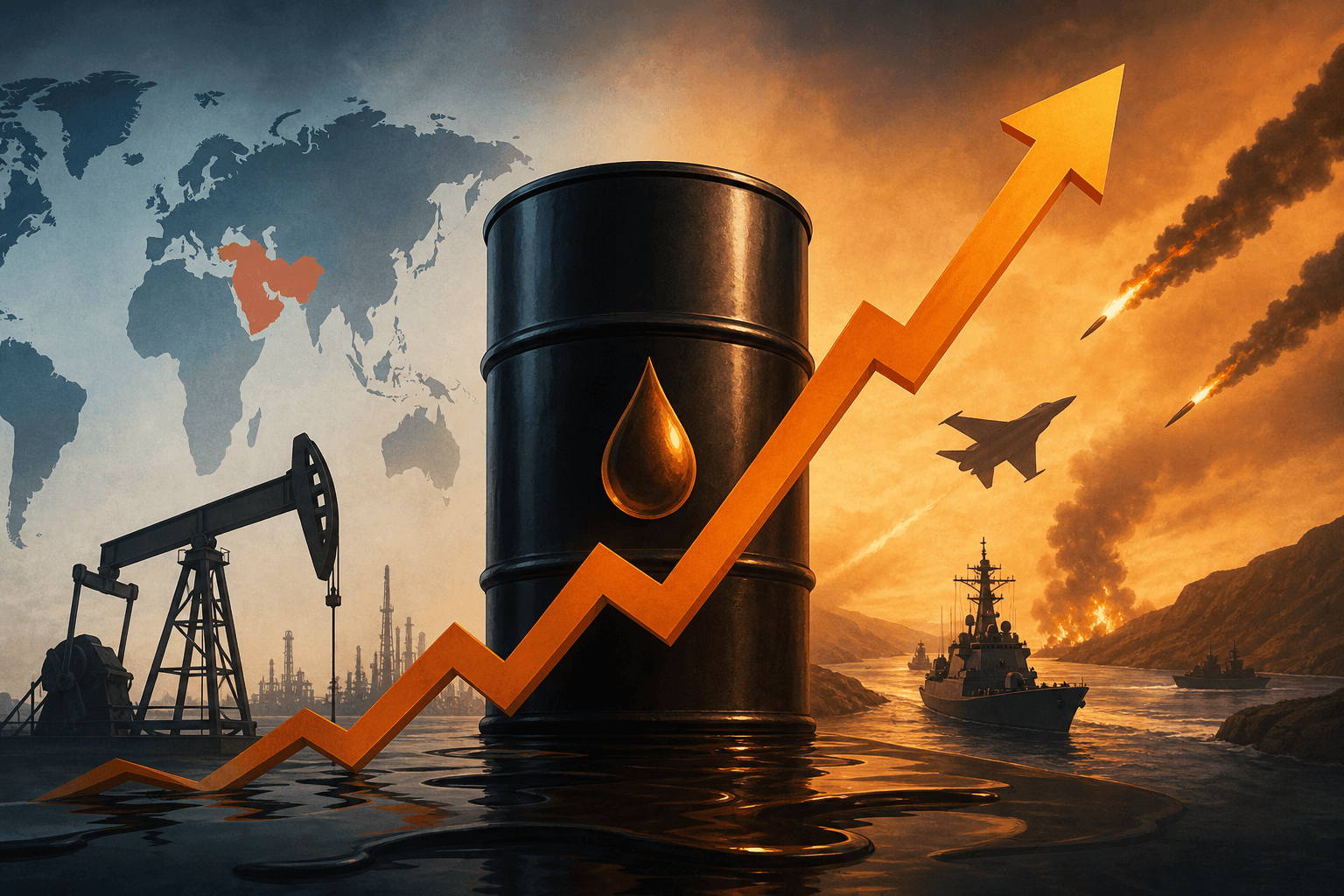
Seldom has a single waterway commanded such influence over the global economy. The Strait of Hormuz, through which roughly a fifth of the world's oil once flowed freely, has become the epicentre of a protracted conflict between the United States and Iran. Brent crude, the international benchmark, surpassed one hundred dollars a barrel on Wednesday. This milestone, reached for the first time since July, has stoked widespread apprehension about energy-driven inflation.
The immediate catalyst for the surge was an escalation in military hostilities. U.S. Central Command confirmed the destruction of five Iranian oil tankers near critical export routes. Iran retaliated with missile strikes targeting American forces in Jordan and vessels in the Persian Gulf. These tit-for-tat attacks underscore the precariousness of maritime commerce in the region.
Analysts at Goldman Sachs have warned that a more bullish price scenario is becoming increasingly plausible. Should Persian Gulf exports fail to recover, Brent crude could exceed one hundred and twenty dollars a barrel. The conflict, now in its seventh month, has already constrained supply through disrupted shipping lanes and damaged infrastructure. Iran-backed Houthi forces have simultaneously targeted energy facilities in Saudi Arabia.
The ramifications extend well beyond energy markets. The IMF projects global headline inflation could reach approximately 4.7 percent in 2026, reversing years of disinflation. Developing economies reliant on imported fuel bear a disproportionate burden. Furthermore, sustained high oil prices complicate monetary policy, as central banks must weigh inflationary pressures against the risk of stifling economic growth.
What renders this crisis particularly consequential is its intersection of geopolitics, economics, and energy security. Unlike transient supply shocks, the current disruption stems from a structural conflict with no foreseeable resolution. Should hostilities persist, the reverberations will be felt in household budgets and boardrooms alike. The world is being reminded that energy dependence remains a formidable vulnerability.