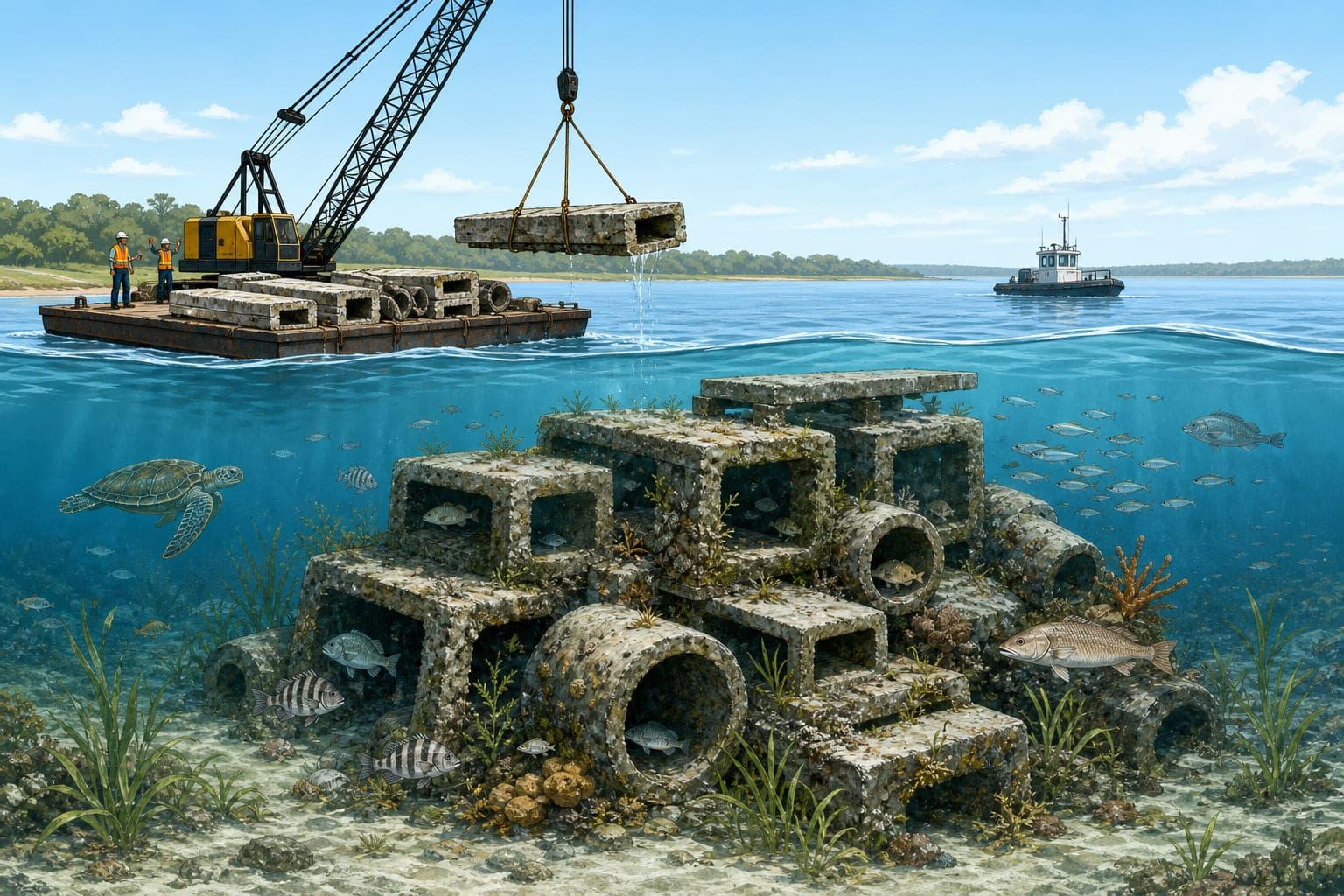
A major new project in North Carolina aims to help marine life recover. The state's Division of Marine Fisheries has proposed a 125-acre artificial reef. It would be located in Albemarle Sound, about 3.5 miles from the Alligator River. The reef is designed to create habitat in areas with featureless bottoms. A public meeting about the proposal is scheduled for December 2026.
The reef will be constructed from debris from the Alligator River Bridge. This approach recycles old materials that would otherwise be wasted. The state has previously used demolished bridge materials for similar projects. In one earlier effort, around 80,000 tons of concrete were transported to reef sites. Such projects show that infrastructure waste can serve a valuable environmental purpose.
Artificial reefs are human-made structures placed underwater to promote marine life. They provide spawning and foraging habitat for commercially important fish species. Over time, these structures develop into vibrant ecosystems that support biodiversity. North Carolina currently maintains 72 artificial reefs across its waters. Of these, 29 are in estuaries and 43 are located in the ocean.
Experts believe that artificial reefs can restore damaged ecosystems effectively. They help protect coastlines from erosion and increase marine biodiversity. If more states invested in such projects, coastal communities would benefit greatly. Research suggests that artificial reefs can boost fish production significantly. This proposed reef represents a promising step toward sustainable marine conservation.