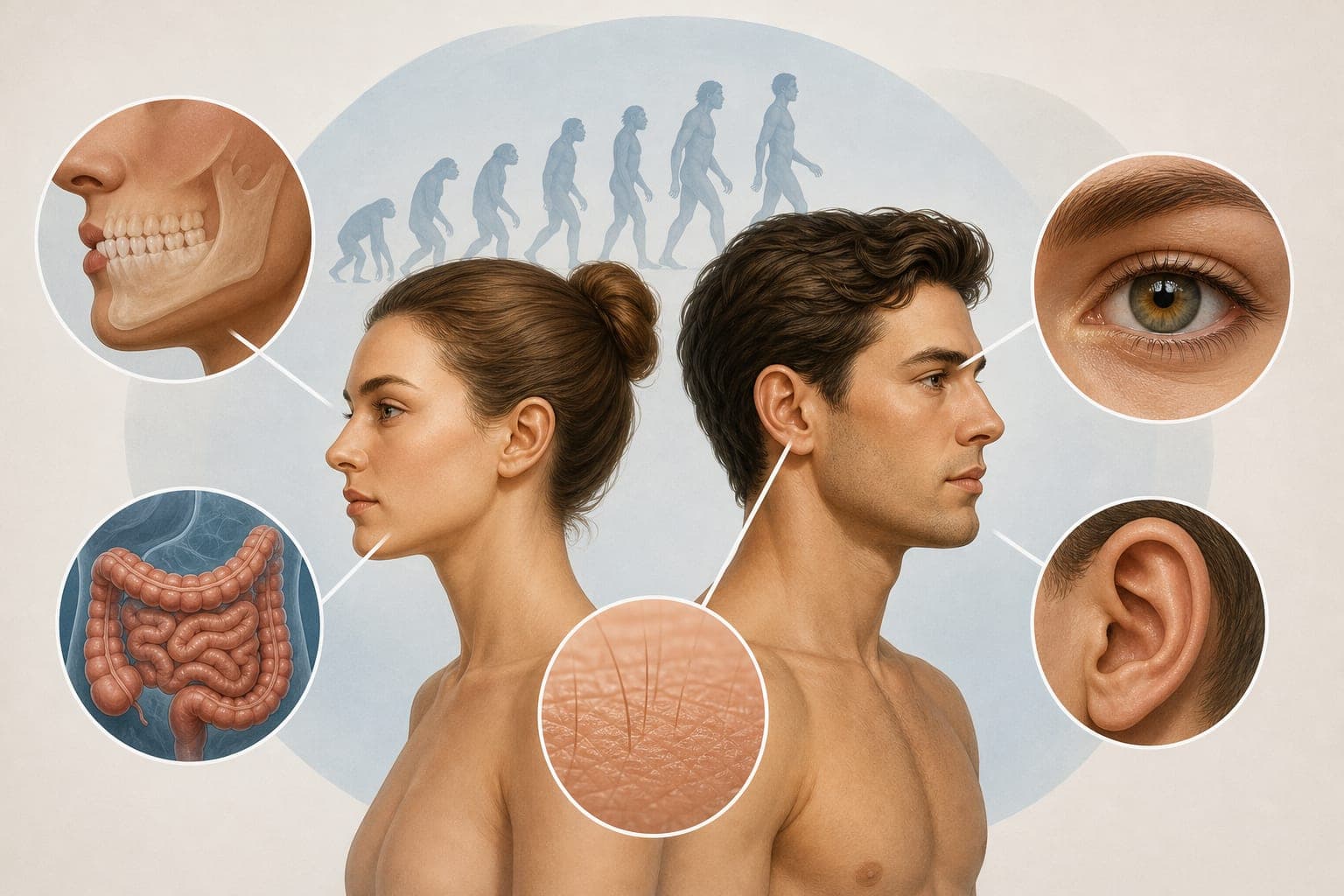
It is a widespread misconception that human evolution concluded thousands of years ago. However, mounting scientific evidence suggests otherwise. Researchers have identified at least five observable signs on the human body that attest to ongoing evolutionary change. These physiological markers span our internal organs, our blood, and even our vision. Far from being a relic of the distant past, natural selection continues to shape our species.
Perhaps the most compelling evidence lies within the human gut. Historically, the ability to digest lactose disappeared after infancy in most mammals. Yet gene variants enabling adult lactose tolerance have spread through populations in Europe, East Africa, and the Middle East. Today, approximately thirty to thirty-five percent of the global adult population can digest dairy products. Separately, indigenous Quechua people in the Andes have developed an enhanced capacity to digest starch from potatoes.
Equally remarkable are the adaptations observed among communities on the Tibetan Plateau. After more than ten thousand years of high-altitude settlement, inhabitants have evolved traits that improve oxygen delivery in their blood. Research led by anthropologist Cynthia Beall demonstrated that women with higher oxygen saturation showed greater reproductive success. This constitutes a textbook case of natural selection operating through differential reproduction.
External signs of evolution are also discernible. Skin pigmentation represents a well-documented example of adaptation to varying levels of ultraviolet radiation. Over the past ten thousand years, gene variants associated with lighter skin have become increasingly prevalent at higher latitudes. Furthermore, myopia has surged dramatically in recent decades. A 2021 study estimated that natural selection contributes over one hundred thousand new myopia cases per generation in the United Kingdom alone.
What distinguishes these findings is their demonstration that evolution does not invariably yield advantageous outcomes. The proliferation of myopia suggests that certain traits may spread through a mechanism called antagonistic pleiotropy. In such cases, genes conferring one benefit may simultaneously produce a disadvantage elsewhere. These discoveries fundamentally challenge the assumption that modern medicine and technology have rendered natural selection obsolete.