
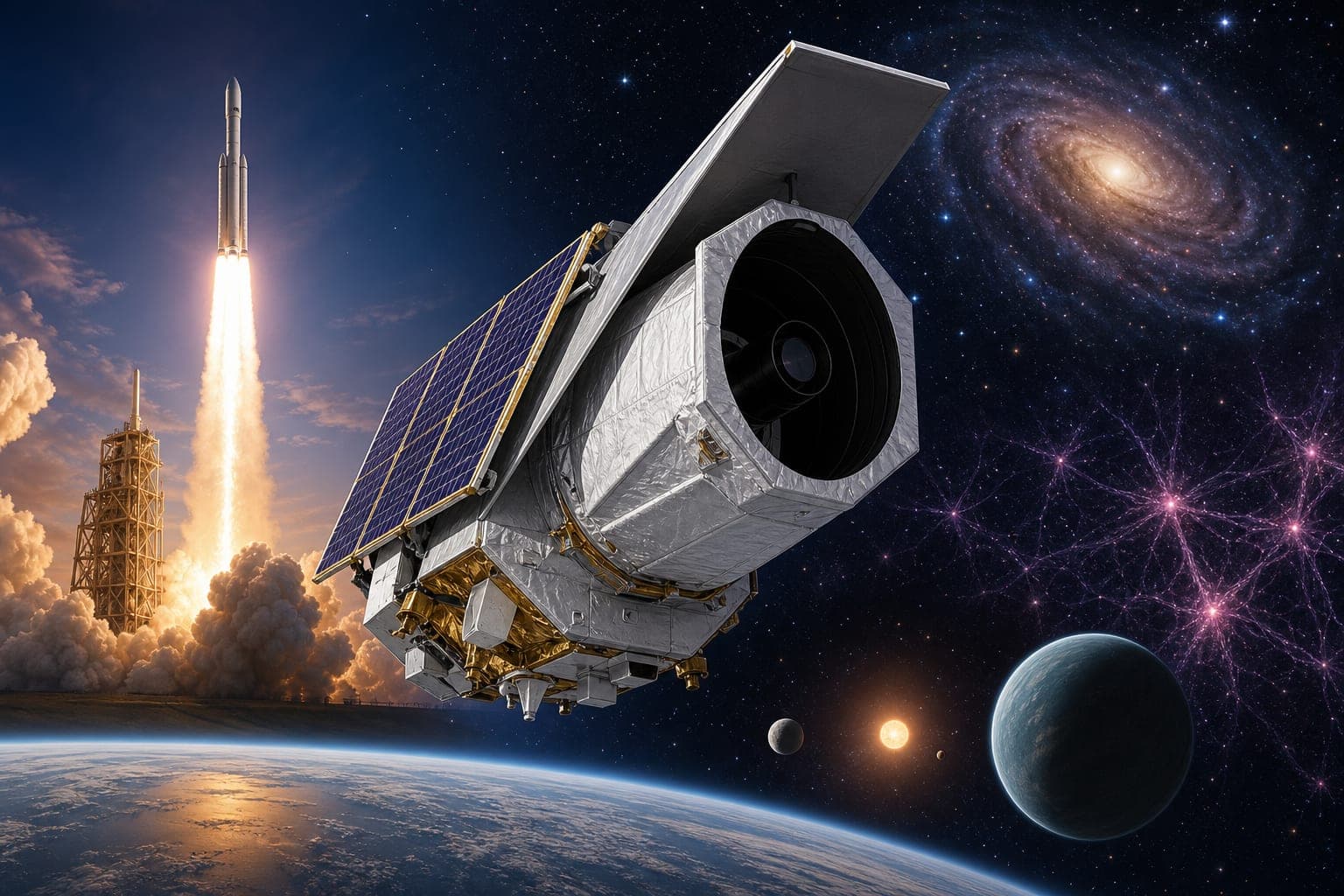
NASA is preparing to launch its most ambitious space observatory in decades. The Nancy Grace Roman Space Telescope is scheduled to launch on August 30, 2026. It will travel to a point roughly one million miles from Earth. There, it will begin surveying the universe in ways that had previously been impossible. The telescope has been named after NASA's first chief of astronomy.
Roman's capabilities represent an unprecedented leap in astronomical observation. Its field of view is at least 100 times larger than that of Hubble. Scientists estimate that it can survey the cosmos approximately 1,000 times faster. One month of Roman's observations of the Milky Way would take Hubble a century. The telescope is also expected to produce over 500 terabytes of data annually.
The observatory will investigate some of the most profound mysteries in modern science. It will map billions of galaxies to study dark energy and dark matter. Its instruments could discover thousands of exoplanets beyond our solar system. A coronagraph instrument will enable direct imaging of distant planetary systems. These discoveries may fundamentally reshape our understanding of the universe.
The mission, which cost approximately four billion dollars, launches nine months ahead of schedule. Had the original timeline been maintained, the telescope would not have launched until 2027. Its primary mission is planned for five years of scientific operations. If Roman performs as expected, it could yield insights that scientists have not yet imagined. The telescope's success would mark a significant milestone in space exploration.