
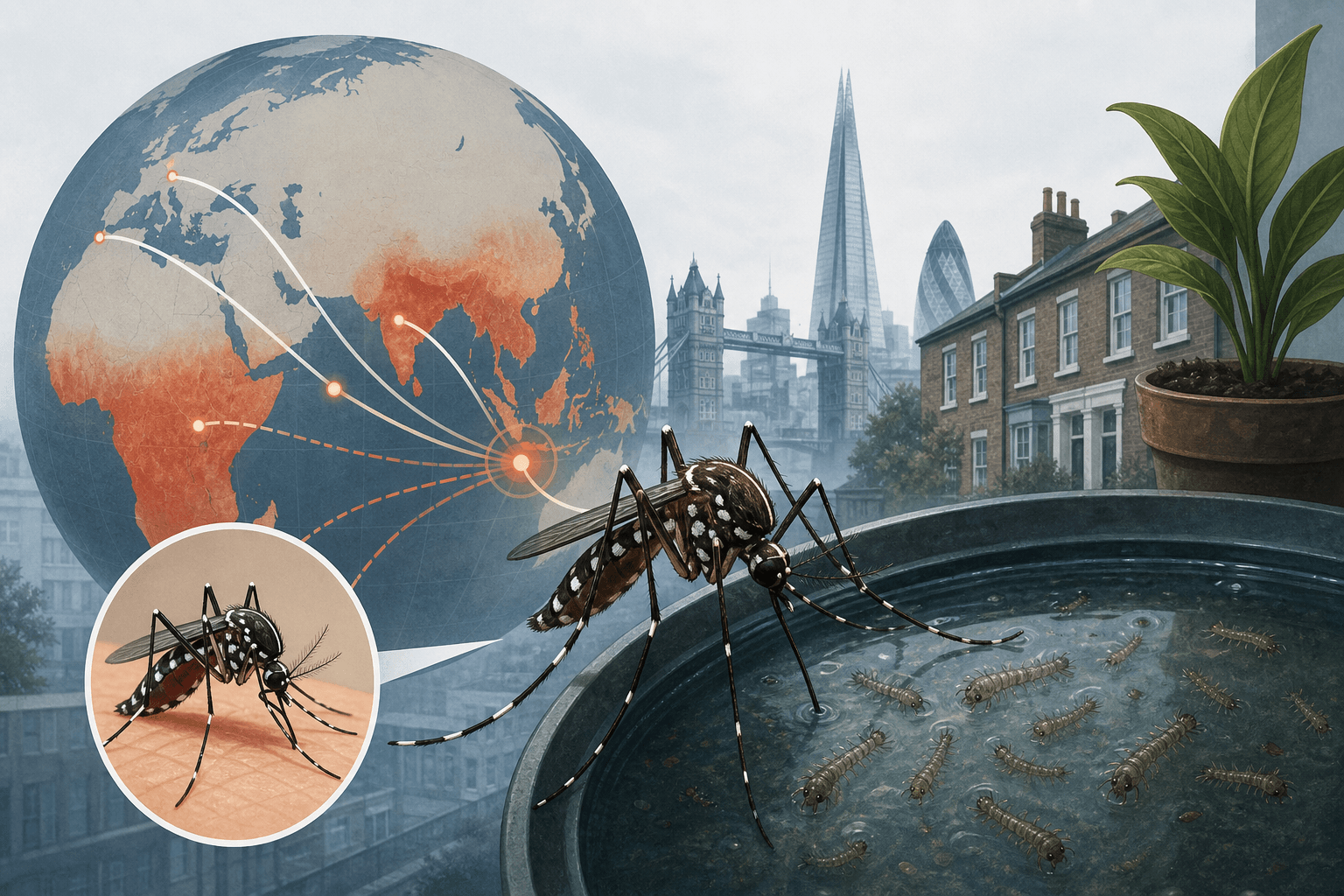
Seldom has a single entomological discovery so vividly illustrated the convergence of climate change and public health risk. The UK Health Security Agency has confirmed that Aedes aegypti mosquitoes have bred in east London. This constitutes the first documented instance of this invasive species reproducing on British soil. The finding, reported through the agency's Mosquito Watch surveillance scheme, has prompted immediate containment measures.
Aedes aegypti, commonly designated the yellow fever mosquito, is the principal vector for dengue, chikungunya, and Zika virus. Ordinarily confined to tropical and subtropical regions, this species thrives in warm, humid conditions. Scientists believe the London specimens were inadvertently imported through luggage, vehicles, or ornamental plants. While this represents the fourth modern-day detection in the UK, it is the first evidence of active breeding.
The broader European context renders this discovery particularly alarming. In 2024, Italy recorded over two hundred locally acquired dengue cases, predominantly in the Marche region. France and Spain also reported domestic dengue transmission during the same period. Meanwhile, France documented nearly five hundred locally transmitted chikungunya cases in 2025. These outbreaks, once confined to the tropics, are now proliferating across the continent.
Experts attribute this northward expansion to a confluence of factors. Rising temperatures and milder winters are creating increasingly hospitable environments for invasive mosquito species. International travel and global trade facilitate the passive transport of drought-resistant eggs across vast distances. Nevertheless, authorities emphasise that the UK's temperate climate remains a substantial barrier to permanent establishment. The typical British winter would likely impede the species' long-term survival.
The UKHSA has implemented control measures to destroy larvae and is conducting enhanced surveillance throughout the affected area. Residents have been advised to eliminate standing water from gardens and outdoor containers. Notwithstanding the low immediate risk, continued vigilance and robust biosecurity protocols are deemed indispensable. As global temperatures rise, the intersection of vector ecology and climate science will demand unprecedented cooperation.