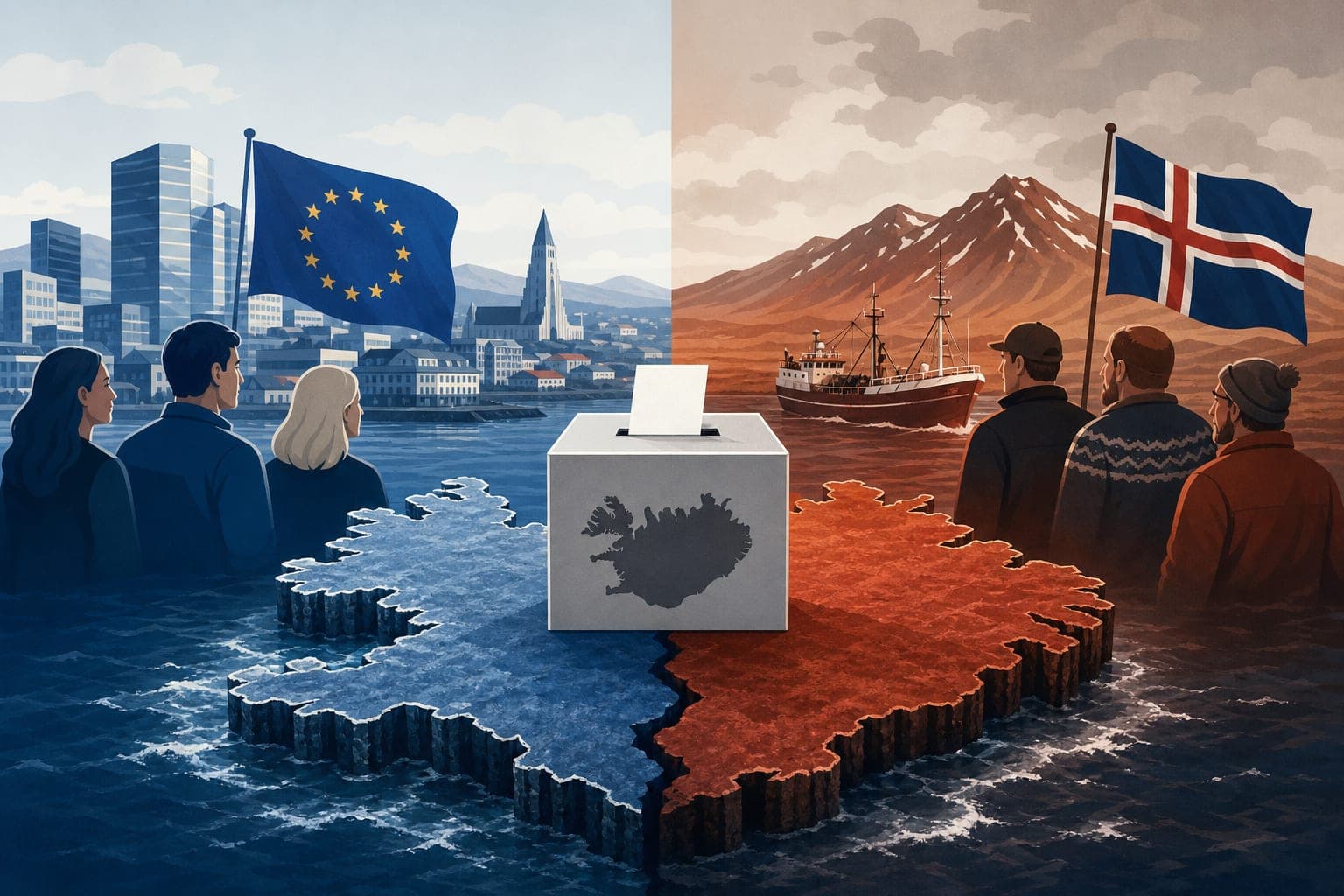
Seldom has a small nation's referendum attracted such considerable international scrutiny. On August 29, 2026, Iceland held a pivotal vote on whether to resume EU accession negotiations. The ballot posed a deceptively simple question to its approximately 390,000 inhabitants. Voters were asked whether talks with the European Union should recommence. The outcome proved remarkably contentious, exposing fundamental divisions within Icelandic society.
The 'No' camp ultimately prevailed with 52.8% of the vote, against 47.2% for resuming talks. Early partial results had initially shown a razor-thin lead for the 'Yes' side. However, as rural constituencies reported their tallies, the balance shifted decisively against accession. Only Reykjavík's two constituencies voted in favour, underscoring a pronounced urban-rural divide.
The referendum's origins lie in Iceland's turbulent economic history. Following the devastating 2008 financial crisis, the government applied for EU membership in 2009. Accession negotiations commenced in 2010 but were subsequently shelved in 2013. A new centre-left coalition under Prime Minister Kristrún Frostadóttir revived the question. The governing coalition had pledged to treat the advisory referendum's outcome as a binding mandate.
Fisheries dominated the campaign discourse, overshadowing geopolitical considerations. The fishing industry contributes approximately 8% of Iceland's GDP and nearly 40% of its exports. Opponents argued that the EU's Common Fisheries Policy would undermine national sovereignty over marine resources. Industry representatives warned that foreign companies could acquire Icelandic fishing quotas. Even proponents acknowledged that ironclad exemptions would be indispensable for any future agreement.
Nonetheless, compelling arguments existed for reopening negotiations. Growing Arctic geopolitical tensions and Trump's threats regarding Greenland heightened security anxieties. Iceland, a founding NATO member, maintains no standing armed forces of its own. Proponents contended that EU membership would yield monetary stability and reduced inflation. Despite the result, this referendum has irrevocably transformed Iceland's political landscape and its relationship with Europe.