
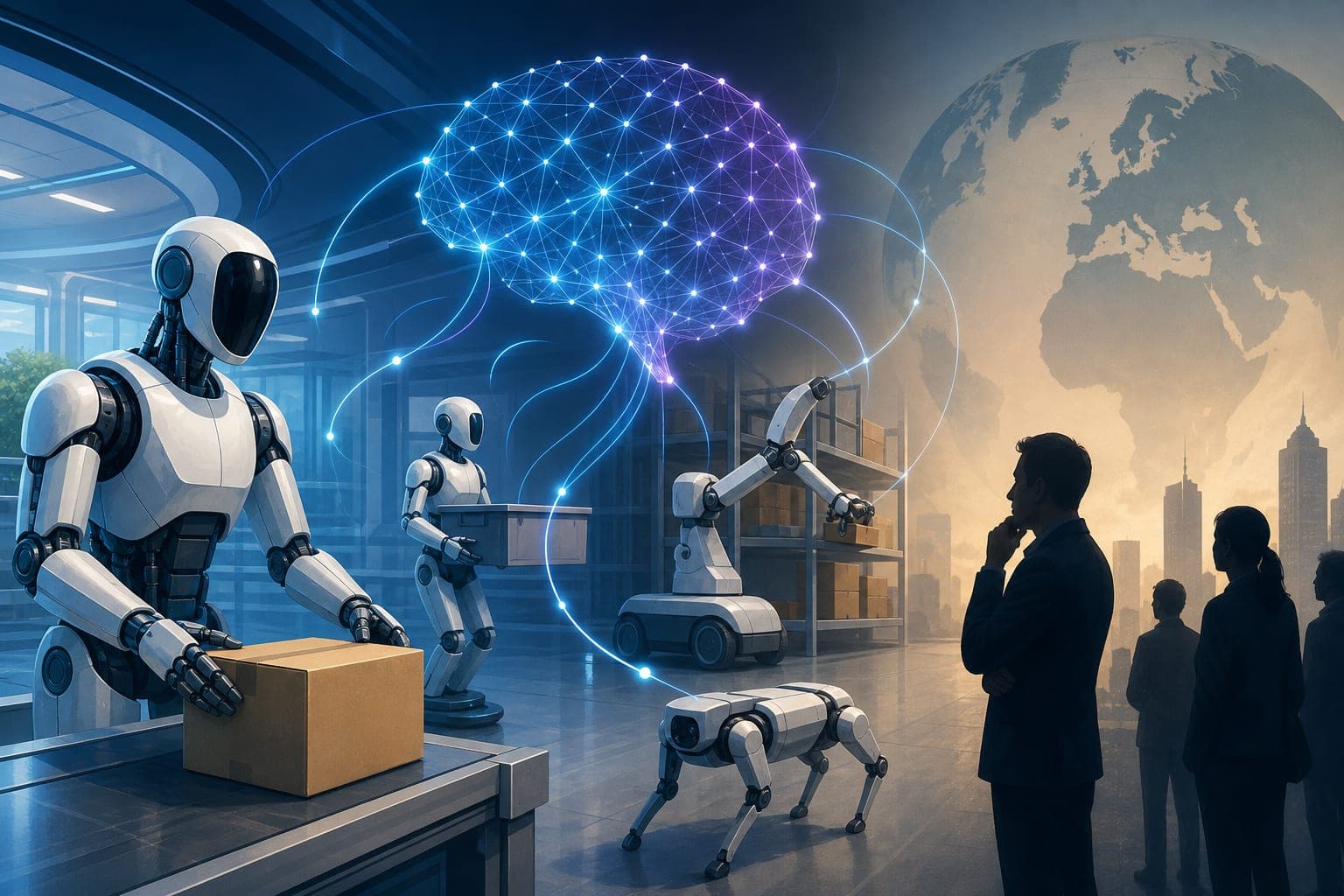
Seldom has a single technological announcement so vividly illustrated the trajectory of physical artificial intelligence. Google DeepMind has released Gemini Robotics ER 2, an embodied reasoning model for robots. This system functions as a high-level cognitive layer, enabling machines to plan multi-step tasks autonomously. It represents a paradigm shift in how robots perceive and interact with the physical world.
What distinguishes this model from its predecessors is its capacity for unified whole-body control. Earlier systems could only direct a robot's upper body for simple tabletop tasks. Gemini Robotics ER 2, by contrast, orchestrates legs, arms, torso, and multi-finger hands simultaneously. The model also facilitates multi-robot collaboration, allowing diverse machines to coordinate shared workflows.
Underpinning these capabilities is an architecture that integrates real-time video understanding with adaptive planning. By analysing continuous video feeds, robots can monitor their own progress and self-correct errors. The system achieves over ninety-one percent accuracy in identifying precise moments during task execution. Furthermore, it can call external tools, including search engines, to retrieve information autonomously.
The implications for the labour market warrant careful scrutiny. Research by Acemoglu and Restrepo found that each additional robot per thousand workers reduces wages considerably. The McKinsey Global Institute projects that fourteen percent of workers may need career transitions by 2030. Nevertheless, many economists contend that automation will predominantly transform tasks rather than eliminate occupations entirely.
Proponents argue that such technology could mitigate labour shortages in ageing societies and hazardous industries. Critics, however, caution that the economic gains of automation disproportionately benefit capital owners, thereby exacerbating inequality. The prevailing consensus suggests that proactive reskilling policies will prove indispensable during this transitional period. Ultimately, the societal impact will hinge upon how governments and institutions choose to redistribute productivity gains.