Seldom has a technology product been retracted so swiftly after its introduction. On July 30, 2026, Google launched an AI feature in Google Earth that permitted users to generate images superimposed onto real satellite maps. By the following afternoon, the company had reversed course entirely. Open-source intelligence researchers had demonstrated the tool's alarming capacity to fabricate convincing evidence at authentic geographic coordinates.
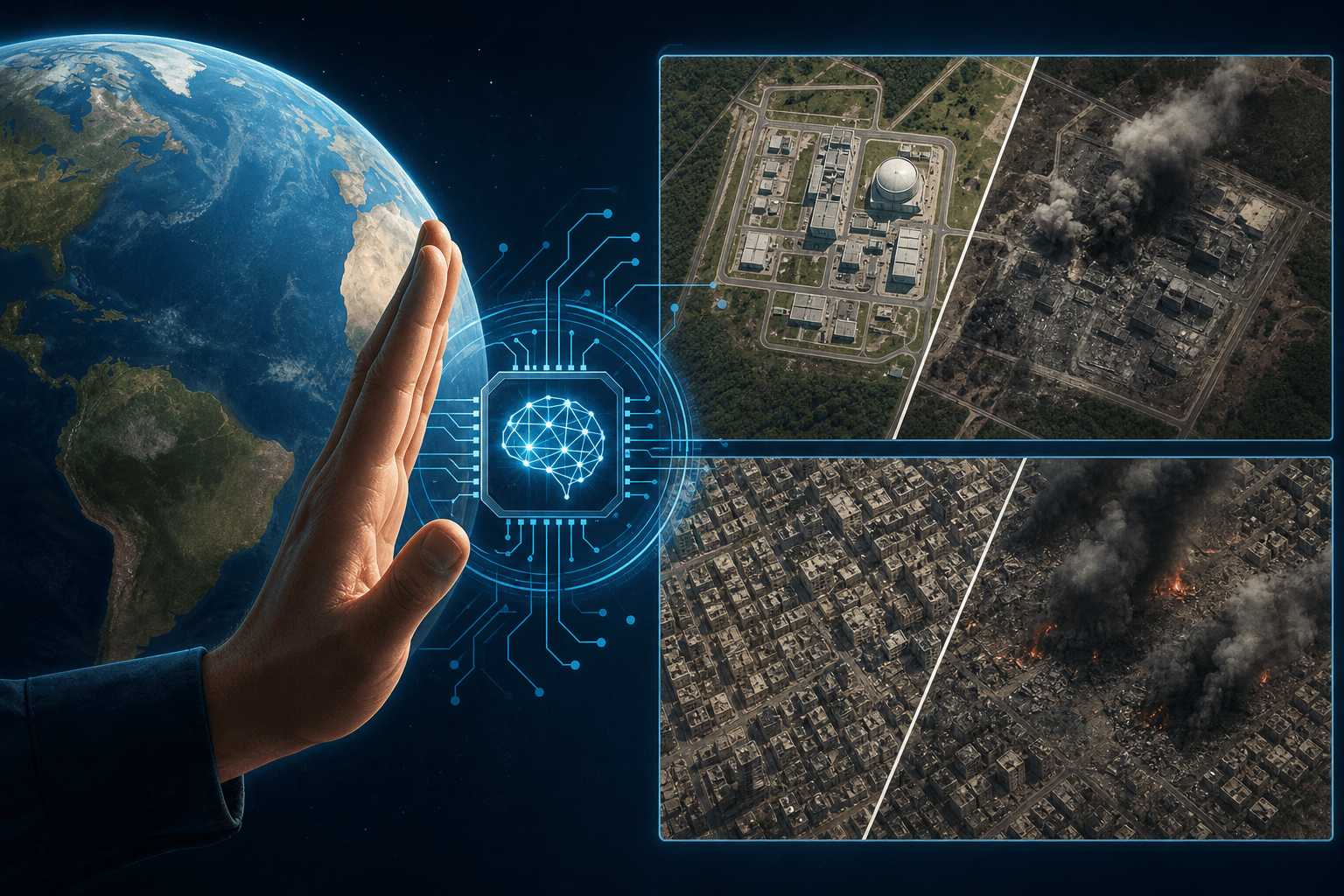
The feature, powered by Google's Gemini AI, invited users to reimagine any location through simple text prompts. Google envisioned legitimate applications, such as visualising historical cityscapes or drafting real estate plans. However, investigative journalist Henk van Ess swiftly exposed its vulnerabilities. He generated fabricated imagery depicting refugee camps, nuclear facilities, bomb craters beside hospitals, and fatal crashes. Crucially, none of these prompts were refused by the system.
The ramifications for verification professionals proved particularly disconcerting. Satellite imagery has long served as a cornerstone of open-source investigations. Analysts and journalists have relied upon it to corroborate events in conflict zones and disaster areas. Embedding a generative AI tool within this trusted platform effectively placed the means of fabrication inside the very instrument used to authenticate reality. This paradox alarmed the broader research community.
Google maintained that all generated images carried its SynthID digital watermark, an imperceptible marker designed to flag AI-produced content. Nevertheless, experts remained sceptical of this safeguard. The watermark functions only when detection tools actively participate in the verification process. Moreover, once an image is screenshotted and disseminated across social media, its provenance becomes increasingly difficult to establish.
This episode underscores a broader tension inherent in the deployment of generative AI technologies. The imperative to innovate frequently outpaces the development of adequate protective measures. Google has characterised the withdrawal as a temporary pause rather than a permanent cancellation. Yet the incident raises a fundamental question for policymakers and technology firms alike. Should geospatial platforms, which underpin public trust in visual evidence, ever integrate tools capable of undermining that trust?