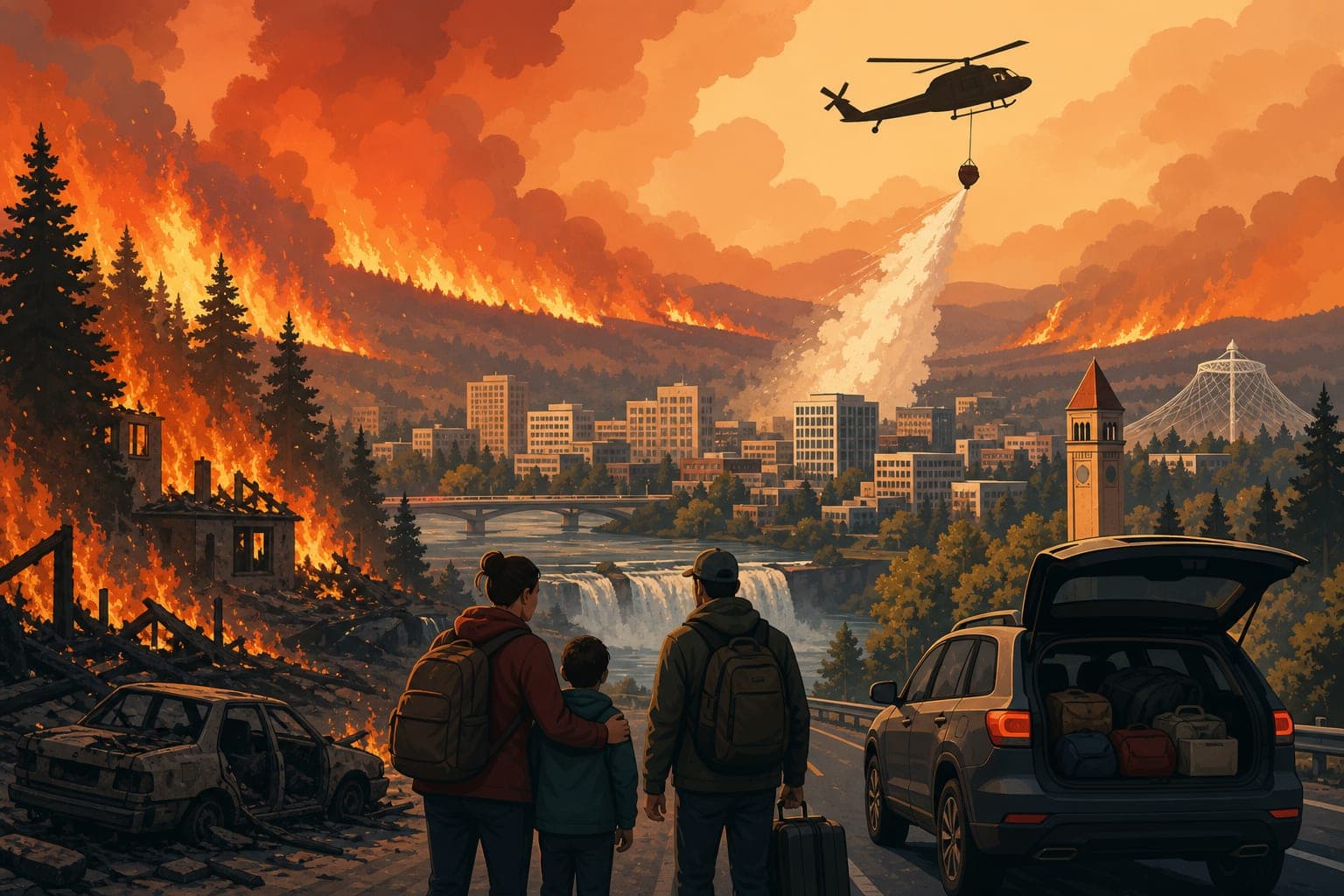
Seldom has a wildfire disaster of such magnitude struck an American urban center with such ferocity. On August 1, 2026, three fast-moving wildfires erupted in and around Spokane, Washington's second-largest city. Driven by sustained winds exceeding 30 miles per hour and critically low humidity, the blazes rapidly engulfed residential neighborhoods. By Monday, the fires had destroyed at least 700 structures and forced approximately 67,000 people to evacuate.
The most catastrophic of the three blazes, the Old Trails Fire, alone accounted for 640 destroyed structures. Authorities subsequently arrested a 37-year-old man on suspicion of first-degree arson in connection with this particular fire. However, the unprecedented speed at which the fire spread was exacerbated by severe drought conditions. A record-low winter snowpack, followed by a hot and dry summer, had rendered the landscape exceptionally combustible.
Spokane Mayor Lisa Brown characterized the disaster as the worst natural catastrophe the region has ever confronted. Nearly half of the city's neighborhoods were either evacuated or deemed at risk. Governor Bob Ferguson declared a statewide emergency and imposed a comprehensive burn ban. Federal emergency assistance was promptly requested, and over 1,000 firefighters from multiple states were deployed to combat the uncontained blazes.
The Spokane fires represent a broader pattern of escalating wildfire severity across the western United States. Across Washington state alone, at least 390 square miles had burned by early August. Environmental analysts attribute this intensification to the compounding effects of prolonged drought and rising temperatures. Mayor Brown herself acknowledged that the dangers of a changing climate had been recognized for years, yet the situation remained unprecedented.
As displaced residents began returning to assess the devastation, many found only charred debris where their homes once stood. The emotional and economic toll on affected communities will undoubtedly persist for years. What distinguishes this disaster from previous wildfire events is its penetration into a densely populated urban area. This raises fundamental questions about whether existing land management and emergency response frameworks are adequate for an era of intensifying climate-related hazards.