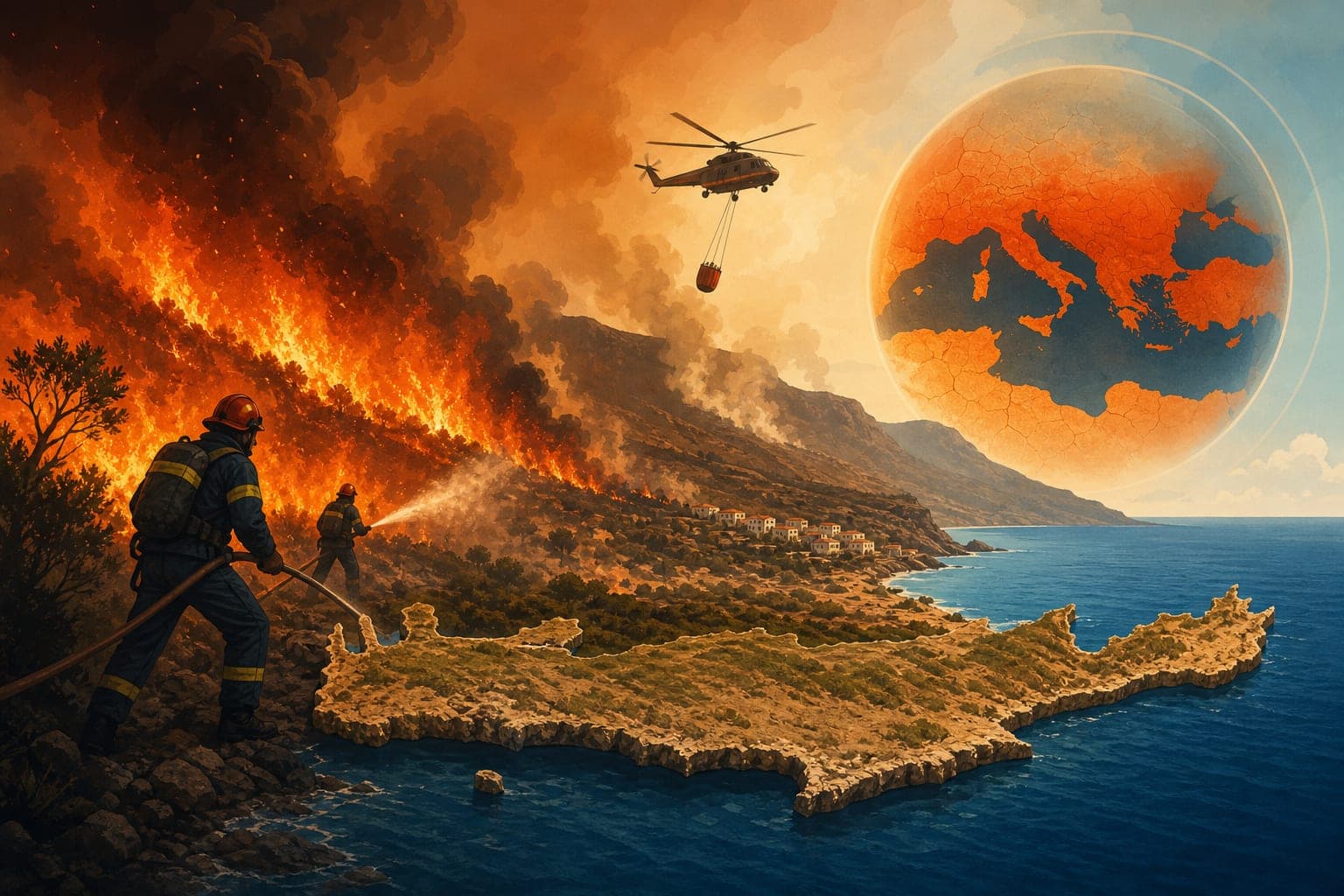
A devastating wildfire broke out on July 29, 2026, near Krya Vrysi in southern Crete. Gale-force winds, gusting past 100 kilometres per hour, drove the flames rapidly southward. By the following morning, the fire front had stretched beyond 15 kilometres. The blaze had split into three separate uncontrolled fronts. Two firefighters tragically perished after becoming trapped in their vehicle.
More than 220 firefighters were deployed to combat the catastrophic blaze. Strong winds severely hampered aerial operations, grounding most water-bombing aircraft. Only two helicopters could assist ground crews during the worst conditions. Authorities issued emergency evacuation orders for several villages in the area. Agricultural land, homes, livestock, and farming operations had already been destroyed.
This disaster is not an isolated incident in the Mediterranean region. Scientific research has demonstrated that climate change is intensifying wildfire conditions significantly. The Mediterranean is regarded as one of the world's most vulnerable climate hotspots. Temperatures in this region have been rising faster than the global average. Researchers project that heat-induced fire weather could increase by 30 percent this century.
Had governments invested more in prevention, such devastating outcomes might have been avoided. Experts warn that wildfires now start earlier and last longer each year. Ecosystems are left with insufficient time to recover between successive fire events. Rural abandonment and inadequate forest management have also contributed to the crisis. Urgent, coordinated international action is needed to address this escalating threat.