Seldom has a climate study carried such profound implications for global weather forecasting. A new study published in the journal Science indicates that El Niño events are intensifying as a direct consequence of human-caused climate change. The research, led by paleoclimatologist Julia Cole at the University of Michigan, analysed coral records spanning approximately nine hundred years. Its findings suggest that these periodic warming episodes in the equatorial Pacific have grown markedly stronger since the industrial era.
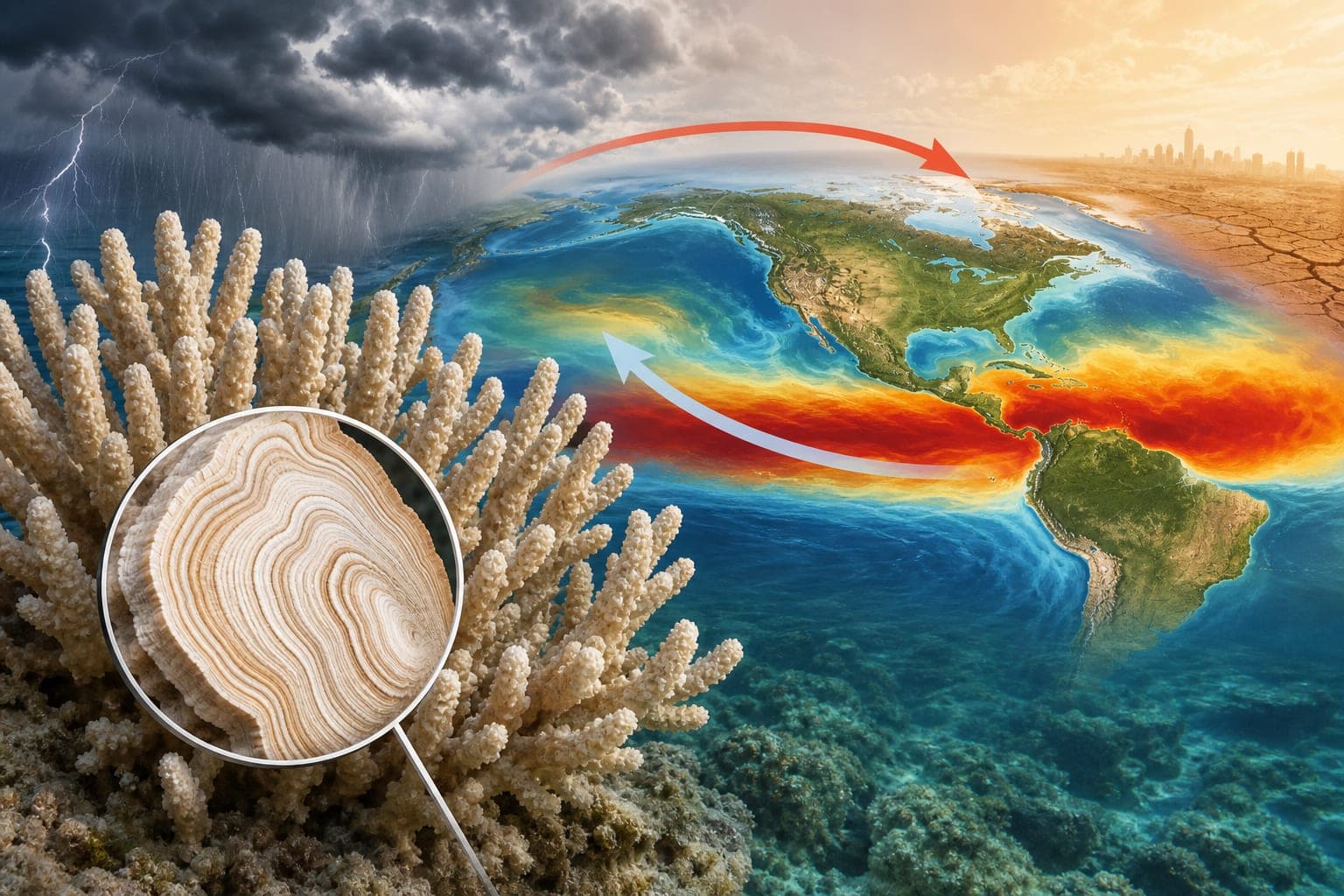
The methodology underpinning the study is notably innovative. Researchers extracted core samples from living and fossilised corals in the Galápagos Islands. The chemical composition of coral skeletons reflects the ocean temperatures under which they formed. By examining strontium-to-calcium ratios and oxygen isotope variations at millimetre-scale intervals, the team reconstructed monthly temperature records across the past millennium.
The results are striking. El Niño events are now more than thirty-six percent stronger than before the industrial age began. A sixteen percent intensification has occurred in just the last four decades, indicating an accelerating trend. This amplification closely parallels the rise in global temperatures attributable to fossil fuel combustion. The correlation strongly implies that anthropogenic warming is the predominant driver.
These findings arrive at a particularly consequential moment. A powerful El Niño that formed earlier this year is forecast to become the strongest on record. Scientists warn it could bring devastating droughts to Central America, Indonesia, and parts of Africa. Simultaneously, other regions may experience catastrophic flooding. The economic toll of such extreme events can reach trillions of dollars globally.
Nevertheless, the scientific community remains somewhat divided on the conclusions. Some researchers hail the study as a landmark contribution to climate science. Others express scepticism, noting that certain observations appear to contradict the findings. What is indisputable, however, is the urgency of understanding how climate variability and anthropogenic warming interact. Should El Niño events continue to intensify, the ramifications for agriculture, infrastructure, and human welfare would be immense.