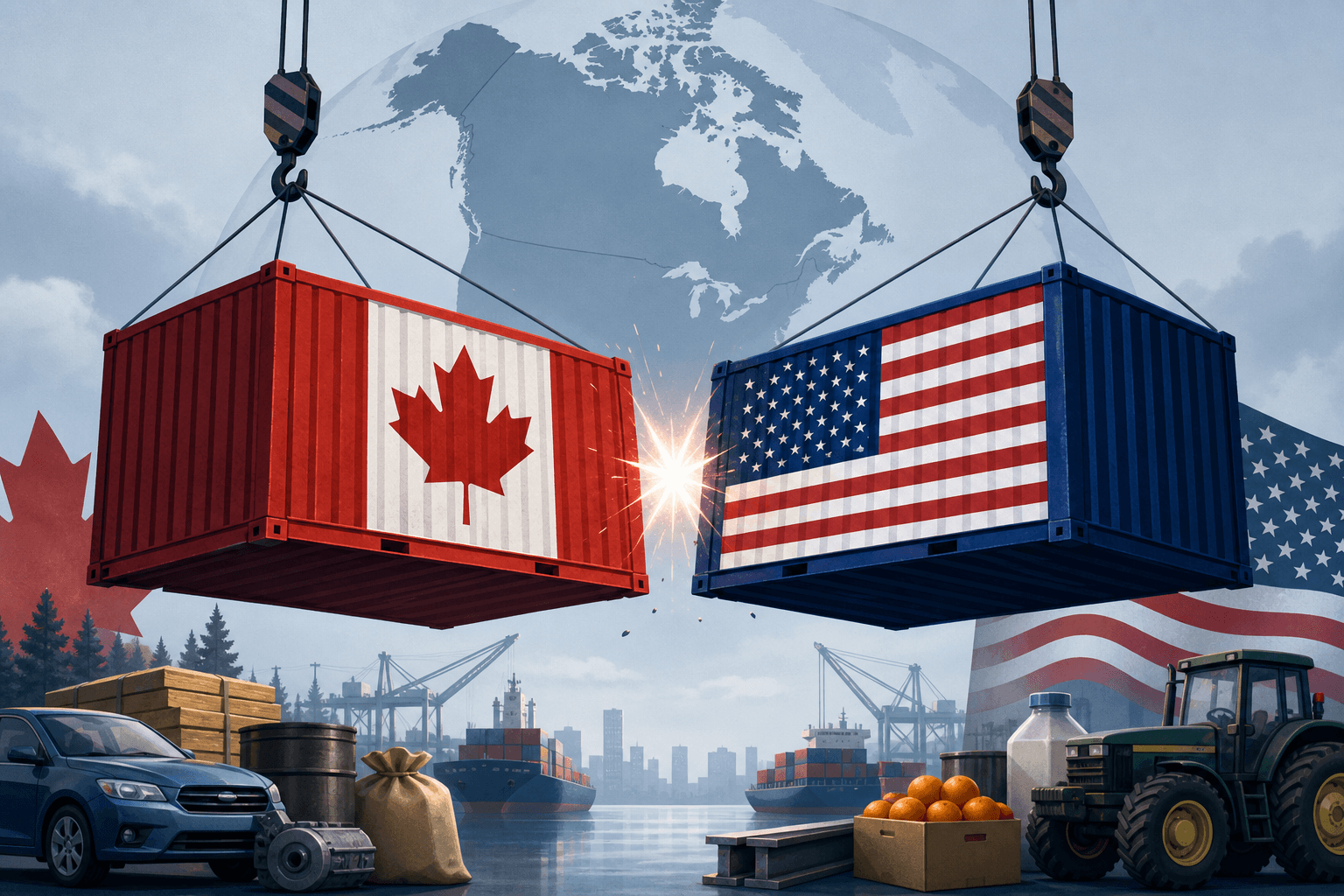
Seldom has the economic relationship between Canada and the United States faced such a profound challenge. Effective September 8, 2026, Canada has imposed counter-tariffs of up to 50 percent on hundreds of American products. The retaliatory measures target more than 700 product categories, spanning sectors including steel, dairy, electronics, and agricultural equipment. This decisive action follows the collapse of trade negotiations between Ottawa and Washington in late August.
The escalation was precipitated by President Donald Trump's decision to impose 50 percent tariffs on Canadian goods in August 2026. Prime Minister Mark Carney responded by pledging to match the American duties dollar for dollar. Finance Minister Champagne framed the countermeasures as a calculated response designed to protect Canadian industries. Notably, the counter-tariffs apply regardless of existing trade agreement protections under the CUSMA framework.
The ramifications of this dispute extend well beyond government policy. Businesses on both sides of the border face mounting uncertainty as supply chains are disrupted and costs rise. Consumers in both nations may ultimately bear the burden through higher prices on everyday goods. Economists caution that such protectionist measures rarely yield the intended benefits for ordinary citizens.
To mitigate the adverse effects, Canada has announced a $7.5 billion support package for affected workers and businesses. This package builds on nearly $25 billion in assistance provided over the preceding eighteen months. Key provisions include enhanced employment insurance, workforce retraining programmes, and expanded loan facilities for enterprises. The government's stated objective is to retain workers and strengthen economic resilience during this turbulent period.
The broader implications for global trade remain uncertain. Should this bilateral conflict persist, it could accelerate a fundamental restructuring of North American supply chains. Canada has signalled its intention to diversify trade partnerships beyond its southern neighbour. Whether such a prolonged dispute will ultimately compel both nations to return to the negotiating table remains an open question.