
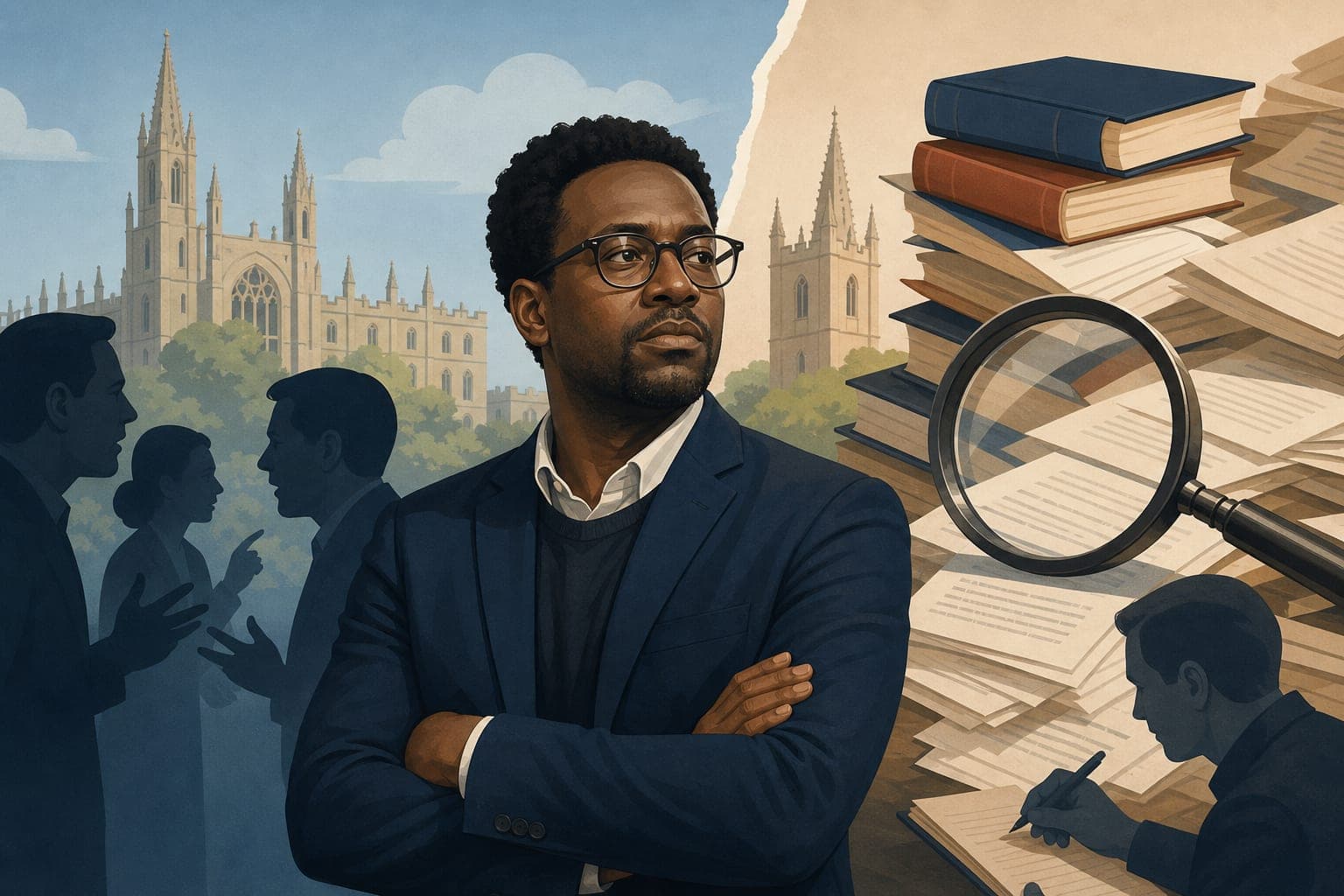
Seldom has an academic controversy generated such polarised debate as the plagiarism allegations surrounding Professor Jason Arday. Appointed to a professorial chair in sociology at Cambridge in 2023, Arday had been widely celebrated. His remarkable personal trajectory included overcoming autism and remaining non-verbal until age eleven. He did not learn to read or write until eighteen, yet he obtained a doctorate and rose rapidly.
The allegations centre on Arday's doctoral thesis and several published journal articles. Independent analyses have identified numerous passages that appear identical or nearly identical to prior academic work. One study found 188 sentences closely matching a 2009 thesis by a Brunel University scholar. Critics contend that such extensive textual overlap cannot be attributed to coincidence alone.
Both Cambridge and Liverpool John Moores University, which awarded Arday his doctorate, have exonerated him. Cambridge described the accusations as a vile campaign to undermine his credibility. The university maintains that thorough investigations found no evidence of wrongdoing. However, several emeritus professors at other institutions have disputed the rigour of these inquiries.
The dispute has become entangled with broader ideological tensions within academia. Supporters argue that the allegations constitute a racially motivated attack on a distinguished Black scholar. Conversely, those raising concerns insist that academic integrity must be upheld regardless of a researcher's background. This ideological dimension has complicated efforts to conduct a dispassionate assessment of the evidence.
The case underscores a systemic challenge confronting universities worldwide. Institutions must balance the imperative to protect scholars from unfounded accusations with the obligation to investigate credible claims. Should universities fail to maintain transparent and rigorous standards, the very foundation of scholarly trust risks erosion. How this dispute is ultimately resolved may set a precedent for academic misconduct cases.