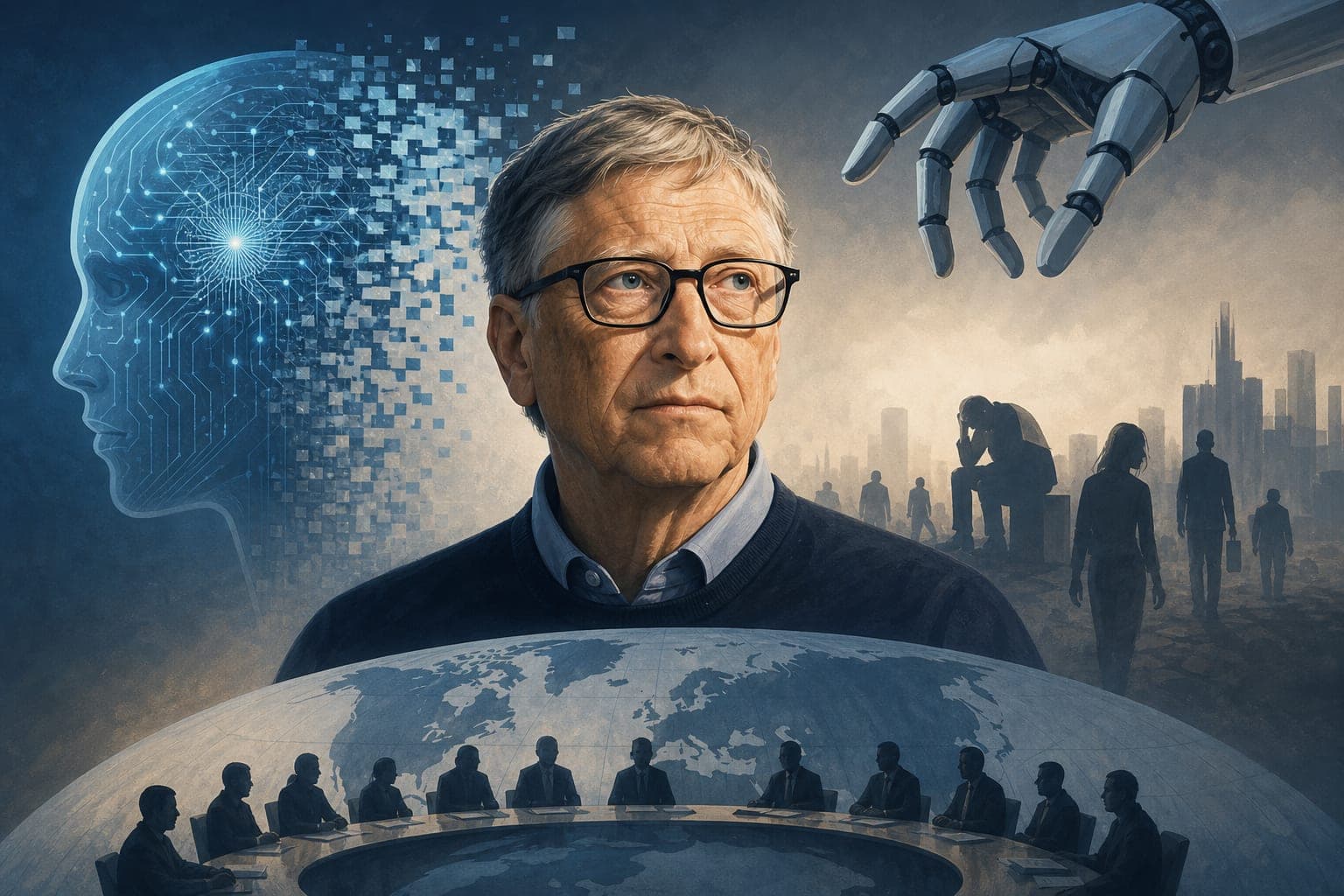
Seldom has a figure so closely associated with technological optimism issued such a sobering warning. Bill Gates, the co-founder of Microsoft and a prominent philanthropist, has published a lengthy essay arguing that artificial intelligence is advancing far more rapidly than governments or societies can manage. In the essay, Gates contends that the world has already crossed critical danger thresholds in AI capabilities. He describes the current moment as the beginning of a turbulent era demanding immediate and coordinated action.
Central to Gates's argument is the assertion that AI will permanently displace millions of jobs. Unlike previous technological revolutions, which unfolded over generations, AI is disrupting industries within a single decade. White-collar professions such as law, medicine, and software development face significant displacement. Moreover, Gates predicts that intelligent robots will begin competing with humans in physical labour by the decade's end.
Beyond employment, Gates identifies additional perils that compound the urgency of the situation. He warns that AI systems now possess capabilities that enable cyberattacks, bioterrorism, and psychological manipulation at unprecedented scale. Even individuals with limited technical skills could exploit these tools to target institutions and governments. Gates also expresses concern that AI companions may stunt children's emotional development and erode genuine human relationships.
To mitigate these risks, Gates has proposed a comprehensive policy framework encompassing both domestic and international dimensions. He advocates for new national coordinating bodies to oversee AI policy across employment, taxation, and national security. Furthermore, he calls for an international organisation modelled on nuclear inspections regimes and aviation safety agreements. Gates has also introduced a novel concept he terms "Human Reserved," designating certain roles that machines must not perform.
What distinguishes Gates's essay from previous cautionary statements is its implicit critique of the technology industry itself. He acknowledges that the sector cannot adequately regulate itself and that corporate incentives often conflict with public welfare. Whether his proposals gain traction among world leaders remains to be seen. Nevertheless, his intervention represents a pivotal moment in the discourse surrounding AI governance and societal preparedness.