
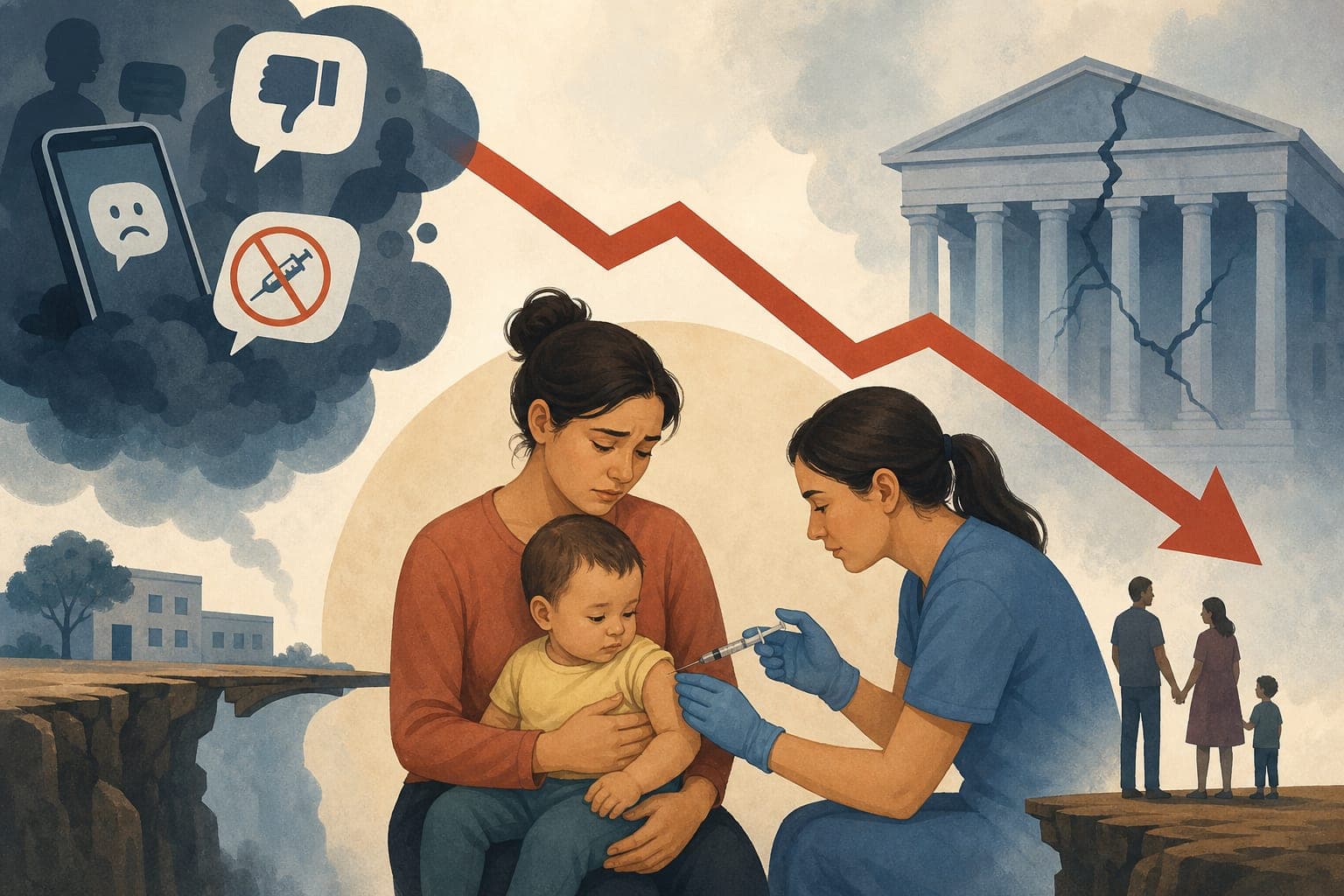
Seldom has a public health achievement been so imperilled by the very systems meant to sustain it. Childhood vaccination rates have declined persistently since the onset of the COVID-19 pandemic. In the United States, kindergarten coverage for measles, mumps, and rubella dropped to 92.5 percent for the 2024-2025 school year. Globally, an estimated 13.5 million children received no vaccine at all during their first year of life in 2025. These figures signal a trajectory that threatens decades of progress in disease prevention.
While misinformation on social media is frequently cited as the predominant driver of vaccine hesitancy, experts contend this narrative is reductive. The erosion of trust in public health institutions represents a far more consequential factor. Research from the Vaccine Confidence Project reveals that confidence in vaccine safety declined in 52 of 55 countries surveyed since 2019. Contradictory government messaging during the pandemic, coupled with coercive policy measures, has fundamentally undermined institutional credibility. Parents who once complied without question now scrutinise recommendations with unprecedented scepticism.
Equally significant are the systemic barriers that impede equitable access to immunisation services. In the United Kingdom, declining public health budgets and reduced access to general practitioners have compounded the problem. Coverage of the first measles vaccine in the UK fell to just 89 percent in 2024, well below the 95 percent threshold for herd immunity. Disparities are particularly acute in underserved communities, where logistical obstacles often outweigh ideological objections. Attributing declining uptake solely to parental beliefs overlooks these structural deficiencies.
The consequences of stagnating coverage are already manifest. Fifty-seven countries reported large or disruptive measles outbreaks in 2025. In the United States, measles cases reached a thirty-three-year high, while whooping cough cases more than doubled. These resurgences underscore that even modest declines in vaccination rates can precipitate significant public health emergencies. Had policymakers addressed access and trust concurrently, such outbreaks might have been substantially mitigated.
Reversing this trajectory will require interventions that transcend conventional awareness campaigns. Community-based outreach programmes have demonstrated remarkable efficacy in certain regions. Healthcare professionals remain the most trusted source of vaccine information for most families. Rebuilding confidence demands transparency, sustained investment in healthcare infrastructure, and genuine dialogue with hesitant populations. Only through such a multifaceted approach can immunisation coverage be restored to the levels necessary for collective protection.