
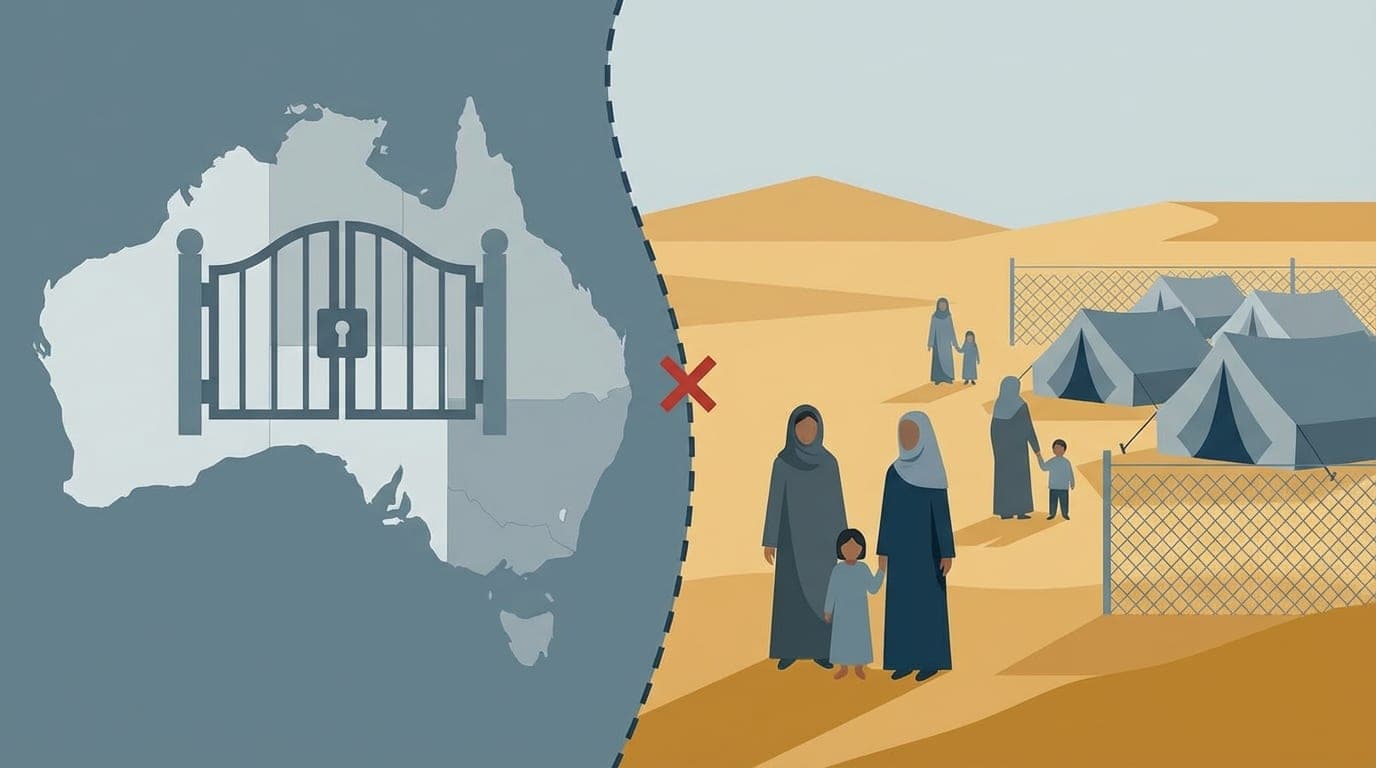
Seldom has a government's refusal to repatriate its own citizens generated such profound ethical controversy. Australian Prime Minister Anthony Albanese declared that his government would not bring home 34 women and children from Syria. These individuals have been detained in the Al-Roj camp, which houses ISIS militants and their families. The Prime Minister's stance has reignited a fraught debate over citizenship and state responsibility.
The controversy arose after the 34 Australians from 11 families attempted to leave Al-Roj camp. Two male relatives had coordinated with Syrian authorities to transfer the families to Damascus. Camp officials confirmed that the men presented temporary Australian passports issued for the families. However, Syrian authorities turned the group back due to procedural complications, and their journey was halted.
Albanese's position has been unequivocal. He warned that any returnees would face the full force of Australian law. Under Australian legislation, travelling to ISIS-held territory without legitimate reason carried a maximum penalty of ten years' imprisonment. A government spokesperson reiterated that Australia would provide no support for repatriation. Previous repatriations had occurred in 2019 and 2022, but the current administration has adopted a markedly harder line.
Human rights organisations have sharply criticised this approach. Amnesty International has documented systematic abuses in the detention camps, including torture and gender-based violence. Save the Children took the Australian government to court in 2023 to compel repatriation but lost. The charity's CEO argued that innocent children deserve the chance to rebuild their lives safely. Many detainees were reportedly trafficked to ISIS territory or born into the conflict.
The broader international context adds further complexity to Australia's position. Several Western nations, including Germany, France, and Britain, have repatriated citizens from Syrian camps. UN experts have urged over fifty countries to bring home their nationals while ensuring legal accountability. The collapse of the Assad regime in 2024 has heightened uncertainty within the camps. Whether Australia will sustain its current policy remains a contentious and unresolved question.