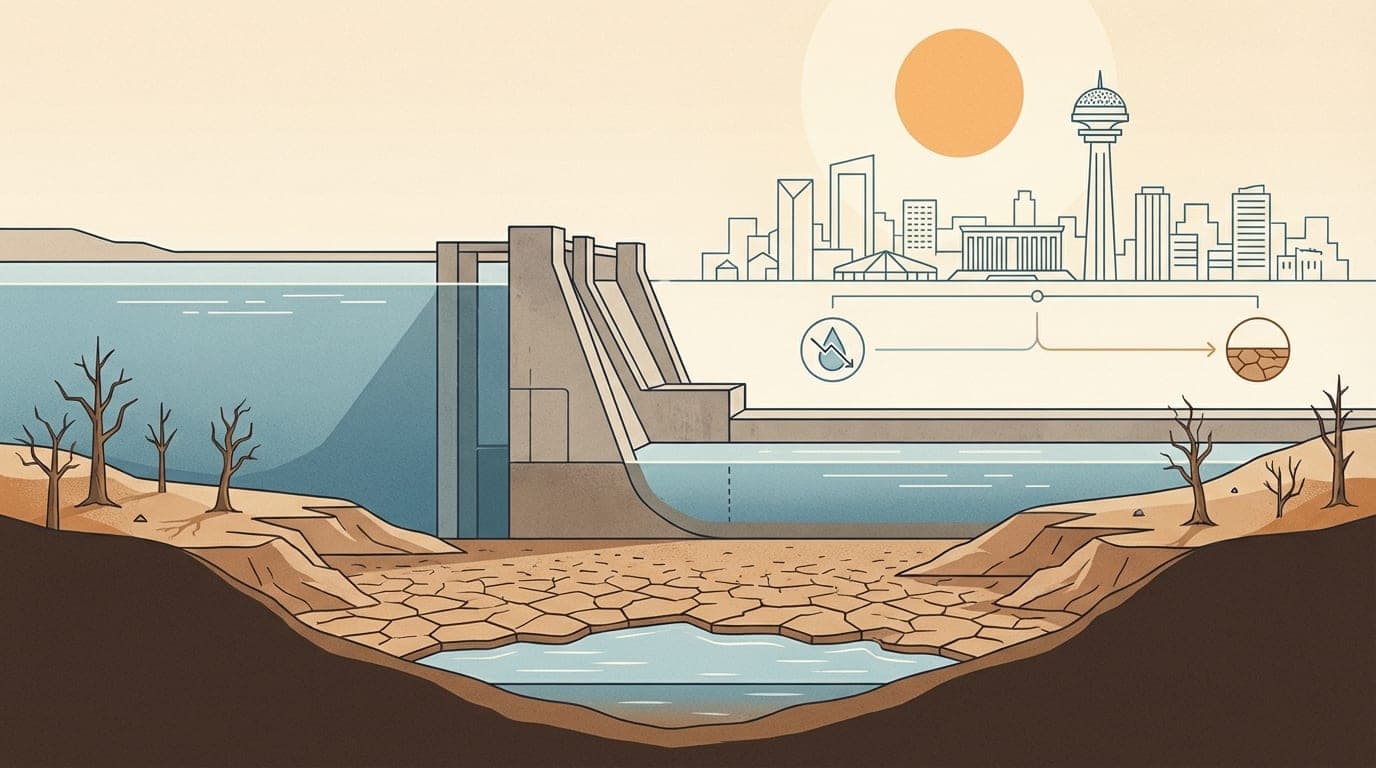
Turkey's capital, Ankara, is confronting a severe water crisis that has intensified over recent months. According to the Ankara Water and Sewerage Administration, known as ASKİ, dam occupancy rates have dropped to 32.96%. More critically, the rate of actively usable water stands at merely 25.16%. These figures, which were released on April 1, 2026, indicate that reserves are at dangerously critical levels. Had sufficient rainfall occurred during the previous year, the situation would not have deteriorated so rapidly.
The crisis is rooted in a prolonged drought that has persisted for approximately eighteen months. Experts have noted that 2025 was the driest year in Turkey in over fifty years. Rainfall across the country has declined by roughly 27% compared to the average of the last three decades. During the summer months, inflow to Ankara's dams fell sharply due to limited precipitation and reduced snowmelt. This significant decrease has challenged the city's ability to meet its daily water demand of 1.3 million cubic meters.
In response, ASKİ has implemented a controlled water distribution model to preserve remaining reserves. Authorities have been allocating water based on priority schedules across different city districts. Strategies being developed include expanding rainwater harvesting, utilizing underground water resources, and optimizing distribution networks. Furthermore, the government launched a National Water Efficiency Initiative to encourage conservation through education and revised tariffs. Heavy water users are now being charged more to discourage non-essential consumption.
Climate scientists warn that recurring drought cycles, exacerbated by climate change, are increasingly complicating urban water management. Without significant reforms and comprehensive adaptation strategies, Turkey could become a water-scarce country by 2050. The broader environmental impact is equally alarming, as 75% of Turkey's lakes have disappeared over the past sixty years. Ankara's predicament serves as a compelling case study in the consequences of insufficient long-term water planning. If proactive measures had been adopted earlier, the capital might have been better prepared for this crisis.