
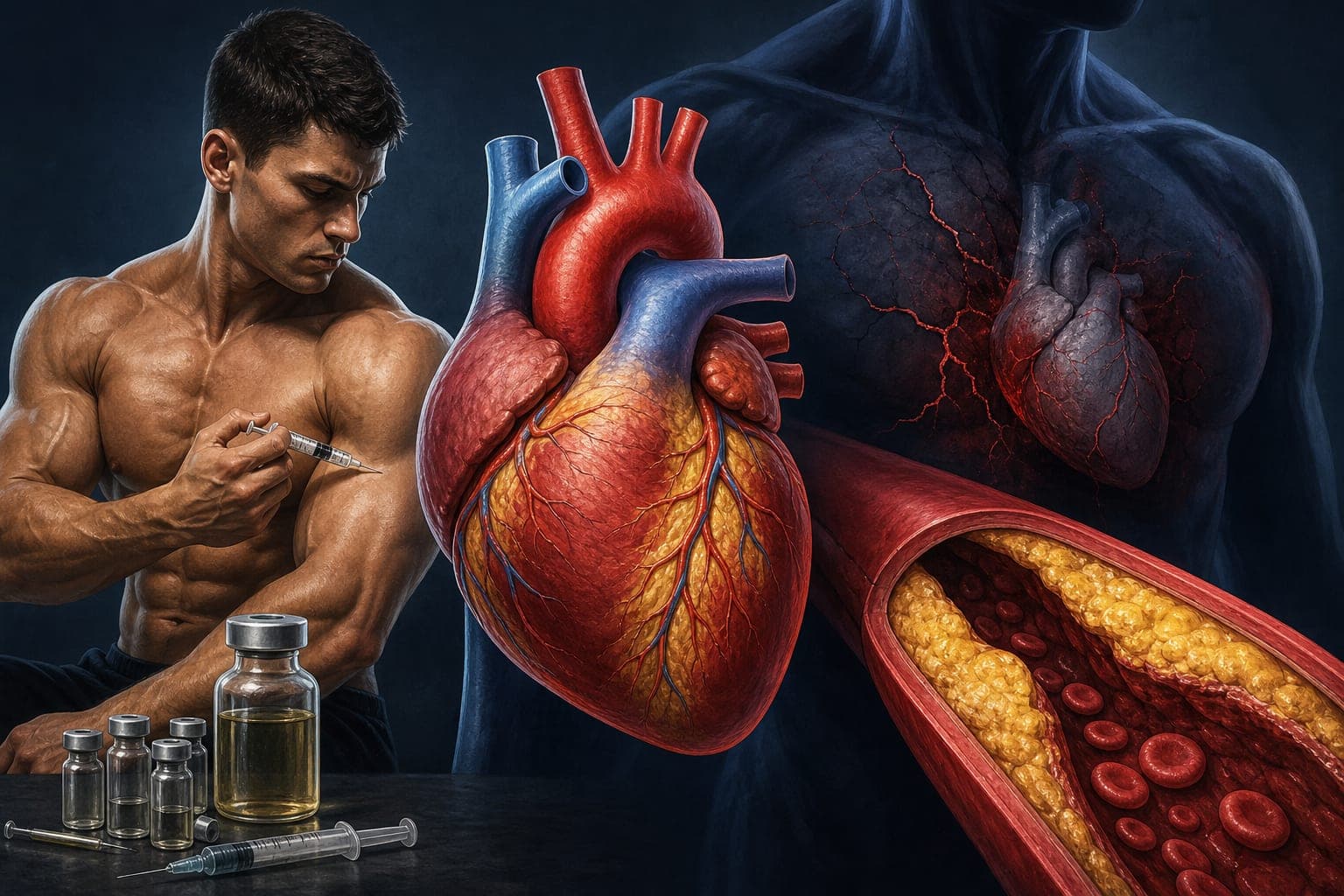
Seldom has a class of performance-enhancing substances attracted such sustained scientific scrutiny as anabolic-androgenic steroids. Synthetic derivatives of testosterone, these compounds were initially developed for legitimate therapeutic purposes. However, their capacity to accelerate muscle growth has driven widespread illicit use across diverse populations. Recent cardiovascular research now reveals that the physiological toll of prolonged steroid consumption is far graver than previously acknowledged.
A landmark study published in the journal Circulation examined 140 experienced male weightlifters aged 34 to 54. Of those participants, 86 reported at least two years of steroid use, while 54 reported none. Users averaged a left ventricular ejection fraction of just 52 percent, compared with 63 percent in nonusers. This disparity indicates that steroid users' hearts pumped substantially less blood with each contraction. Researchers also documented greater coronary artery plaque accumulation among users, with severity correlating to cumulative years of exposure.
A subsequent Danish investigation corroborated these findings on a larger scale. Researchers tracked 1,189 men sanctioned for steroid use in fitness centres over approximately 11 years. The steroid cohort exhibited triple the rate of heart attack compared with the general population. Rates of cardiomyopathy ran nearly nine times higher among users. Heart failure, blood clots, and arrhythmias all demonstrated statistically significant increases as well.
What renders these findings particularly alarming is the demographic profile of contemporary steroid users. A meta-analysis of 187 studies estimated global lifetime use at 3.3 percent overall. Most current users never compete in organised sport. Researchers increasingly attribute this trend to social media, which amplifies unattainable standards of physical perfection. Muscle dysmorphia, a distorted perception of being insufficiently muscular, appears repeatedly in this population.
Prevention researchers now advocate education over prohibition, noting that decades of regulatory bans have failed to diminish demand. Cardiovascular risk evaluation, including blood pressure monitoring and echocardiography, is recommended for all users. Ultimately, the evidence compels a sobering reassessment of the trade-off between aesthetic aspiration and long-term health. The ordinary exercise regimens that genuinely protect the heart remain accessible to everyone without pharmacological risk.