
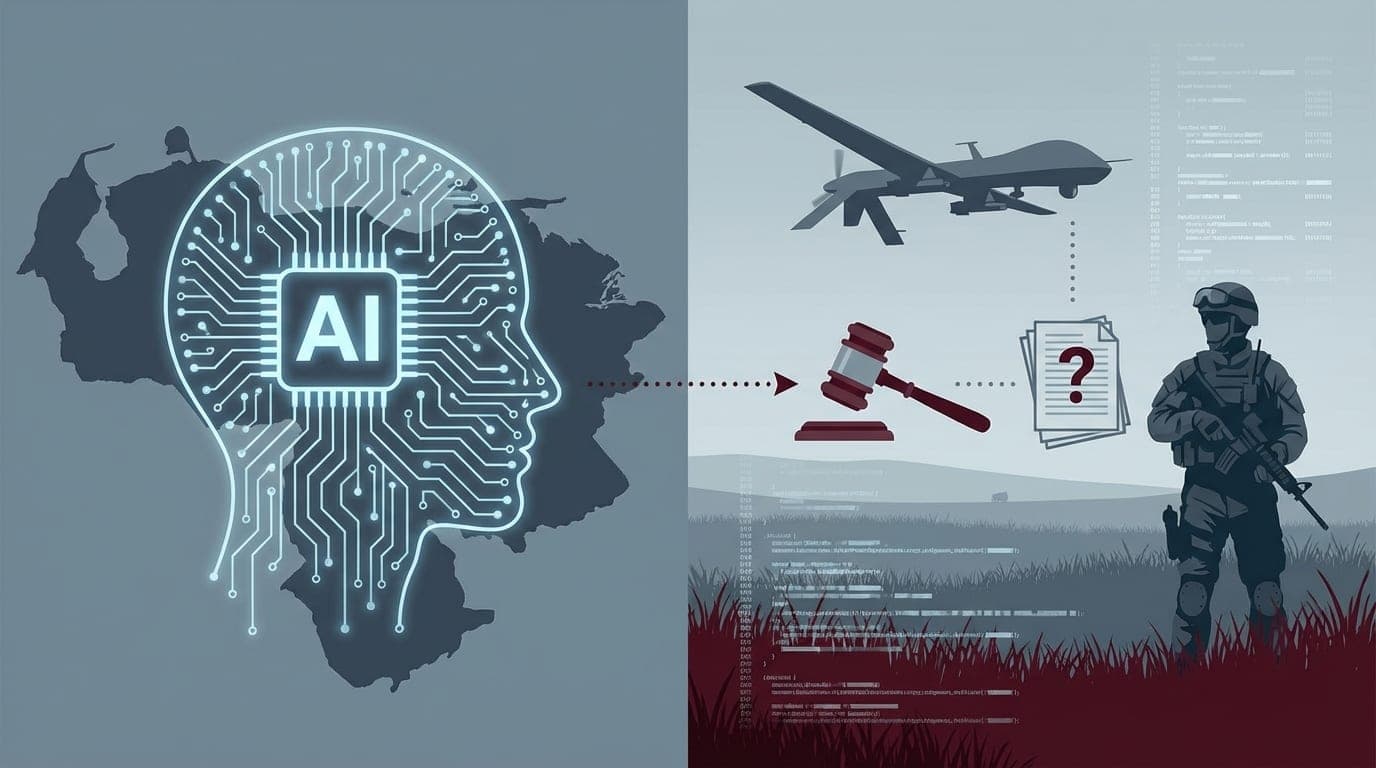
Seldom has a technological revelation provoked such profound ethical scrutiny within military and corporate spheres simultaneously. According to The Wall Street Journal, the United States military employed Claude, a commercial AI model developed by Anthropic, during the raid to capture former Venezuelan President Nicolás Maduro. The operation, which took place in early January 2026, involved US special operations forces breaching sites in Caracas. Claude was reportedly deployed not merely during preparatory phases but throughout the active mission itself. This disclosure marks the first confirmed instance of a commercial AI model being utilised in a classified combat operation.
The AI system reached the battlefield through Anthropic's partnership with Palantir Technologies, a prominent defence contractor. Palantir's platforms are extensively integrated into Defence Department and federal law enforcement operations. Through this arrangement, Claude became the first commercial AI model granted access to the Pentagon's classified networks. The military has previously used such models to analyse satellite imagery and process intelligence data in real time. However, the precise role Claude played during the Venezuela operation remains undisclosed.
This revelation has exposed a fundamental tension between Anthropic's stated ethical principles and its commercial obligations. The company's usage guidelines explicitly prohibit Claude from facilitating violence, developing weapons, or conducting surveillance. Nevertheless, the operation resulted in dozens of Venezuelan and Cuban security personnel being killed. An Anthropic spokesperson maintained that any use of Claude was required to comply with the company's usage policies. The company declined to confirm whether its technology was employed in this specific classified mission.
The fallout from this disclosure has been substantial and far-reaching. Senior Pentagon officials have expressed frustration with Anthropic's insistence on maintaining ethical safeguards. The Trump administration is reportedly considering cancelling a contract valued at up to $200 million with the company. Defence Secretary Pete Hegseth has championed the rapid integration of AI across all military functions. Rival companies, including OpenAI, Google, and xAI, have agreed to remove standard restrictions for Pentagon use.
The broader implications of this episode extend well beyond a single military operation or corporate partnership. It raises critical questions about accountability when commercial technologies are deployed in lethal contexts. Anthropic's CEO, Dario Amodei, has consistently advocated for robust AI regulation and warned against unconstrained use. The company insists that autonomous weaponry and mass domestic surveillance must remain prohibited. Whether such ethical boundaries can withstand the mounting pressure of military demands remains an open question.