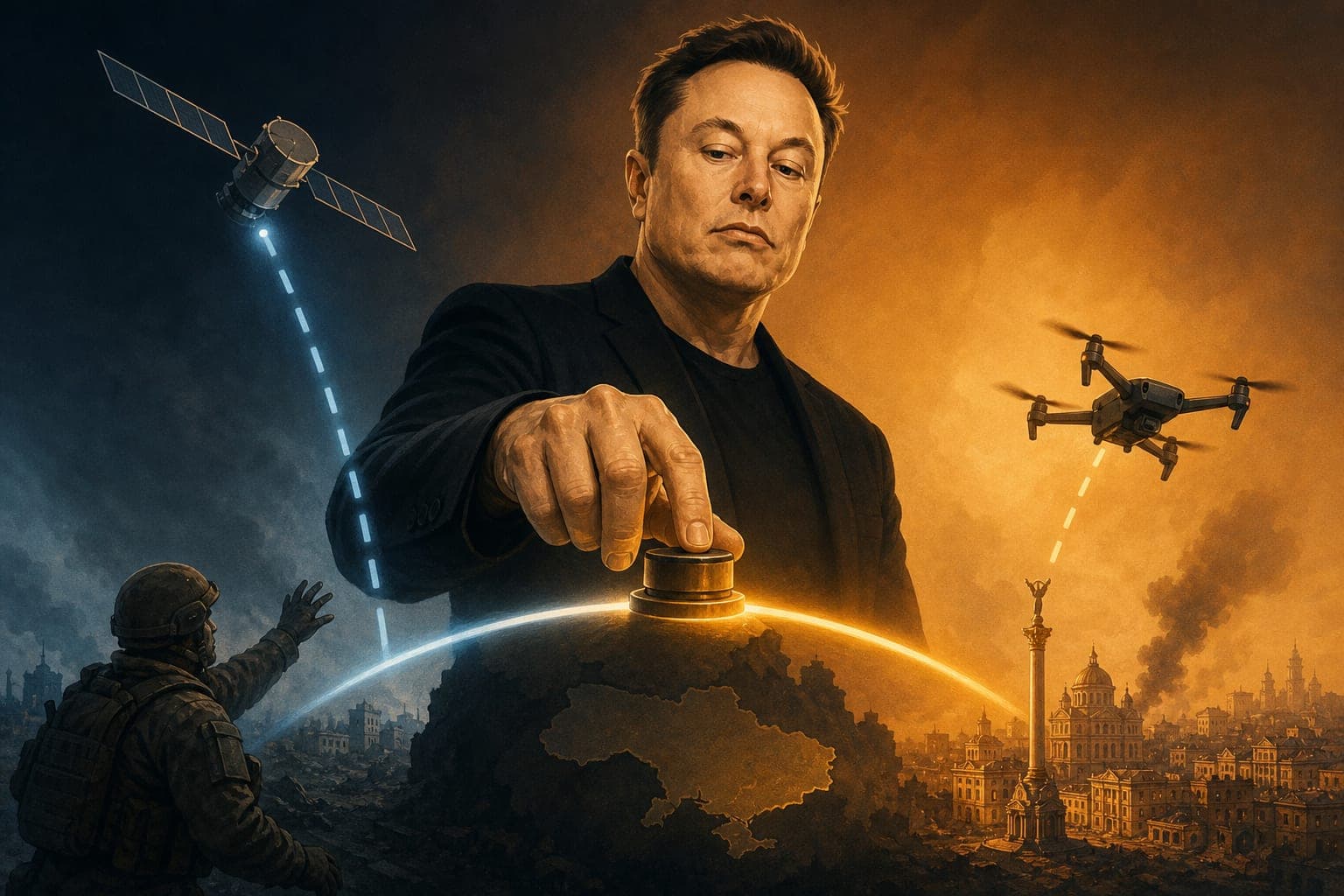
Seldom has a corporate decision carried such profound geopolitical consequences. According to The Wall Street Journal, SpaceX CEO Elon Musk ordered a slowdown of Starshield, the military-grade version of Starlink, in Ukraine. The throttling reportedly began on October 14 and left some Ukrainian offensive drones virtually inoperable. Ukraine relies heavily on Starlink for battlefield communications, drone operations, and even supply deliveries.
The restriction specifically targeted devices traveling above 99 miles per hour using GPS-based speed tracking. This velocity cap effectively crippled Ukraine's attack and air defense drone missions against Russia. Ukrainian President Volodymyr Zelensky warned that the slowdown would cost lives. He called the decision a grave mistake and urged its immediate reversal.
What makes this episode particularly contentious is the contradictory narrative surrounding accountability. Musk initially claimed that only the U.S. military or President Trump could authorize such changes. However, Secretary of State Marco Rubio stated the administration had no foreknowledge of the decision. Defense Secretary Pete Hegseth similarly denied issuing any directives, noting that SpaceX retains autonomy under its terms of service.
The incident is not unprecedented. Reports have previously alleged that Musk ordered Starlink shutdowns during Ukraine's 2022 Kherson counteroffensive. Those disruptions reportedly disabled drones and undermined artillery coordination at a critical moment. Such recurring allegations underscore the precarious dependence of a sovereign nation on privately owned infrastructure.
This controversy has prompted broader scrutiny of the intersection between private enterprise and national security. The European Commission has already begun exploring satellite alternatives for Ukraine should Starlink access be curtailed again. Rarely has the concentration of technological power in private hands posed such an acute dilemma for democratic governance. The question remains: should any individual possess the unilateral capacity to alter the course of a conflict?