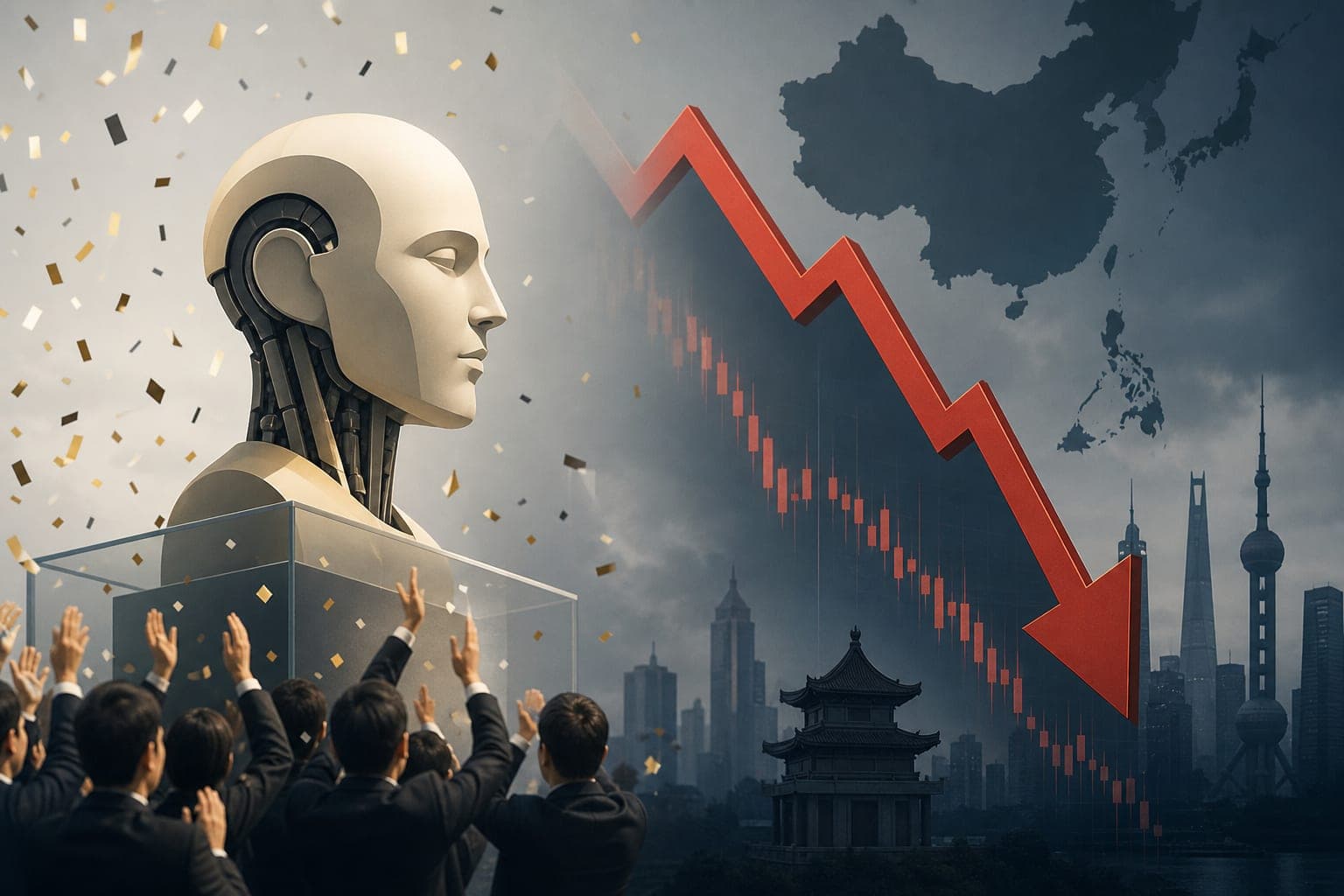
Seldom has a single week carried such profound implications for the trajectory of the artificial intelligence sector. With Nvidia's third-quarter earnings due on November 17 and Anthropic's landmark Nasdaq debut expected on November 19, investors confront two pivotal catalysts in rapid succession. The S&P 500 closed Friday at 7,561.67, slipping 0.4 percent amid cautious positioning. Market participants appear reluctant to commit capital ahead of these consequential disclosures.
Nvidia's forthcoming report arrives under extraordinary circumstances. The chipmaker's founder and visionary leader, Jensen Huang, resigned abruptly on November 12, leaving CFO Colette Kress as interim chief executive. Analysts anticipate revenue of approximately $108.8 billion and earnings near $2.47 per share for the quarter. However, forward guidance will arguably matter more than backward-looking figures in this volatile climate.
Simultaneously, Anthropic's IPO roadshow has captivated institutional investors worldwide. The AI laboratory behind the Claude model has proposed a price band of $70 to $78 per share. At the upper end, the offering would raise roughly $64.4 billion and value the company at $1.4 trillion. No dedicated AI model developer has ever attempted a public listing of this magnitude.
What distinguishes this week from prior earnings cycles is the convergence of leadership upheaval and unprecedented market debut. Nvidia has shed approximately $1.7 trillion in market capitalization since early October, underscoring investor apprehension. Should Nvidia's results disappoint or Anthropic's listing falter, the ramifications could reverberate across the broader technology sector. Conversely, strong outcomes would reinforce the thesis that AI spending remains durable.
For sophisticated market observers, the underlying question transcends any single quarterly report or IPO valuation. The durability of corporate AI expenditure is fundamentally what the market seeks to validate this week. Treasury yields hovering near 5.15 percent further complicate the calculus for growth-oriented equities. How these catalysts resolve may well determine whether the AI trade retains its preeminence in global portfolios.