
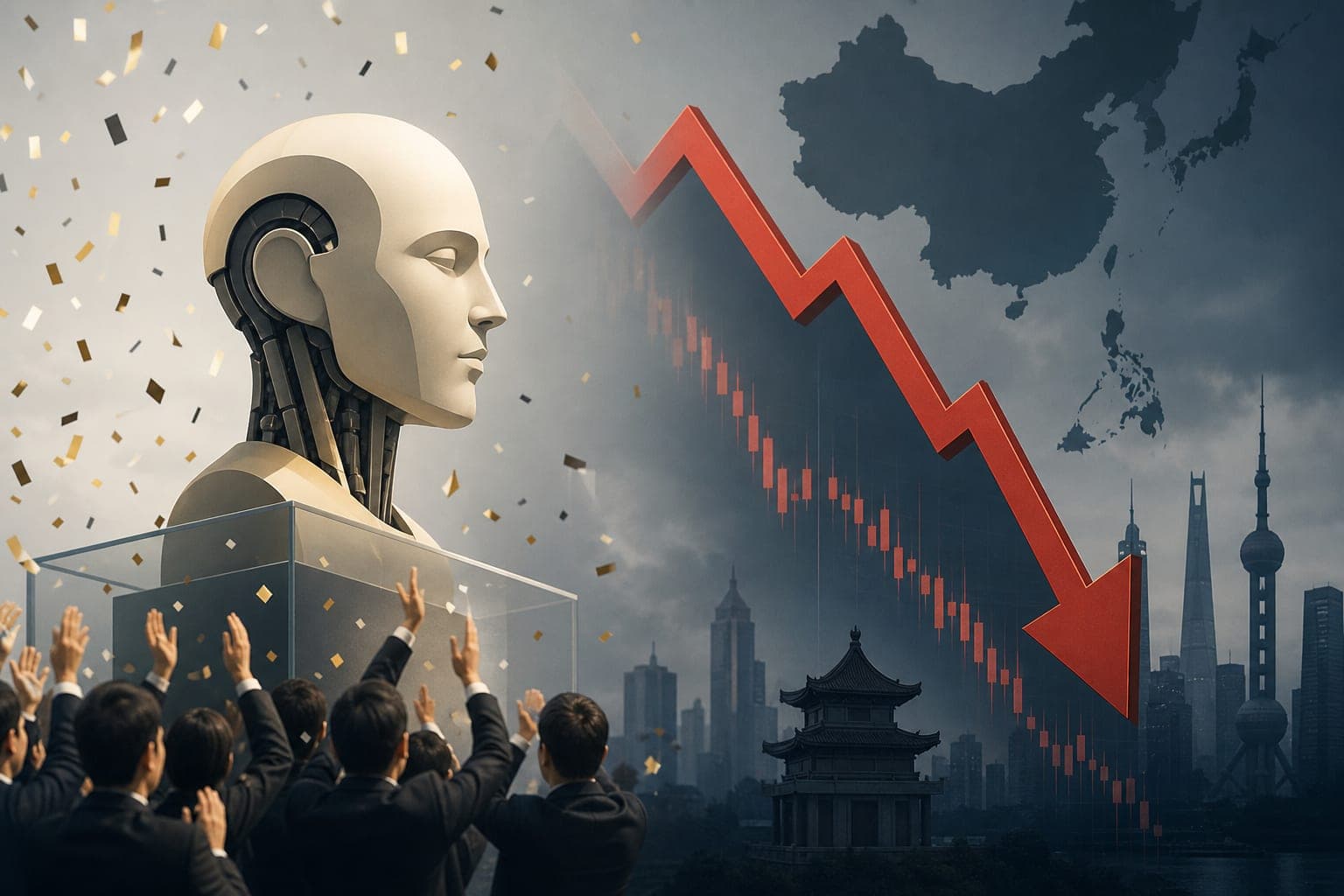
Seldom has a single listing carried so much weight for global market sentiment. Anthropic, the creator of the Claude AI assistant, debuted on the Nasdaq on November 19 in what became the largest initial public offering in history. The company raised $81.3 billion by selling 980 million shares at $83 each, surpassing SpaceX's previous record. Shares opened at $111.50, surging 34% above the IPO price before closing at $97.17. Yet this blockbuster debut proved insufficient to restore broader investor confidence.
Asian equity markets fell sharply the following day, extending a prolonged losing streak. The MSCI Asia Pacific equities index declined 1%, marking its seventh consecutive session of losses. Tokyo's Nikkei 225 tumbled as much as 4.9%, while Seoul's Kospi plunged 5.4%. Taiwan's Taiex dropped more than 6.8%, and Hong Kong's Hang Seng Index dipped over 2%. These declines underscored the fragility of sentiment across the region's chip-heavy markets.
The broader sell-off in technology stocks had been gathering momentum throughout November. A Democratic sweep in the U.S. midterm elections fueled concerns about tighter oversight of artificial intelligence infrastructure. Investors grew apprehensive that new regulatory measures could curtail data center construction and slow AI spending. The Nasdaq Composite had already entered correction territory, erasing trillions in market value. Anthropic's listing arrived against this turbulent backdrop.
Analysts offered a sobering assessment of the situation. Carlos Casanova of Union Bancaire Privée described the downturn as a fundamental collapse in confidence in the AI investment thesis. Rather than lifting the broader AI complex, the listing appeared to divert liquidity from established technology stocks. Rajat Agarwal of Societe Generale suggested that the peak growth phase for AI-led equities may have passed. Such perspectives highlight a pivotal shift in how institutional investors are recalibrating their portfolios.
Anthropic's IPO nonetheless represents a watershed moment for the artificial intelligence industry. The company achieved a fully diluted valuation of approximately $1.76 trillion on its first trading day. Major technology firms, including Amazon and Google, hold stakes valued at over $100 billion each. Whether this landmark offering ultimately reinvigorates or further destabilizes the AI trade remains an open question. For now, markets appear to be grappling with a fundamental reassessment of the sector's trajectory.