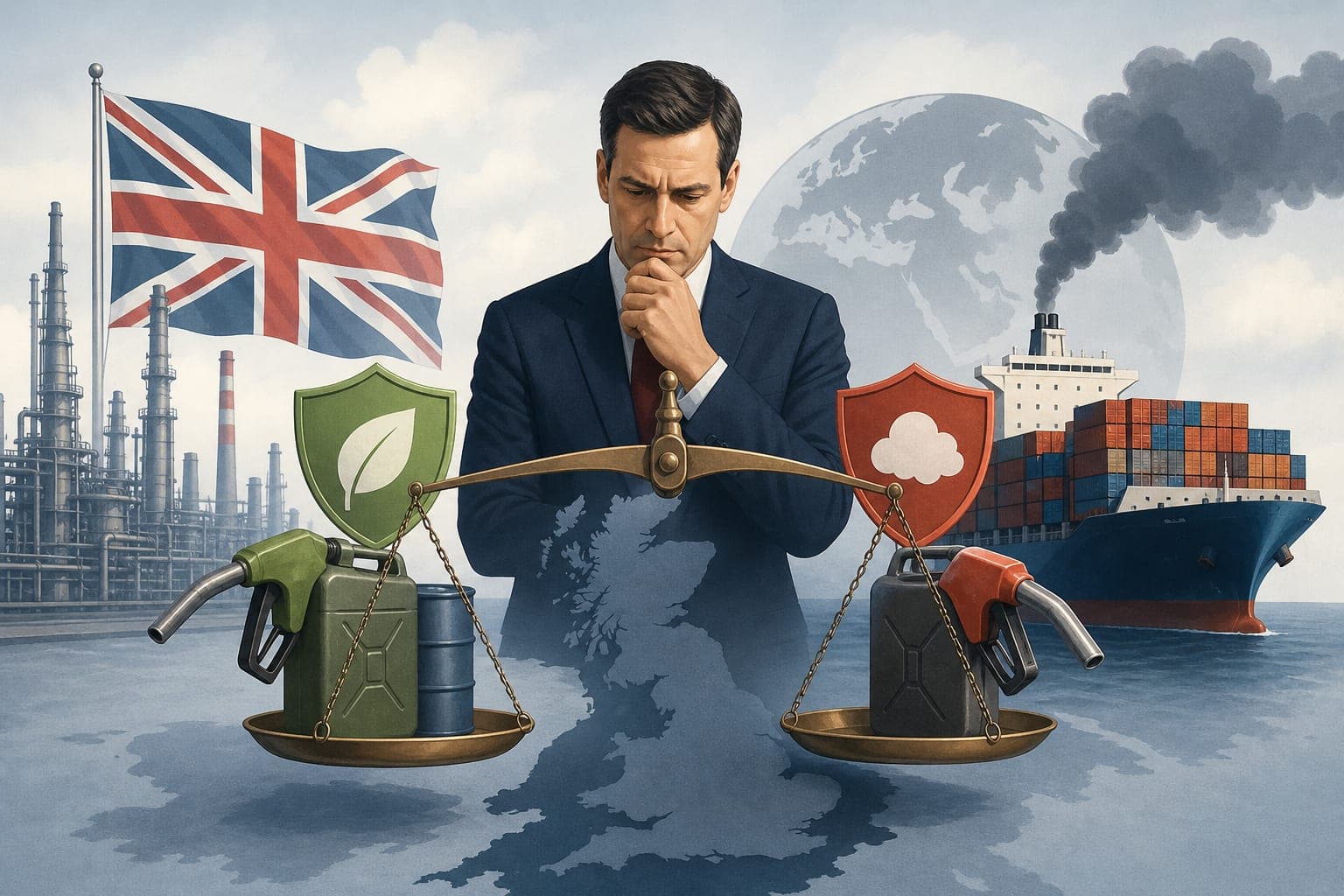
Seldom has a proposed fiscal measure generated such polarised debate in British politics. Chancellor John Healey has reportedly drawn up plans to impose a carbon charge on imported fuel. The proposal, revealed ahead of next week's Budget, would subject petrol and diesel imports to net-zero costs. Currently, British refineries bear substantial environmental compliance expenses that foreign competitors do not face. This asymmetry has allowed cheaper imported fuel to undercut domestically refined products.
The proposed mechanism would function as a carbon border adjustment, levelling the playing field between domestic and overseas producers. Under existing regulations, UK refineries must pay millions in emissions-related costs through the national trading scheme. Foreign refiners exporting to Britain face no equivalent obligation, creating what economists term carbon leakage. By imposing a comparable charge on imports, the government aims to discourage the offshoring of emissions-intensive production.
Proponents of the measure contend that it would bolster energy security and attract investment to British industry. Elizabeth de Jong, chief executive of Fuels Industry UK, has argued that a level playing field prevents both carbon and investment leakage. Without such intervention, she maintains, capital will continue flowing abroad rather than supporting domestic infrastructure. The policy aligns with broader international trends, as the European Union has already implemented its own carbon border mechanism.
Nevertheless, opponents have voiced considerable apprehension about the potential consequences for consumers. Petrol prices have already surged by approximately thirty-one percent since the onset of the Middle East conflict. The TaxPayers' Alliance has characterised the proposal as a punitive tariff disguised as environmental policy. Critics argue that such charges would inevitably trickle down to motorists, inflating pump prices and supply chain costs. Households already contending with a cost-of-living crisis could face further financial strain.
The timing of this proposal adds another layer of complexity to the debate. Fuel duty has been frozen at 52.95 pence per litre since March 2022, though increases are scheduled for early 2027. Whether the government extends this freeze remains uncertain, compounding public anxiety about rising motoring costs. Ultimately, policymakers must reconcile competing imperatives: environmental sustainability and economic affordability. The outcome of this deliberation will have profound implications for millions of British drivers.