
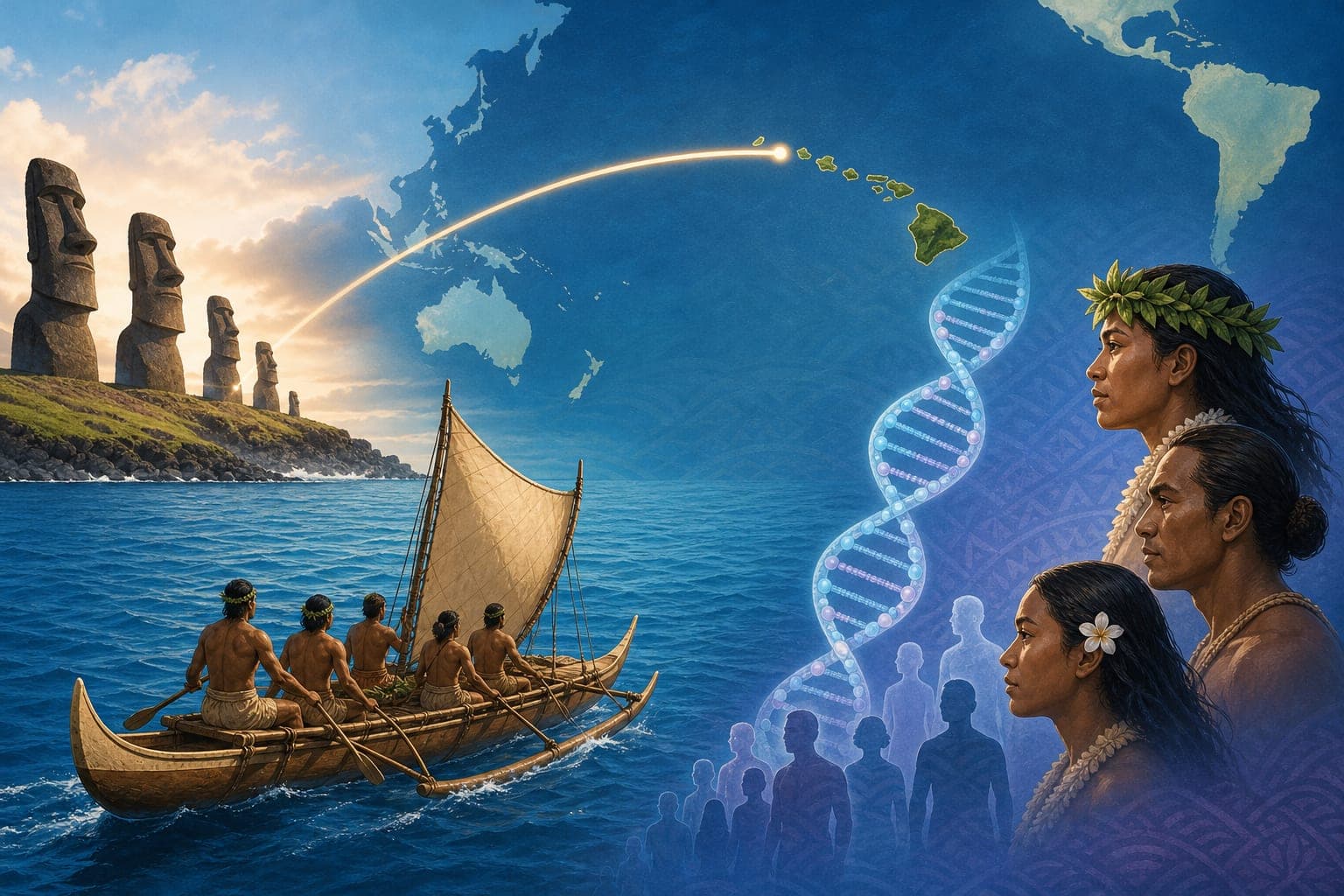
Seldom has a genetic study so fundamentally reshaped our understanding of human migration across the Pacific. Researchers from Stanford Medicine and collaborators have analysed the genomes of over 1,000 Polynesian individuals. Their findings, published in the journal Science, trace the ancestral origins of Native Hawaiians to Easter Island, also known as Rapa Nui. This revelation challenges previous assumptions about how Hawaii's first settlers arrived.
The researchers examined shared DNA segments and reconstructed thousands of genetic family trees across Polynesian populations. In a remarkable finding, Hawaii and Rapa Nui were paired together in 61 percent of those reconstructed trees. The data further indicated that Mangarevan ancestry ranked second among Native Hawaiians. These results suggest that an ultravoyaging culture embarked on an extraordinary journey spanning over 7,000 kilometres.
What distinguishes this study from prior research is its identification of nested founder effects throughout Polynesian settlement. A founder effect occurs when a small group separates from a larger population and establishes a new community. This genetic bottleneck reduces overall variation and can amplify otherwise rare mutations. Native Hawaiians sit at the culmination of successive bottlenecks accumulated over centuries of island settlement.
The clinical implications of these findings are particularly consequential. Researchers identified rare genetic variants linked to kidney disease and progressive blindness at elevated frequencies in Polynesian populations. These founder effects among Native Hawaiians are more than ten times stronger than those documented in well-studied European groups. Such disparities underscore the urgent need for tailored genetic screening programmes for this underserved population.
Beyond its medical significance, the study illuminates the remarkable navigational prowess of ancient Polynesian seafarers. These voyagers traversed vast stretches of open ocean in double-hulled canoes, carrying essential plants and animals. Their expeditions predated European voyages of exploration by centuries, constituting one of humanity's most impressive settlement feats. This research ultimately demonstrates how genomic analysis can elucidate both ancestral heritage and contemporary health priorities.