
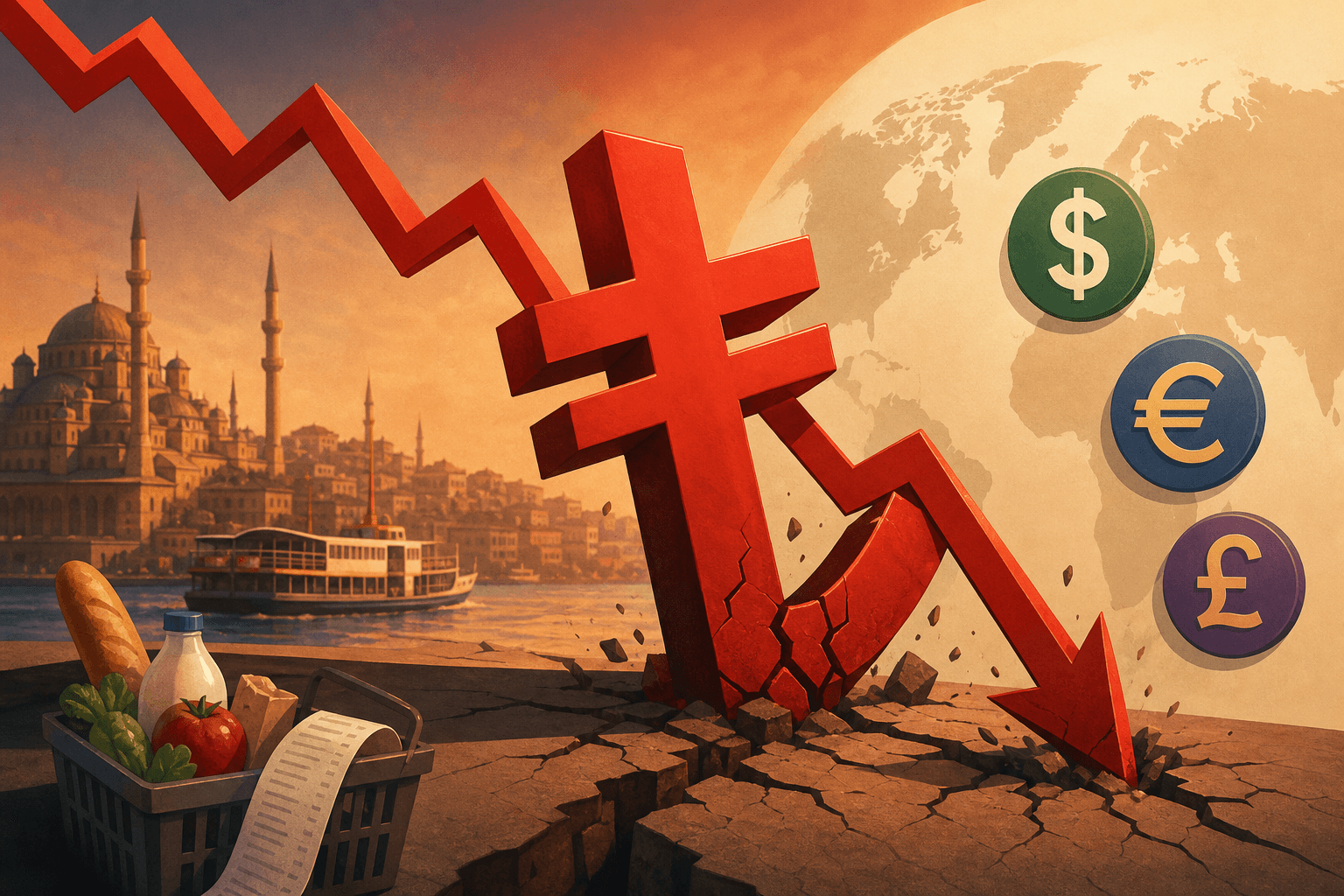
The Turkish lira has been falling steadily against major world currencies. It recently hit a record low of nearly 48 lira per US dollar. The euro also reached about 55 lira, its highest level ever. These numbers mean that foreign goods and services cost more for Turkish people. For many families, this decline has made daily life harder.
Several factors have caused the lira's weakness. Turkey's annual inflation rate is above 32 percent. Rising energy prices, linked to the Middle East conflict, have made things worse. The central bank has kept interest rates at 37 percent. However, this strategy has not been enough to stop the depreciation.
The impact on ordinary people is significant. Imported products, from electronics to food, have become more expensive. If the lira were stronger, people would have more purchasing power. Many Turkish citizens have reported that their wages cannot keep up. The cost of housing, transport, and education has also risen sharply.
Experts say the central bank is managing a controlled, gradual weakening. They want to prevent a sudden crash in the currency's value. For travelers, Turkey remains affordable in dollar or euro terms. However, for people who earn in lira, the situation is challenging. Many wonder whether the government's economic policies will eventually bring stability.