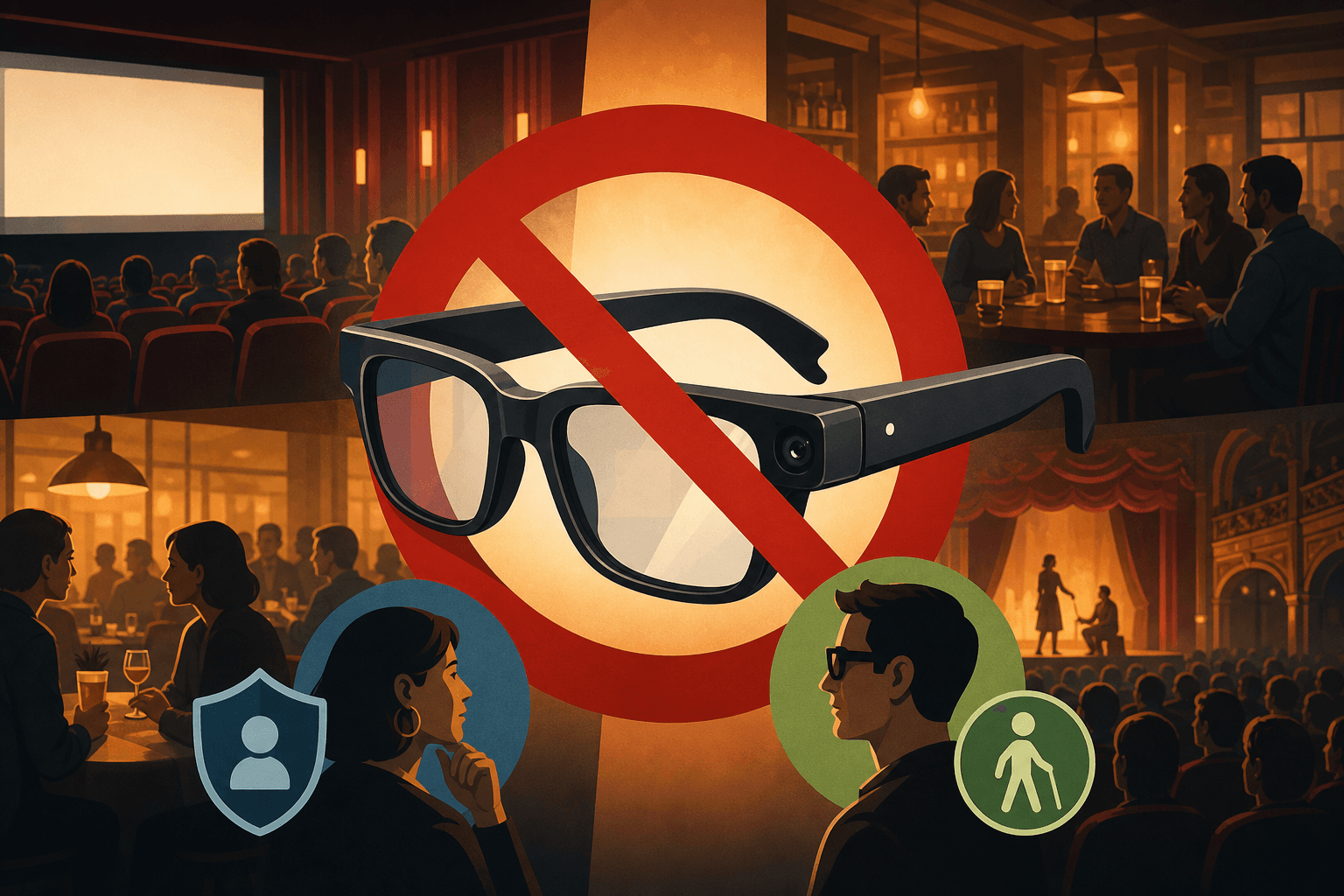
Seldom has a piece of consumer technology provoked such a swift institutional backlash. Across the United Kingdom, venues are banning Meta's Ray-Ban smart glasses. Cinemas, pubs, theatres, and upscale restaurants have all announced restrictions within weeks of one another. The devices, which embed tiny cameras into ordinary-looking eyewear frames, enable discreet recording. Industry leaders now regard them as instruments of surreptitious surveillance.
The UK Cinema Association confirmed that all major operators are considering policies to prohibit the glasses. Wetherspoons, a pub chain with over eight hundred venues, has imposed an outright ban. London restaurateur Jeremy King declared them unwelcome across his dining establishments. Soho House, the exclusive members' club, will ask patrons to remove them entirely. Even Comic-Con events have followed suit after attendees reported being filmed without consent.
What complicates this debate is the undeniable accessibility value the glasses provide. Visually impaired users rely on built-in AI to read menus, describe surroundings, and navigate independently. Meta has argued that restricting the technology would be a major step backwards for the blind community. A small indicator light flashes during recording, yet critics contend it is virtually imperceptible in dimly lit venues.
The controversy echoes the earlier demise of Google Glass, which faced similar hostility over a decade ago. However, Meta's product has achieved what Google's could not: mainstream commercial success. The glasses have sold over seven million units worldwide, with sales tripling in the past year. Documented cases of covert filming and even extortion have intensified public unease considerably. European regulators, including Germany's data-protection commissioner, are now scrutinising the devices.
At the heart of this dispute lies a fundamental tension between innovation and individual privacy. Banning the glasses outright risks penalising disabled users who depend on the technology daily. Yet permitting unrestricted use effectively normalises hidden recording in intimate spaces. Had legislators anticipated the pace of wearable technology, clearer boundaries might already exist. For now, individual venues are shouldering a regulatory burden that arguably belongs to governments.