Coral reefs are among the most important ecosystems on Earth. They provide essential habitats for about a quarter of marine species. However, rising ocean temperatures have caused severe bleaching events. Roughly 84 percent of the world's reefs suffered heat stress recently. Once bleached, corals often struggle to recover on their own.
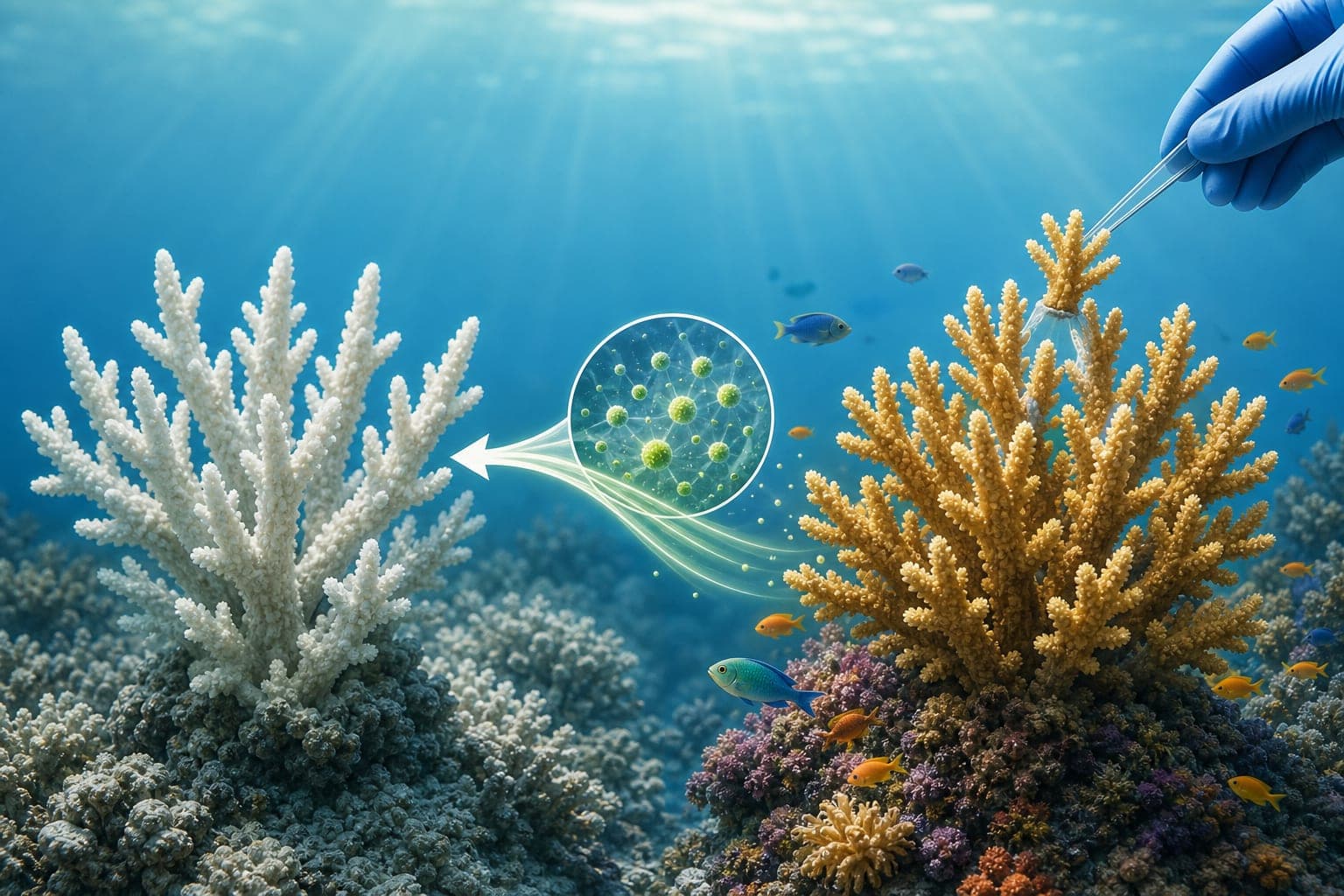
A new study from Stanford University offers remarkable hope. Scientists discovered that bleached coral can recover through contact with healthy coral. The healthy coral shares its beneficial algae with the damaged one. In laboratory tests, bleached coral fully recovered within seven weeks. This is the fastest documented coral recovery to date.
The discovery happened by accident in 2025. Professor Steve Palumbi noticed two coral pieces touching in a tank. One was bleached and the other was healthy. Color was returning where the two fragments met. Doctoral student Danny Collins then designed a formal experiment. He found that separated coral pieces did not recover at all.
However, the method has significant limitations that must be addressed. Recovery required genetically identical coral, like an organ transplant. If the corals were not matched, they competed instead. The technique has also not been tested on natural reefs yet. Researchers now hope to deliver the algae without direct contact.