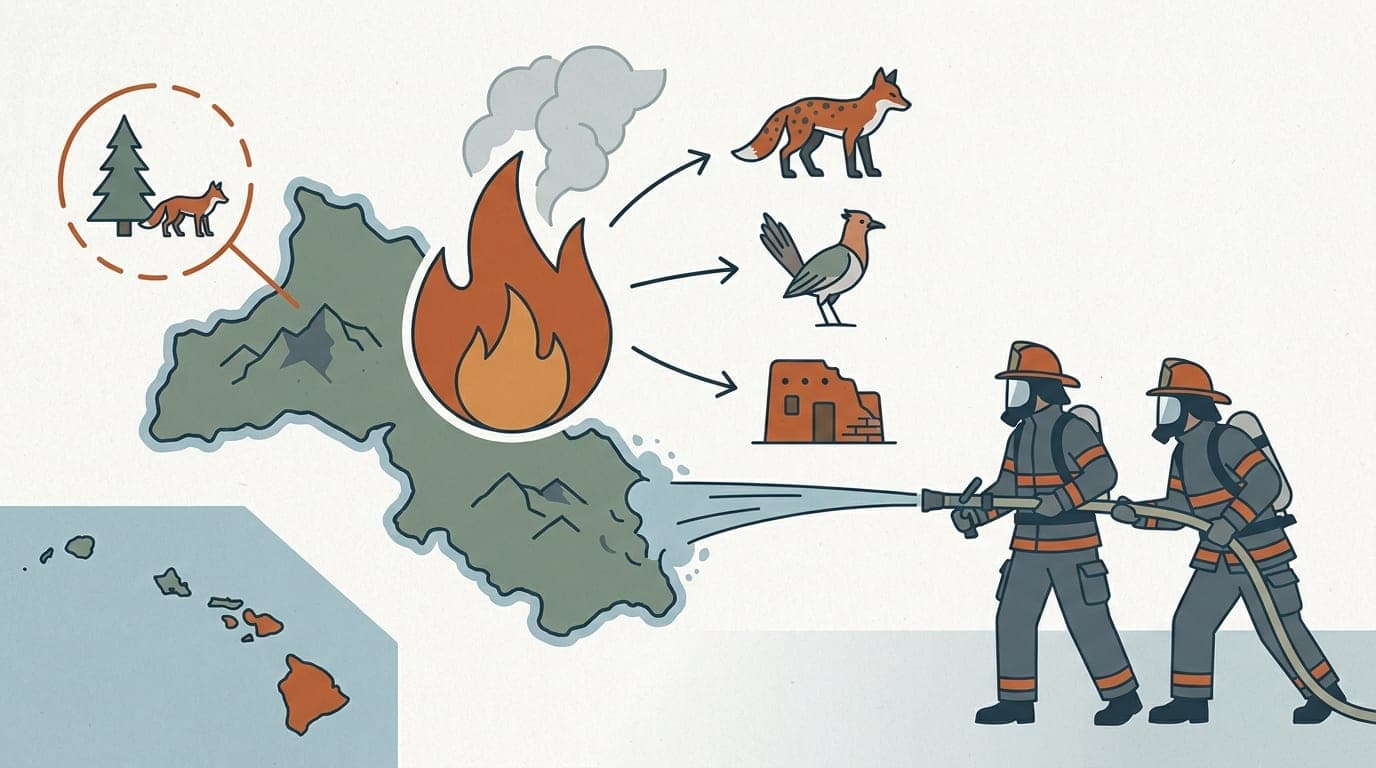
A catastrophic wildfire on Santa Rosa Island has become the largest ever documented on any of California's eight Channel Islands. The blaze, first detected by aircraft on May 15, 2026, has consumed over 17,500 acres. This represents approximately one-third of the island's total 53,760-acre landmass. Fueled by high winds and dry vegetation, the fire spread with alarming rapidity across the southeastern quadrant. Firefighters, transported to this remote location by boat, have achieved only 44 percent containment.
What renders this disaster particularly consequential is the island's extraordinary ecological significance. Channel Islands National Park has long been designated as a biodiversity hotspot. The archipelago, frequently referred to as North America's Galápagos, harbors dozens of endemic species. Six plant species exist exclusively on Santa Rosa Island and are found nowhere else in the world. Among the most imperiled is the Torrey pine, one of the rarest pine species in North America.
The fire has burned through the island's rare Torrey pine grove, devastating a critically endangered species. These distinctive trees, characterized by broad canopies and twisting branches, have inhabited the island for millennia. The blaze also coincides with the breeding season for the Santa Rosa Island fox, the world's smallest canid. Bald eagles and federally threatened western snowy plovers face similar disruption to their nesting grounds. Such timing amplifies the ecological ramifications considerably.
Beyond the environmental toll, irreplaceable cultural heritage has been lost. Two uninhabited historic structures have been destroyed, including Johnson's Lee Equipment Shed and Wreck Line Camp Cabin. An adjacent storage structure was also consumed by the flames. The National Park Service has implemented preventative measures to protect the historic Main Ranch complex. A former island rancher expressed profound sadness over the loss of buildings and artifacts his family had safeguarded for generations.
The fire's origin remains under formal investigation, though authorities believe it to be human-caused. A 67-year-old sailor reportedly ran his vessel aground on the island's rocks on May 15. The Coast Guard subsequently rescued the mariner by helicopter. This unprecedented disaster underscores the vulnerability of isolated island ecosystems to even singular human actions. Had preventative protocols been more robust, such irreversible ecological damage might conceivably have been averted.